At a time that conservatives are concerned with the direction Speaker John Boehner is taking in negotiations over the fiscal cliff, he gives conservatives another reason to worry.
Heritage Foundation writes that Boehner’s counteroffer to President Obama is “little more than categorical, pre-emptive capitulation.”
The Washington Times reports: “Republican leaders struggled Tuesday to contain the backlash from conservatives over the GOP’s offer of $800 billion in tax increases to head off the ‘fiscal cliff’ — a move that didn’t impress the White House, even as it spawned a rebellion on the right. Conservative lawmakers and interest groups said House Speaker John A. Boehner’s offer abandoned core Republican principles and earned no credit from a White House that has insisted on even bigger tax increases and balked at major spending cuts.”
So perhaps it’s not surprising that Boehner has taken steps to discipline a handful of members, including Tim Huelskamp, who was just re-elected to a second term representing the Kansas first district. Three of the four are notable for their votes on fiscal issues, voting for limited government rather than expansion.
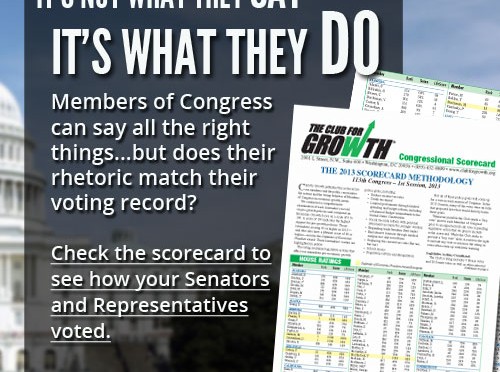
In a press release, the watchdog group Club for Growth reported: “The Club for Growth today praised the conservative voting records of Congressmen David Schweikert (R-AZ), Justin Amash (R-MI) and Tim Huelskamp (R-KS). All three members of Congress were removed from their committee assignments as a consequence of their principled stands on behalf of pro-growth policies, often bringing them in conflict with the leadership of their own party. … Congressmen Schweikert, Huelskamp, and Amash are now free of the last remnants of establishment leverage against them. We expect that these three defenders of economic freedom will become even bolder in their efforts to defend the taxpayers against the big spenders in both parties. The dirty little secret in Congress is that while refusing to kowtow to the wishes of party leaders can sometimes cost you some perks in Washington, the taxpayers back home are grateful.”
Huelskamp said “No good deed goes unpunished. We were not notified about what might occur but it confirms in my mind the deepest suspicions that most Americans have about Washington D.C: it’s petty, it’s vindictive, and if you have conservative principles you will be punished.”
In a statement on his Congressional website, Huelskamp explained “It is little wonder why Congress has a 16 percent approval rating: Americans send principled representatives to change Washington and get punished in return. The GOP leadership might think they have silenced conservatives, but removing me and others from key committees only confirms our conservative convictions. This is clearly a vindictive move, and a sure sign that the GOP Establishment cannot handle disagreement. I am not at all ashamed of any of the principled, conservative stances I took in the past two years.”
An open letter from Congressman Tim Huelskamp of the Kansas first district to Republican Kansas State Senators Pete Brungardt, Jay Emler, Terrie Huntington, Jeff Longbine, Carolyn McGinn, Steve Morris, Tim Owens, Roger Reitz, Vicki Schmidt, Jean Schodorf, Ruth Teichman, Dwayne Umbarger, and John Vratil. These are the “traditional,” “reasonable,” “moderate” Kansan Republicans.
July 31, 2012
Dear Senator:
While all Republicans in Washington are working hard to fulfill Kansans’ wishes to stop ObamaCare from destroying our liberties, I am disappointed that you and many other Topeka politicians are actually hindering our efforts.
The reasons to undo ObamaCare are countless. It carries a trillion-dollar price tag over the next decade. It increases family premiums, burdens our small businesses, invades our privacy, and stomps on our religious freedom. States like Kansas will continue to bear the costs of expensive federal mandates. And, Secretary Kathleen Sebelius has refused to offer waivers she was more than willing to grant to unions and businesses connected to the Obama Administration.
As you may know, before being elected to Congress, I strongly supported adding the Health Care Freedom Amendment to our state Constitution. If passed, it would allow Kansans to have a say on a law they fundamentally oppose: ObamaCare. The citizens of Ohio were given this opportunity — so should the people of Kansas.
However, when this Amendment came to you during the 2012 Session, I was extremely disappointed that you refused to allow a vote of the people if the law was upheld by the Supreme Court. What a mistake. Kansans deserve to have a say on ObamaCare — whether you like it or not — and whether a narrow Supreme Court majority refuses to defend the Constitution.
As you know, ObamaCare is a significant threat to the wallets, the liberties, and health care access of Kansans. It was rammed through Congress behind closed doors, without public input, and many are still reading it “to see what was in it.” And for you to hide behind the Supreme Court and with Obama, Pelosi and Reid instead of the people of Kansas — that is very disappointing.
In closing, please reconsider your opposition to putting the Health Care Freedom Amendment to a vote of the Kansas people.
Watchdog reporter at Pachyderm. This Friday (May 18th) the Wichita Pachyderm Club features Paul Soutar, Reporter for Kansas Watchdog, speaking on “The evolution of journalism and how the new media empowers citizens.” The public is welcome and encouraged to attend Wichita Pachyderm meetings. For more information click on Wichita Pachyderm Club. … The club has an exceptional lineup of future speakers as follows: On May 25th: Ron Estes, State Treasurer of Kansas, speaking on “A report from the Kansas Treasurer.” … On June 1st: Gary Oborny, Chairman/CEO Occidental Management and Real Estate Development, CCIM Designated member of the Storm Water Advisory Board to the City of Wichita, speaking on “What is the economic impact of EPA mandates on storm water quality in Wichita?”
Kansas senators vote for cronyism. Veronique de Rugy explains the harm of the Export-Import Bank of the United States in Why Would Anyone be Against the Export-Import Bank? “First, the Ex-Im Bank is nothing more than corporate welfare. This is an agency that is in the business of subsidizing private companies with taxpayer dollars. … An excellent paper by Cato Institute’s trade analyst Sallie James exposes just how unseemly, inefficient, and irrelevant the Export-Import Bank is. As James explains, the Bank not only picks winners and losers by guaranteeing the loans of private companies, but it also introduces unfair competition for all the U.S. firms that do not benefit from such special treatment.” The bill is H.R. 2072: Export-Import Bank Reauthorization Act of 2012. Both Kansas senators Jerry Moran and Pat Roberts voted for this bill. So did U.S. Representative Kevin Yoder of the Kansas third district. But Representatives Tim Huelskamp, Lynn Jenkins, and Mike Pompeo voted against it.
Koch = big oil?Politico: “The Koch brothers have an unlikely ally in the war of words with their liberal adversaries: the nation’s journalistic fact-checkers. Both The Washington Post’s Fact Checker blog and the nonpartisan site FactCheck.org have dinged critics of David and Charles Koch in recent weeks for referring to the billionaire brothers as Big Oil. Why? Because Koch Industries’ business interests extend well beyond the company’s involvement in petroleum refining and other oil-based operations. And while no corporate midget, the company isn’t anywhere near as big as true oil giants like ExxonMobil. ‘So even if all of Koch Industries’ revenues came from its refining business — which they do not — they would still be a fraction of the revenues of the companies that actually represent ‘Big Oil,” the FactCheck.org critique read.” More at Fact-checkers and Kochs’ ‘Big Oil’. Another example of how facts don’t get in the way of Koch critics. Or try For New York Times, facts about Kochs don’t matter.
Economic freedom. Why does the political left criticize Charles and David Koch? In the following video from last year, Koch Industries CEO and board chairman Charles G. Koch explains the principles of economic freedom, something that he and David Koch have worked to advance for many years. These principles, according to Koch, include private property rights, impartial rule of law, free trade, sound money which reduces boom and bust cycles, and a small and limited government. These principles are good for everyone, I should add, including those currently at the bottom of the economic ladder.
We aren’t Greece … yet. “Once again, Greece finds the international community questioning its ability to pay its debts. Default and an exit from the Euro Zone (or countries which share the Euro as a common currency) threatens on the horizon. Here in the U.S., we face high debts and have a lowered credit rating due to Washington’s inability to agree on deficit reduction. Just how alike are our two nations?” An infographic from Bankrupting America explains.
Pompeo meeting tomorrow. From the congressman’s office: “Kansas Fourth District Congressman Mike Pompeo will host a town hall meeting at the WSU Hughes Metroplex in Wichita on Saturday, March 24 at 11:30 am. Congressman Pompeo will take questions from constituents and discuss issues related to Congress and the federal government. The public and members of the media are welcome and encouraged to attend.” The WSU Hughes Metroplex is located at 5015 East 29th Street North.
Obamacare anniversary. Listening to President Barack Obama you wouldn’t know it, but it’s the second anniversary of his signature legislative achievement. The problem? It’s very unpopular. A recent poll found “Two-thirds of Americans say the U.S. Supreme Court should throw out either the ‘individual mandate’ in the federal health care law or the law in its entirety — signaling the depth of public disagreement with that controversial element of health care reform.” Locally, two Congressmen are not happy with the law, either. In a statement Last week U.S. Representative Tim Huelskamp, who is in his first term representing the Kansas first district, wrote “Two years ago, President Obama began a terrible experiment in government-run health care. Even though we are still two years away from the full implementation of the law, the devastating harm is already coming to light. There is no shortage of new ‘unintended consequences,’ usually with taxpayers and patients paying the price — literally or figuratively. The universal rule of medicine is ‘Do No Harm,’ yet the only thing ObamaCare seems to do is damage. … Americans were assured we could keep our health insurance if we like it, but the Congressional Budget Office now estimates as many as 20 million Americans could lose their employer-based coverage because of ObamaCare.” … U.S. Representative Mike Pompeo of Wichita wrote “My conservative colleagues and I warned during the debate over Obamacare that having the government take over 1/6th of the U.S. economy would not reduce health care costs or improve access to health care, but Democrats rammed the bill down the throats of the American people anyway. At the time, then-Speaker Nancy Pelosi infamously declared that the Democrats needed to pass it in order to know what was in it. Now we know. Obamacare’s price tag has doubled and the newest projections show that up to 88 million Americans will not be able to ‘keep their plan if they like it,’ as President Obama so often promised in his sales pitch.”
Ambassador Hotel. The free-market organization Heartland Institute contributes coverage in the special election in Wichita regarding the Ambassador Hotel. Of special note is how some people just don’t get it. Writes the reporter: “Reflecting on the defeat of the rebate, [Wichita Downtown Development Corporation chair Tom] Docking said, ‘The anti-development, anti-tax populace out there are numerous and they’re well organized.’ Weeks objected to this characterization. ‘We’re not anti-development. I am a capitalist. . . Anti-tax, yes, we’re very much that. But ‘organized’ I don’t think applies to us at all. We beat it back this one little time.’” … Docking was also quoted as saying the election “was portrayed in a lot of circles in a way that was not accurate.” I should mention that WDDC and Docking were extended several invitations to appear at forums where the issues could be discussed. No one would agree, with Docking and others preferring to level their charges in forums where they knew they would not be challenged or held accountable.
Do politics reflect culture, or does culture reflect politics?
In a representative form of government, what happens in Washington should be a reflection of what happens in each of the communities and among the people of our country. Those elected to serve are to carry to Washington the views, ideas, and priorities of their constituents. Not the other way around.
But increasingly, President Obama is attempting to transform the culture of our nation using manipulative political means.
President Obama seeks to replace America’s culture of self-reliance with a culture of dependence, religious liberty with intolerance and compulsion, and the American Dream with more American debt. He relies on the politics of envy and the punishment of success to manipulate the American people into believing that without government they are missing something to which everyone is entitled regardless of effort or merit. He argues “fairness” means everyone has the same outcome, not the same opportunity.
By standing in the way of economic recovery, the Obama Administration has forced a record number of people on to food stamps. But, the President is just fine with that. It means more Americans depend on political elites like him who merely take resources rather than produce them.
By forcing Catholic employers to pay for or provide contraception and abortion drugs, demanding health care providers and medical students to take part in activities that violate their consciences, or censoring military chaplains to preach sermons or perform ceremonies contrary to the tenets of their faiths, the Obama Administration has signaled its willingness to trample on religious liberty. It means bureaucrats have a greater grip on the American people than churches, synagogues, and mosques. It turns an “appeal to a higher power” from a prayer to God to a call to a Washington theocracy.
By refusing to deal with $16 trillion in debt — an I.O.U. larger than the size of the entire American economy — the Obama Administration is comfortable with indebting our children and grandchildren for spending they neither made nor consented to. All the while, Obama has displayed its contempt for those who are already shouldering a disproportionate burden of current taxes. When one percent pays 37 percent of all income taxes, the Obama Administration has the nerve to argue that it is not enough. Never mind that close to half of all Americans pay nothing in federal income taxes.
Making acceptable a culture of dependence, intolerance for faith, and demonization and punishment of hard work and success will have profound negative consequences for our culture. But, perhaps this is why the Obama Administration is doing so.
While those with the bully pulpit should seek to inspire greatness in the American people, all President Obama seems to do is espouse resentment. He wants Americans to envy straw men. He wants them to believe that they are but mere victims of a grand conspiracy to rid them of any and all any recognition and reward for their hard work. Simultaneously, he wants them to believe that hard work should not be recognized and rewarded; that the fruits of their labor are to be handed over to the elite government for its “wise and prudent” redistribution.
Contrary to President Obama’s interpretation of American history and culture, America’s success story is and will continue to be the result of limited government answering the views, ideas, and priorities of its people, not the result of government telling the American people what they need. It is the result of individuals being allowed to thrive, success being rewarded, and the spirit of charity and community responding to the immediate needs of those around us. And, it is the result of generation after generation leaving things better than they found them for the next not because government says to do so, but because God so instructs.
Congressman Tim Huelskamp represents the First District of Kansas. He serves on the House Budget, Agriculture, and Veterans’ Affairs Committees. He can be found at huelskamp.house.gov.
Kansas school forum. Tomorrow (January 31st) Dave Trabert of Kansas Policy Institute and Mark Tallman of Kansas Association of School Boards will participate in a town hall meeting with the subject being Kansas schools. The meeting is at 7:00 pm at the Central Branch Wichita Public Library at 223 S. Main.
Ambassador Hotel to be subject of discussion. This Friday (February 3rd) the Wichita Pachyderm Club will host a forum or discussion on the February 28th election, which lets voters decide whether the Ambassador Hotel gets to keep 75 percent of its guest tax collections. I (Bob Weeks) will present for the “Vote No” side. Many invitations have been extended, but so far no one is willing to represent the “Vote Yes” side. If you know of anyone who would participate for the “Vote Yes” side, please contact John Todd at john@johntodd.net. The public is welcome and encouraged to attend Wichita Pachyderm meetings. For more information click on Wichita Pachyderm Club. Upcoming speakers: On February 10th: Debra Ary, P.E., Superintendent Production and Pumping, Wichita Water Utilities, speaking on “An overview of Wichita’s water plan for the future.” Then from 2:30 pm to 3:30 pm interested Pachyderm Club members and guests are invited to take a guided tour of the City of Wichita ASR (Aquifer Storage and Recovery) site. The address of the ASR plant is 11511 N. 119th St. W., Sedgwick, KS. Click here for a Google map. … On February 17th: Richard Ranzau, Sedgwick County Commissioner, 4th District, speaking on “The $1.5 million Regional Economic Area Partnership (REAP) HUD Sustainable Development Planning Grant. Economic Development or Economic Destruction?” … On February 24th: A Face-to-Face Forum with Kansas Congressional delegation staff members: Melvin “Mel” Thompson, State Agriculture Representative, Senator Pat Roberts; Mike Zamrzla, Deputy State Director, Senator Jerry Moran; Lea Stueve, District Director, Congressman Mike Pompeo. Topic: “Learn what is happening and likely to happen in the nation’s capitol.”
Capital gains tax rate.e21 has written an excellent explanation as to why the 15 percent tax on capital gains does not tell the entire story. Considering that capital gains are taxed twice, the true rate of taxation is 44.75 percent, which is much higher than the top income tax rate, and higher than the corporate tax rate. The full explanation is at Capital Gains Tax Rates Are Higher Than You Think, and Getting Higher.
Kan-ed audit. Kan-ed is a state-run network designed “to provide broadband Internet access and distance learning capabilities for schools, hospitals, and libraries.” Kansas Legislative Division of Post Audit has just released an audit of this program. Among the audit’s findings: “Although the Kan-ed network is connected to the Internet, it is a very slow and expensive way of providing Internet access. … Most connected members need commercial Internet access or no Internet connection at all. … Kan-ed could save up to $2 million a year by switching slightly more than half of members to commercial Internet and disconnecting others.” And finally, a conclusion that reminds us of why government spending is almost always wasteful: “Kan-ed has done a poor job of monitoring network connections to ensure members actually need them and has rarely disconnected unneeded connections.” The audit highlights are at Kansas Board of Regents: Evaluating the Effects of Eliminating the Kan-ed Program, and the full audit report is here.
Huelskamp and Sharpton. Last week U.S. Representative Tim Huelskamp, who is in his first term representing the Kansas first district, appeared on the MSNBC television program PoliticsNation. Huelskamp’s office writes: “Congressman Huelskamp engaged the Rev. Al Sharpton over the issue of current tax rates and whether or not it’s ‘fair’ that millionaires and billionaires are allegedly taxed at a lower rate than others. The Congressman argued that the top 1% pay the plurality of all taxes in America, and that the real issue is promoting opportunity and not class envy, citing that his constituents tend to care more about having the ability to find a job and make it on their own rather than what their neighbors’ incomes may or may not be.” I would say that Sharpton has a peculiar — and harmful — idea of what constitutes fairness. Video is at Promoting Opportunity, Not Class Envy.
Education reform blog started.The Friedman Foundation for Educational Choice has started a blog focusing on education reform, a subject the foundation has great experience in. A pres release announces: “As efforts to reform education and improve learning spring up across the nation, the Friedman Foundation for Educational Choice announced a new on-line information hub for advocates, parents and concerned citizens: the Friedman Flyer. The Friedman Flyer, FriedmanFlyer.com, will advance Milton and Rose Friedman’s vision of school choice for all with daily updates on news and lively discussion centering on education reform and school choice.”
Super PACs. Are the new Super PACs a problem? No, write Nick Gillespie and Meredith Bragg of Reason. Here’s why: “Billionaires don’t need them to influence elections, Super PACS go negative — and that’s a good thing!, and Super PACS take power away from the parties.” More at 3 Reasons Not To Get Worked Up Over Super PACs.
Kansas computer security. This month the Kansas Legislative Division of Post Audit released an audit looking at how well five Kansas state government agencies kept their computers up-to-date. The audit found: “Three of the five agencies had significant vulnerabilities because of inadequate workstation patching processes, and all five could make some minor improvements to their patching process.” Patching refers to the process of keeping software updated. The most important updates, or patches, concern security vulnerabilities that have been discovered and fixed. Some of these vulnerabilities are serious and can lead to computers and networks being compromised. The report is at State Agency Information Systems: Reviewing Selected Systems Operation Controls in State Agencies.
KPERS. Wichita financial planner Richard Stumpf contributes a piece to the Wichita Eagle on the problems with Kansas Public Employee Retirement System (KPERS). He paints a bleak picture of the plan’s finances and proposes a tax increase, writing: “I am recommending that Brownback propose a 25 percent tax increase to fund employees’ retirement plans. The commission wouldn’t cut spending. I refuse to recommend taking more money from classrooms to pay this bill. The only remaining option is a tax increase.” … As bleak as is this picture, it’s not as dark as it should be: Stumpf says the debt in KPERS is “nearly $9 billion.” More realistic analysis puts the figure much higher. Adjusting for unreported investment losses and using a realistic assumed rate of return of six percent, Kansas Policy Institute says the shortfall would be $14.1 billion. More shocking is an evaluation of state pension funds conducted by the American Enterprise Institute which uses market valuation methods. This evaluation puts the shortfall for Kansas at $21.8 billion. … Stumpf notes this: “So far this year, the stock market is up about 1.3 percent. Since KPERS is based upon an 8 percent assumed rate of return, earning 1.3 percent this year is equivalent to losing 6.7 percent.” The full editorial is at Richard Stumpf: Unions, Legislature lack guts to fix KPERS.
Kansas Treasurer makes grand circuit. One of the jobs of Kansas TreasurerRon Estes is to safeguard unclaimed property and seek to return it to its owners. Estes and his staff have now visited all 105 Kansas counties, holding unclaimed property return events in each. The office says that in 2011, 65,913 claims totaling $14,433,929 have been returned to Kansans. The office is holding $230 million in unclaimed property.
Huelskamp considered objecting. The payroll tax measure passed last week in the U.S. House of Representatives was passed using “unanimous consent.” This means that there was no voice or roll call vote taken, and members did not need to be present. But if even one member had been present and had voiced an objection, the measure would have failed. Appearing on CNN, U.S. Representative Tim Huelskamp, who is in his first term representing the Kansas first district, said he considered making such an objection, but could not get to Washington from Kansas in time: “Actually, I did. Problem was by the time we were notified that the unanimous consent agreement would be offered, where I come from in Kansas, I can’t get to Washington quick enough on this short notice. So that was an option, we did think about that, but there’s no way to fly in on time to make that happen. Back on the pledge to America, we talked about 72 hours where big things like this would give us an opportunity to reel read the deal, actually read the bill. And in this case they decided to not follow that rule as well.” … Huelskamp said he was disappointed with the House leadership team, noting Congress has not cut spending, did not stand up to the president on the budget ceiling debate, and did not pass a balanced budget amendment. Noting the lack of delivery after the election of a conservative majority to the House, Huelskamp wondered “what difference did it make?” He described the payroll tax measure as one of numerous losses this year.
Obama’s regulation.Wall Street Journal Review & Outlook: “To answer the most basic question — has regulation increased? — we’ll focus on what the government defines as ‘economically significant’ regulations. Those are rules that impose more than $100 million in annual costs on the economy, though there are hundreds if not thousands of new rules every year that fall well short of that. According to an analysis of the Federal Register by George Mason University’s Mercatus Center, the Cabinet departments and agencies finalized 84 such regulations annually on average in President Obama’s first two years. The annual average under President Bush was 62 and under President Clinton 56.” The Journal notes the deception used by the Obama Administration as it tries to portray itself as not regulation-hungry: “Cass Sunstein, the director of the White House Office of Information and Regulatory Affairs, has been shopping around lower numbers that selectively compare Mr. Obama’s first two years favorably with Mr. Bush’s last two. Administrations are typically most active on the way out, and in any case the Bush regulatory record is nothing to crow about. But Mr. Sunstein’s numbers are even more misleading because they only include the rules that his office reviews while excluding the prolific ‘independent’ agencies such as the Federal Communications Commission. This means that if Congress tells, say, the Securities and Exchange Commission to write a new rule, it doesn’t enter Mr. Sunstein’s tally. So it omits, for example, some 259 rules mandated by the Dodd-Frank financial reregulation law along with its 188 other rule suggestions. It also presumes that Mr. Obama is a bystander with no influence over his own appointees who now dominate the likes of the National Labor Relations Board.” … After presenting more evidence of the growth of costly regulation under Obama, the Journal concludes: “The evidence is overwhelming that the Obama regulatory surge is one reason the current economic recovery has been so lackluster by historical standards. Rather than nurture an economy trying to rebuild confidence after a financial heart attack, the Administration pushed through its now-famous blitz of liberal policies on health care, financial services, energy, housing, education and student loans, telecom, labor relations, transportation and probably some other industries we’ve forgotten. Anyone who thinks this has only minimal impact on business has never been in business. … Mr. Obama can claim he is the progressive second coming of Teddy Roosevelt as he did in Kansas last week, or he can claim to be a regulatory minimalist, but not both. The facts show he’s the former.” The full article is Regulation for Dummies: The White House says its rule-making isn’t costly or unusual. The evidence shows otherwise.
The failure of American schools.The Atlantac: “Who better to lead an educational revolution than Joel Klein, the prosecutor who took on the software giant Microsoft? But in his eight years as chancellor of New York City’s school system, the nation’s largest, Klein learned a few painful lessons of his own — about feckless politicians, recalcitrant unions, mediocre teachers, and other enduring obstacles to school reform.” Key takeway idea: “As a result, even when making a lifetime tenure commitment, under New York law you could not consider a teacher’s impact on student learning. That Kafkaesque outcome demonstrates precisely the way the system is run: for the adults. The school system doesn’t want to change, because it serves the needs of the adult stakeholders quite well, both politically and financially.” … Also: “Accountability, in most industries or professions, usually takes two forms. First and foremost, markets impose accountability: if people don’t choose the goods or services you’re offering, you go out of business. Second, high-performing companies develop internal accountability requirements keyed to market-based demands. Public education lacks both kinds of accountability. It is essentially a government-run monopoly. Whether a school does well or poorly, it will get the students it needs to stay in business, because most kids have no other choice. And that, in turn, creates no incentive for better performance, greater efficiency, or more innovation — all things as necessary in public education as they are in any other field.” … Overall, an eye-opening indictment of American public schools.
Markets: exploitation or empowerment? Do markets lead to a centralization of political and economic power, or do markets decentralize and disseminate wealth? In an eight-minute video from LearnLiberty.org, a project of Institute for Humane Studies, Antony Davies presents evidence and concludes that markets and free trade empower individuals rather than exploit them.
Kansas school finance. Reactions to Kansas Governor Sam Brownback’s school finance plan are coming in. Dave Trabert, president of Kansas Policy Institute gives it a grade of “incomplete.” “It’s good to give districts more flexibility in deciding how to spend aid dollars and the formula may be easier to understand, but there is nothing in this plan to substantively address his laudable goals of raising student achievement. Excellence in Education requires laser-like focus on outcomes and those elements are missing from this plan. … Funding is important but that’s not what drives achievement. Total aid to Kansas schools increased from $3.1 billion in 1998 to $5.6 billion in 2011. Yet reading proficiency levels according to the U.S. Department of Education remain relatively unchanged at about 35%.” … Kansas National Education Association (KNEA), the teachers union, notes the good points: It anticipates no further cuts to K-12 Education funding. It allows maximum flexibility in addressing student needs by removing restrictions on spending on at-risk or bilingual students. It counts kindergartners as full time students. But, the bad, according to the union: It has a TABOR-like effect that permanently locks in school funding at the current inadequate level. TABOR refers to taxpayer bill of rights, plans that some states have to limit the rate of growth of government. … While the Brownback administration believes the plan should settle lawsuits aimed at forcing more spending on education, lawyers suing the state say “Without addressing the costs of what schools need to spend in order to get the kind of performance the 21st Century demands, it is a system doomed to failure. It doesn’t do what the Kansas Supreme Court and the Kansas Constitution requires and that is fund education based on its costs.”
No school choice for Kansas. The Brownback plan contains no mention of school choice programs of any kind, not even charter schools. The latter are possible in Kansas, but the law is stacked against their formation. School choice programs are increasing in popularity in many states, because they hold the strong possibility of better results for students and parents. Plus, as the Friedman Foundation for Educational Choice has found in its study Education by the Numbers: The Fiscal Effect of School Choice Programs, 1990-2006, school choice programs save money: “Every existing school choice program is at least fiscally neutral, and most produce a substantial savings.” Governor Brownback could have integrated a small school choice program into the school financing plan as a way to save money and provide greater freedom for students and parents. … In what the Wall Street Journal dubbed the The Year of School Choice, Republican governors across the nation have founded or expanded school choice programs. Wrote the Journal: “But choice is essential to driving reform because it erodes the union-dominated monopoly that assigns children to schools based on where they live. Unions defend the monopoly to protect jobs for their members, but education should above all serve students and the larger goal of a society in which everyone has an opportunity to prosper. This year’s choice gains are a major step forward, and they are due in large part to Republican gains in last fall’s elections combined with growing recognition by many Democrats that the unions are a reactionary force that is denying opportunity to millions. The ultimate goal should be to let the money follow the children to whatever school their parents want them to attend.” … But under governor Brownback’s leadership, this is not happening in Kansas.
Federal budget transparency.U.S. Representative Tim Huelskamp, who is in his first term representing the Kansas first district, this week expressed frustration with transparency involving the federal budget. “I appreciate the Congressman from Utah talking about transparency. The idea that just because we’re only shining some light on a particular aspect — on not on the whole process — to me that’s an argument we need more transparency on the whole process. I totally agree with that. The experience in my office in the last three days has been to make an attempt to find out what is in this Conference Committee report. It’s been three days, and at 12:37 am this morning that was posted online — 1,219 pages, not quite 11 hours ago. I’m a Member of Congress and I’m going to be expected to vote on that very quickly. There was an interesting quote in The Hill this morning. I don’t know who said it, but it quoted: ‘… [A]ppropriators are worried that the tactic could leave the omnibus text out in the public for too long, giving time for K Street lobbyists to attack it before it gets approved.’ I don’t care about the lobbyists. It’s my job. It’s a responsibility to my constituents. We need more transparency not less. We need more discussions of the tyranny of debt, not less. This type of legislation gives us that opportunity. It gives the American people more appropriately the opportunity to see what we are doing.” There is video of Huelskamp’s remarks.
Open records in Wichita. “A popular Government without popular information or the means of acquiring it, is but a Prologue to A Farce or a Tragedy or perhaps both. Knowledge will forever govern ignorance, and a people who mean to be their own Governors, must arm themselves with the power knowledge gives.” That’s James Madison, framer of the First Amendment, 1822. Six of seven Wichita City Council members seem not to agree with Madison, and we have a city attorney who goes out of his way to block access to information that the public has a right to know. The City of Wichita’s attitude towards open records and government transparency will be a topic of discussion on this week’s edition of the KAKE Television public affairs program This Week in Kansas. That program airs in Wichita and western Kansas at 9:00 am Sundays on KAKE channel 10, and at 5:00 am Saturdays on WIBW channel 13 in Topeka.
Cell phone ban while driving. Sometimes regulating a behavior, even though it is dangerous, makes things even worse. “A news release from the Highway Loss Data Institute summarizes the finding of a new study: “It’s illegal to text while driving in most US states. Yet a new study by researchers at the Highway Loss Data Institute (HLDI) finds no reductions in crashes after laws take effect that ban texting by all drivers. In fact, such bans are associated with a slight increase in the frequency of insurance claims filed under collision coverage for damage to vehicles in crashes. This finding is based on comparisons of claims in 4 states before and after texting ban, compared with patterns of claims in nearby states.” More at Texting bans haven’t worked.
Myths of the Great Depression. “Historian Stephen Davies names three persistent myths about the Great Depression. Myth #1: Herbert Hoover was a laissez-faire president, and it was his lack of action that lead to an economic collapse. Davies argues that in fact, Hoover was a very interventionist president, and it was his intervening in the economy that made matters worse. Myth #2: The New Deal ended the Great Depression. Davies argues that the New Deal actually made matters worse. In other countries, the Great Depression ended much sooner and more quickly than it did in the United States. Myth #3: World War II ended the Great Depression. Davies explains that military production is not real wealth; wars destroy wealth, they do not create wealth. In fact, examination of the historical data reveals that the U.S. economy did not really start to recover until after WWII was over.” This video is from LearnLiberty.org, a project of Institute for Humane Studies, and many other informative videos are available.
Last week the U.S. House of Representatives passed H.R. 3010: Regulatory Accountability Act of 2011. This law would, if passed by the Senate and signed by the president, would require regulatory agencies to “base all preliminary and final determinations on evidence,” among other reforms. It might surprise citizens to realize that regulations may be made for other reasons.
The act would also requires agencies to address “specific nature and significance of the problem,” the “significance of the problem the agency may address with a rule,” and also to recognize “the legal authority under which the rule may be proposed.”
In commentary on this legislation, James L. Gattuso of the Heritage Foundation wrote: “On the whole, the Regulatory Accountability Act represents a positive step toward regulatory reform, imposing clear obligations on agencies with review by the courts. It should, however, be considered by Congress as a supplement — not an alternative — to other needed reforms.”
All Kansas representatives voted for the bill, which passed 253 to 167. Votes were split primarily along party lines, although 19 Democrats voted in favor. Two Kansas members provided comments on the bill, and shared Gattuso’s opinion that this bill is just the start of controlling harmful and unneeded regulation.
Representative Tim Huelskamp of the Kansas first district commented on the bill and the potential of it passing the Senate: “HR 3010 — like several other bills that would require economic impact to be taken into account when regulation is being written — has the potential to control the costs of federal regulations. But, it’s just potential. I am about as optimistic as the Senate taking up this bill as I am about the Senate taking up any one of the nearly two dozen other ‘jobs’ bills or passing a budget. Majority Leader Reid is doing America a great disservice by allowing these jobs bills to go untouched in the Senate; the American people don’t send their Senators to Washington to loiter for six years.”
Representative Mike Pompeo of the Kansas fourth district was also cautious about relying on this bill to provide needed regulatory reform: “The Regulatory Accountability Act of 2011 (HR 3010) is a great piece of legislation, but it is not the silver bullet for reining in the Obama Administration’s rampant regulatory overreach, which is severely hindering job creation across the country and here in Wichita. While the Administration is ‘strongly opposed’ to the bill, they have not issued a veto threat, yet. Even still, I doubt this bill will pass the Senate. Tomorrow the House will consider a stronger piece of legislation — The REINS Act (HR 10), of which I am a co-sponsor. HR 10 would require Congressional approval of every major new regulation proposed by this Administration. Ultimately, if passed into law, it will radically slow the expansion of government which is something that I have been working to do in every way since I got here in January.”
The House is expected to vote on the REINS Act today.
Addressing members and guests of the Wichita Pachyderm Club last Friday, U.S. Representative Tim Huelskamp of the Kansas first district updated the audience on national spending and debt, a health information database that poses privacy risks, and Warren Buffett’s taxes.
Today: Wichita City Council; ‘Federalists’ author to appear in Wichita this week; Rep. Huelskamp to speak in Wichita; Kansas tax reform; The debt of the states; Freedom of the press; Student loans; Obama makes a great appointment; Libertarianism works both ways.
At this moment, we can’t say that Kansas has its own version of Solyndra, the subsidized and politically-connected solar energy firm that recently shut down its operations and declared bankruptcy. But as far as absorbing the important lessons from Solyndra, we may have another chance to learn them in Kansas.
Today: Kansas House Appropriations Chair to speak; Sebelius responds to waivers inquiry; Brownback to Sebelius: No thanks; ‘Nullify Now’ tour in Kansas City; ‘Birth of Freedom’ screening.
Today: Debt ceiling; Was August 2nd a deadline?; Despite drag of government health care, Canada thrives; Kansas government website revamped; Demand is not the problem; Debt ceiling bill.
Today: Huelskamp on spending as driving economic growth; No Wichita Pachyderm this week; Government spending secrets; Wichita city council; Wichita city budget input; Fracking facts.
At the RightOnline conference in Minneapolis, U.S. Representative Tim Huelskamp of the Kansas first district told the general session audience that federal spending and debt is a threat to the future of America, and that we must use the opportunity of the upcoming debt ceiling vote to force spending cuts.
Today: Transportation planning; Pompeo, Huelskamp ‘no’ on debt limit; This Week in Kansas; Kingman is the first; Legislature is through for season; Stossel looks at energy.
Today: The failure of American schools; Professors to Koch Brothers: Take your green back; History and legacy of Kansas populism; Federal grants seen to raise future local spending; Debt observed as sold.
Today: American exceptionalism; Wichita City Council this week; The Great American Bailout; “Not yours to give rally” in Topeka; Kansas Bioscience Authority benefits from exemptions; The presidency in liberal society.
Today: Duplication in federal programs found; bureaucrats can’t change the way we drive … but they keep trying; Wednesdays in Wiedemann tonight; Americans for Prosperity website attacked; Kansas presidential primary pitched as economic development; Huelskamp joins Tea Party Caucus; how government works.
The political website FiveThirtyEight provides an innovative look at political forecasting and also supplies useful information about candidates and political districts.
In the hotly contested Kansas Republican primary elections this year, polls generated a lot of interest. In two Kansas Congressional districts, independent polls did a good job of predicting the vote for all candidates except the two winners, and a candidate’s own poll may have been undermined by large voter turnout.
KWCH Television in Wichita and SurveyUSA have released a poll of voter opinion of candidates for the Republican party nomination for United States Congress from the first district of Kansas. As was the case in the most recent poll, three candidates have broken away from the pack. The difference between the candidates is within the poll’s margin of sampling error, and as such, should be considered a statistical tie.
Of the candidates seeking the Republican party nomination for United States Congress from the first district of Kansas, two have extensive voting records based on their service in the Kansas Senate. Both candidates — farmer and Kansas Senator Tim Huelskamp of Fowler and physician and Kansas Senator Jim Barnett of Emporia — promote themselves as conservatives.
The Club for Growth is a national organization that advances prosperity and economic growth by promoting economic freedom and limited government. Each year it ranks federal lawmakers on how well they follow these principles on its scorecards. (For a look at how current Kansas Congressman and Senate hopefuls Todd Tiahrt and Jerry Moran ranked on the scorecard, see Club for Growth gives slight nod to Tiahrt over Moran.)
This afternoon the Kansas Senate debated for about 90 minutes on an amendment that would require more disclosure for “issue ads” or communications in favor of candidates by third parties.
Wednesday Waste from Bankrupting America The tip for this week’s Wednesday #Waste story comes from @bob_weeks via our mobile app. Give it a try! bnkrpt.am/10sPdfZ
— Bankrupting America (@BankruptingAm) May 15, 2013 […] Quick Takes
NAACP chairman emeritus: Tea party is the Taliban of American politics Former NAACP Chairman Julian Bond states on MSNBC that the targeting of Tea Party Groups by the IRS is legitimate, and compares the Tea Party to the Taliban. Thank you to Washington Free Beacon for transcript:
BOND: I hope not. I hope they don’t get any more air. They are the […] Quick Takes
Social media in local news coverage This Friday (May 17, 2013) the Wichita Pachyderm Club features Jeff Herndon, News Anchor on KAKE TV, Wichita’s ABC affiliate. The title of his presentation is “The Role of Social Media in Local News Coverage.”
The public is welcome and encouraged to attend Wichita Pachyderm Club meetings. Meetings are held almost […] Quick Takes
We had no knowledge It’s shocking to realize the accumulated gravity of this. #WeHadNoKnowledge […] Quick Takes
Stossel looks at affordable medical care Now available to view for free on hulu: “John Stossel looks at affordable medical care offered by a Oklahoma doctor. Guests debate the merits of Obama’s health care law and a veterinarian fights his state to keep his online consultations active.” […] Quick Takes
Americans for Prosperity Kansas supports limited government and responsible tax and budget policies that force state government to live within its means. Click here to learn more.
The Kansas Economic Freedom Index identifies Kansas legislators who vote in favor of economic freedom — and those who don’t.
Featured thoughts
We hold these truths to be self-evident, that all men are created equal, that they are endowed by their Creator with certain unalienable Rights, that among these are Life, Liberty and the pursuit of Happiness — Declaration of Independence
The enumeration in the Constitution, of certain rights, shall not be construed to deny or disparage others retained by the people. — Ninth Amendment to the U.S. Constitution
Government is essentially the negation of liberty. — Ludwig von Mises
It is the responsibility of the patriot to protect his country from its government. — Thomas Paine
It does not take a majority to prevail, but an irate, tireless minority keen to set brushfires of freedom in the minds of men. — Samuel Adams
You do not know, and will never know, who the Remnant are, nor where they are, nor how many of them there are, nor what they are doing or will do. Two things you know, and no more: first, that they exist; second, that they will find you. — Albert Jay Nock
A major source of objection to a free economy is precisely that ... it gives people what they want instead of what a particular group thinks they ought to want. Underlying most arguments against the free market is a lack of belief in freedom itself. — Milton Friedman
As the coercive power of the state will alone decide who is to have what, the only power worth having will be a share in the exercise of this directing power. — F.A. Hayek
The kind of rules we should have are the kind that we'd make if our worst enemy were in charge. — Walter E. Williams
Your principle has placed these words above the entrance of the legislative chamber: “whosoever acquires any influence here can obtain his share of legal plunder.” And what has been the result? All classes have flung themselves upon the doors of the chamber crying: “A share of the plunder for me, for me!” — Frederic Bastiat
This was all before politicians gave us the idea that the things we could not afford individually we could somehow afford collectively through the magic of government. — Thomas Sowell
While the short-run prospects for liberty at home and abroad may seem dim, the proper attitude for the Libertarian to take is that of unquenchable long-run optimism. — Murray N. Rothbard
Barbra Streisand told Diane Sawyer that we're in a global warming crisis, and we can expect more and more intense storms, droughts and dust bowls. But before they act, weather experts say they're still waiting to hear from Celine Dion. — Jay Leno
The great virtue of free enterprise is that it forces existing businesses to meet the test of the market continuously, to produce products that meet consumer demands at lowest cost, or else be driven from the market. It is a profit-and-loss system. Naturally, existing businesses generally prefer to keep out competitors in other ways. That is why the business community, despite its rhetoric, has so often been a major enemy of truly free enterprise. — Milton Friedman
Increasingly, it seems that the biggest difference between conservatives and liberals is that the conservatives know government is force. But that doesn't stop them from using it. — John Stossel
One of the annoying things about believing in free will and individual responsibility is the difficulty of finding somebody to blame your problems on. And when you do find somebody, it's remarkable how often his picture turns up on your driver's license. — P.J. O'Rourke
Late one night in Washington, D.C. a mugger wearing a ski mask jumped into the path of a well-dressed man and stuck a gun in his ribs. "Give me your money!" he demanded. Indignant, the affluent man replied, "You can't do this. I'm a United States Congressman!" "In that case," replied the robber, "give me my money!" — Related by Walter Block
The libertarian creed, finally, offers the fulfillment of the best of the American past along with the promise of a far better future. Even more than conservatives, who are often attached to the monarchical traditions of a happily obsolete European past, libertarians are squarely in the great classical liberal tradition that built the United States and bestowed on us the American heritage of individual liberty, a peaceful foreign policy, minimal government, and a free-market economy. Libertarians are the only genuine current heirs of Jefferson, Paine, Jackson, and the abolitionists. — From "For A New Liberty: The Libertarian Manifesto" by Murray N. Rothbard
No matter how disastrously some policy has turned out, anyone who criticizes it can expect to hear: “But what would you replace it with?” When you put out a fire, what do you replace it with? — Thomas Sowell
Here’s Williams’ law: Whenever the profit incentive is missing, the probability that people’s wants can be safely ignored is the greatest. — Walter E. Williams
I would remind you that extremism in the defense of liberty is no vice. And let me remind you also that moderation in the pursuit of justice is no virtue. — Barry Goldwater
A society that puts equality — in the sense of equality of outcome — ahead of freedom will end up with neither equality nor freedom. The use of force to achieve equality will destroy freedom, and the force, introduced for good purposes, will end up in the hands of people who use it to promote their own interests. — Milton Friedman
When it becomes dominated by a collectivist creed, democracy will inevitably destroy itself. — F.A. Hayek
The most dangerous man, to any government, is the man who is able to think things out for himself, without regard to the prevailing superstitions and taboos. Almost inevitably he comes to the conclusion that the government he lives under is dishonest, insane and intolerable, and so, if he is romantic, he tries to change it. — H.L. Mencken
Of all tyrannies, a tyranny exercised for the good of its victims may be the most oppressive. It may be better to live under robber barons than under omnipotent moral busybodies. The robber baron's cruelty may sometimes sleep, his cupidity may at some point be satiated; but those who torment us for our own good will torment us without end, for they do so with the approval of their own conscience. — C.S. Lewis
When the people find they can vote themselves money, that will herald the end of the republic. — Benjamin Franklin
What is euphemistically called government-corporate "partnership" is just government coercion, political favoritism, collectivist industrial policy, and old-fashioned federal boondoggles nicely wrapped up in a bright-colored ribbon. It doesn’t work. — Ronald Reagan
Those fighting for free enterprise and free competition do not defend the interests of those rich today. They want a free hand left to unknown men who will be the entrepreneurs of tomorrow. — Ludwig von Mises
The problem is big government. If whoever controls government can impose his way upon you, you have to fight constantly to prevent the control from being harmful. With small, limited government, it doesn’t much matter who controls it, because it can’t do you much harm. — Harry Browne
Life, liberty, and property do not exist because men have made laws. On the contrary, it was the fact that life, liberty, and property existed beforehand that caused men to make laws in the first place. — Frederic Bastiat
It is indeed probable that more harm and misery have been caused by men determined to use coercion to stamp out a moral evil than by men intent on doing evil. — F.A. Hayek
Freedom in economic arrangements is itself a component of freedom broadly understood, so economic freedom is an end in itself ... Economic freedom is also an indispensable means toward the achievement of political freedom. — Milton Friedman
Be thankful we're not getting all the government we're paying for. — Will Rogers
The American people will never knowingly adopt socialism, but under the name of liberalism, they will adopt every fragment of the socialist program until one day America will be a socialist nation without ever knowing how it happened. — Norman Thomas
[The political system] tends to give undue political power to small groups that have highly concentrated interests; to give greater weight to obvious, direct and immediate effects of government action than to possibly more important but concealed, indirect and delayed effects; to set in motion a process that sacrifices the general interest to serve special interests rather than the other way around. There is, as it were, an invisible hand in politics that operates in precisely the opposite direction to Adam Smith's invisible hand. — Milton Friedman
I'd rather be governed by the first 2,000 names in the Boston telephone directory than by the faculty of Harvard. — William F. Buckley Jr.
Liberty is not a means to a political end. It is itself the highest political end. — Lord Acton
The great virtue of a free market system is that it does not care what color people are; it does not care what their religion is; it only cares whether they can produce something you want to buy. It is the most effective system we have discovered to enable people who hate one another to deal with one another and help one another. — Milton Friedman
It is not from the benevolence of the butcher, the brewer, or the baker, that we expect our dinner, but from regard to their own interest. We address ourselves, not to their humanity but to their self-love, and never talk to them of our own necessities but of their advantages. Nobody but a beggar chooses to depend chiefly upon the benevolence of his fellow citizens. — Adam Smith
Democracy is a pathetic belief in the collective wisdom of individual ignorance. — H.L. Mencken
This is the shabby secret of the welfare statists' tirades against gold. Deficit spending is simply a scheme for the "hidden" confiscation of wealth. Gold stands in the way of this insidious process. It stands as a protector of property rights. If one grasps this, one has no difficulty in understanding the statists' antagonism toward the gold standard. — Alan Greenspan, “Gold and Economic Freedom” [1966]
Fundamentally, there are only two ways of coordinating the economic activities of millions. One is central direction involving the use of coercion — the technique of the army and of the modern totalitarian state. The other is voluntary cooperation of individuals — the technique of the marketplace. — Milton Friedman
The compelling issue to both conservatives and liberals is not whether it is legitimate for government to confiscate one’s property to give to another, the debate is over the disposition of the pillage. — Walter Williams
In Germany, they came first for the Communists,
And I didn’t speak up because I wasn’t a Communist;
And then they came for the trade unionists,
And I didn’t speak up because I wasn’t a trade unionist;
And then they came for the Jews,
And I didn’t speak up because I wasn’t a Jew;
And then ... they came for me ...
And by that time there was no one left to speak up.
— Pastor Martin Niemöller
There is no virtue in compulsory government charity, and there is no virtue in advocating it. A politician who portrays himself as "caring" and "sensitive" because he wants to expand the government's charitable programs is merely saying that he's willing to try to do good with other people's money. Well, who isn't? And a voter who takes pride in supporting such programs is telling us that he'll do good with his own money — if a gun is held to his head. — P.J. O'Rourke
The difference between libertarianism and socialism is that libertarians will tolerate the existence of a socialist community, but socialists can't tolerate a libertarian community. — David Boaz
When the people fear their government, there is tyranny; when the government fears the people, there is liberty. — Thomas Jefferson
After all, only the imagination limits the kind of laws and restrictions that can be written in the name of saving the planet. — Walter E. Williams
One of the methods used by statists to destroy capitalism consists in establishing controls that tie a given industry hand and foot, making it unable to solve its problems, then declaring that freedom has failed and stronger controls are necessary. — Ayn Rand
People of the same trade seldom meet together, even for merriment and diversion, but the conversation ends in a conspiracy against the publick. ... It is impossible indeed to prevent such meetings, by any law which either could be executed, or would be consistent with liberty and justice. But though the law cannot hinder people of the same trade from sometimes assembling together, it ought to do nothing to facilitate such assemblies; much less to render them necessary. — Adam Smith
Act only on that maxim through which you can at the same time will that it should become a universal law. — Immanuel Kant
When plunder becomes a way of life for a group of men living together in society, they create for themselves in the course of time a legal system that authorizes it and a moral code that justifies it. — Frederic Bastiat