Americans For Prosperity

A press release from Americans for Prosperity Foundation — Kansas. This will be an informative event. I’ll be there.

For Immediate Release — May 6, 2013
Contact: Jen Rezac, 785-354-4237

AFPF-Kansas to host policy luncheon on government overreach, high taxation, over spending

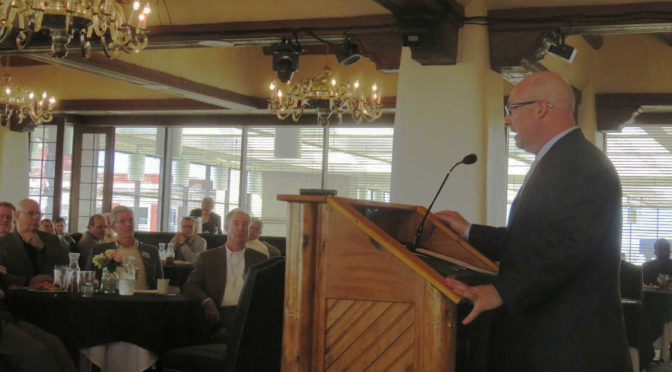
Topeka, Kan. — The Kansas chapter of Americans for Prosperity Foundation is pleased to announce that bestselling author and columnist Jonah Goldberg will speak in Topeka this week.

Goldberg, an American Enterprise Institute fellow, will address issues of government overreach, and heavy reliance on government, as well as high taxation and over spending.

“Americans are waking up to the fact that our federal government is encroaching further and further into our daily lives,” said AFPF-Kansas State Director Jeff Glendening. “We’re excited to bring Jonah to Kansas to speak to our AFPF citizen leaders, as well as legislators, about this issue and the effects of high taxation and government over spending on everyday citizens.”

Those attending the AFPF-Kansas luncheon will also have the opportunity to hear from AFP Foundation State Policy Manager Nicole Kaeding on Medicaid expansion, and Wichita’s leading conservative talker, radio host Joseph Ashby.

Friday’s luncheon is open to the public, but registration is required. To attend, please register online at afpfks-jonahgoldberg.eventbrite.com.

For those in Wichita, there is a bus trip available. The bus will leave Wichita at 8:30 am and return at 4:00 pm. More information is available when you register.

{ 0 comments }

Joseph Ashby Show: Mayor Carl Brewer and cronyism

by Bob Weeks on April 23, 2013

Today on the Joseph Ashby Show, the host had a few comments regarding a television news story about Wichita Mayor Carl Brewer. An excerpt follows.

Joseph Ashby Show, April 23, 2013 (excerpt)

The KAKE TV news story referred to may be seen here. Background on this issue is here.

{ 0 comments }

Today on the Joseph Ashby Show, the host had a few comments on Wichita Mayor Carl Brewer. An excerpt follows.

Joseph Ashby Show, April 17, 2013 (excerpt)

The video Joseph played audio from is here, and a longer video of the issue is here.

{ 3 comments }

If you ask Wichita Mayor Carl Brewer to live up to the policies he himself promotes, you might be threatened with a lawsuit. Video here, or below. A related story is Ambassador Hotel Industrial Revenue Bonds.

{ 3 comments }

Well-intentioned policies do more harm than good

by Bob Weeks on February 7, 2013

By Derrick Sontag, Americans for Prosperity-Kansas. A version of this appeared in the Wichita Eagle.

Medicaid.gov Keeping America Healthy

Governor Brownback and legislators in Kansas must make an important decision this legislative session. Following the Supreme Court’s ruling in June 2012, Kansas must decide whether it will vastly expand its Medicaid rolls. Adding hundreds of thousands of Kansas residents to Medicaid is the exact wrong policy for our state.

The desire to expand Medicaid is well-intentioned, but will do more harm than good. The plan ignores the realities of the Medicaid system.

Medicaid is a broken, costly system traditionally serving low-income populations focusing on pregnant women, children and the disabled. Its expansion is a key component of the President’s health care law.

Unfortunately, Medicaid is rife with problems. Medicaid’s unique structure–jointly managed by the state and the federal government — results in subpar outcomes for covered families. Medicaid combines countless restrictions and paperwork requirements for providers while at the same time paying half of other insurance plans. This results in a lose-lose for providers, forcing many out of the Medicaid market. A recent study found 32 percent of Kansas doctors won’t accept new Medicaid patients.

These problems lead to even bigger problems for Medicaid patients and families. The health outcomes for Medicaid patients dramatically lag those on private insurance or Medicare. Study after study has confirmed these results.

Adding hundreds of thousands of people to this system will only make these problems worse and does not qualify as real health reform.

Even if Medicaid wasn’t a broken system, Kansas can’t afford to expand coverage.

The federal government is making gigantic promises to encourage states to comply. According to the President’s health care law, the federal government will pay 100 percent of expenses for newly eligible individuals for the first three years stepping down to 90 percent by 2020.

This seems like a great deal for Kansas. The state can leverage federal funding to provide for its residents. But not so fast.

The federal government can’t afford these promises. The President himself has twice suggested the government cut its reimbursement to states due to the high costs imposed. Even if the government honors its generous promises, Kansas taxpayers will pay an additional $525 million in the next 10 years just for this expanded population.

By refusing to create a health insurance exchange last year, Gov. Brownback admitted the health care law won’t result in better care or better outcomes for patients. Expanding Medicaid, while well-intentioned, is just another flawed health care idea coming from Washington.

Instead of subject Kansas to a broken, costly system, Kansas’ leaders should refuse to expand the Medicaid rolls in the Sunflower State.

{ 0 comments }

Bill would end taxpayer-funded lobbying in Kansas

by Bob Weeks on February 4, 2013

Kansas lobbyist expenditure report

A bill has been introduced in the Kansas Senate that would end or limit taxpayer-funded lobbying.

The heart of this bill, SB 109, is “No public funds may be used directly or indirectly for lobbying. No public funds may be used to pay membership dues to an association that is engaged in lobbying the state. Public funds shall not be used for the purpose of employing or contracting for the service of any person whose duty and responsibility includes lobbying.”

Taxpayer-funding lobbying is one of the worst excesses of government. Commenting on the revelation that TARP bailout funds were spent on lobbying, David Boaz wrote:

It’s bad enough to have our tax money taken and given to banks whose mistakes should have caused them to fail. It’s adding insult to injury when they use our money — or some “other” money; money is fungible — to lobby our representatives in Congress, perhaps for even more money.

Get taxpayers’ money, hire lobbyists, get more taxpayers’ money. Nice work if you can get it.

Later in the same article he wrote: “Taxpayers shouldn’t be forced to pay for the very lobbying that seeks to suck more dollars out of the taxpayers.”

Locally, Americans for Prosperity-Kansas wrote this last year:

Taxpayer-funded lobbying reform has been a part of AFP-Kansas’ legislative agenda for a number of years. Back in 2007, we conducted a statewide open records request to find out just how many government entities and associations were using tax dollars to lobby the legislature for more tax dollars. We had a hard time getting answers. Many local governments were part of such associations that regularly lobby, but few were willing to recognize that it was tax dollars paying for those memberships, and tax dollars helping fund the organizations’ lobbying efforts.

Fighting the endless cycle of taxpayer-funded lobbying has been a part of this organization’s mission for years, so we welcomed news this week that the Brownback Administration is trying to do something about it. The Kansas Department of Social and Rehabilitation Services is changing language to its contracts in an effort to tighten restrictions on taxpayer-funded lobbying by state contractors.

This is certainly an important step, but more can be done. AFP-Kansas will continue to push for legislation restricting taxpayer-funded lobbying in all forms. Unless we are able to achieve serious reforms, the culture of “more is never enough” under the capitol dome is sure to continue.”

Taxpayer-funded lobbying can be very expensive in two ways: First, the cost of performing the lobbying, and secondly, the cost of the government spending that the lobbyists seek.

And that lobbying can be expensive, successful or not. The lobbyist for USD 259, the Wichita public school district is paid $99,588 per year, according to records at Kansas OpenGov. Since she spends much time in Topeka (that’s where the money is), there’s surely much additional travel and lodging expense.

Oh, and she’s not really a lobbyist. That’s a crude word to use to describe someone who’s only working for the kids, as the school district tells us. Instead, she’s Director of Governmental Affairs.

Either way, we’ll all be better off if we don’t have to pay for government lobbying government.

{ 3 comments }

Reaction to Kansas State of the State Address, 2013

by Bob Weeks on January 16, 2013

Governor Sam Brownback delivered his State of the State Address on January 15, 2013. The as-prepared text of the address may be read here.

Americans for Prosperity-Kansas:

“Americans for Prosperity-Kansas continues to support the eventual elimination of the income tax in Kansas, and we applaud Gov. Brownback for making this a priority in 2013″” said AFP-Kansas state director Derrick Sontag. “We would support a trigger mechanism for future rate reductions in the proposal rather than legislators continuing to seek a reduction in the rate every year.

“We have no doubt that continued reductions in the income tax rate will help create economic activity, expand the tax base and create jobs.

“We’re coming off a years-long cycle in which excessive government spending stifled Kansas families and resulted in stagnant population growth, taxpayers migrating to other states, and the loss of tens of thousands of private sector jobs. The Governor said it best when he pointed out that some choose to grow spending rather than jobs.

“We look forward to working with legislators and the Governor in the coming session on other important areas of reform such as judicial selection — giving citizens of Kansas more direct input in the judges who sit on the Kansas Supreme Court and Kansas Court of Appeals. Senate confirmation or elections of judges would certainly create a more transparent process that is accountable to the people.”

Senate Democratic Leader Anthony Hensley and House Democratic Leader Paul Davis issued the following statement. Hensley is wrong about the school spending figures, as I report in Kansas Democrats wrong on school spending.

“Governor Brownback’s $2.5 billion dollar self-inflicted budget shortfall, a result of his irresponsible tax policy, has brought Kansas to the edge of its own fiscal cliff. He has brought Washington, D.C. politics to Kansas, and they do not belong here,” said Hensley. “Four months into office, he signed the single largest cut to public education in Kansas history. In just three school years, statewide funding for K-12 education was cut nearly $442 million, or a cut of $620 per child. It is no surprise that a three-judge panel issued its ruling last Friday that the Legislature isn’t meeting its K-12 school funding duty under the Kansas Constitution. Members of the Legislature took an oath just yesterday swearing to uphold the Constitution of Kansas. What is our oath worth if we renege on our constitutional duty to adequately and fairly fund our schools?”

The 2013 legislative session will likely be marked by three major issues: a budget deficit created by tax breaks for the wealthy and big corporations, a court order to restore funding to Kansas public schools and a fundamental debate over checks and balances in Kansas.

“Democrats want to be part of the solution to this problem, but we cannot support proposals that make the gap between the rich and the middle class even wider. The most troubling part of the Brownback Agenda is the extent to which it brings Washington-style politics to Kansas. We need Kansas based solutions to our Kansas problems, which means funding for Kansas schools, lower property taxes, and proposals to create good paying jobs for middle class families,” said Davis.

Some tweets:

Someone doesn’t understand the difference between “deductible” and “refundable”:

{ 1 comment }

TOPEKA, KAN — The Kansas chapter of the grassroots group Americans for Prosperity applauds the Sedgwick County Commission for rejecting the proposed tax-increment financing (TIF) district for the Bowllagio development in Wichita.

“We are pleased that Sedgwick County commissioners unanimously voted against public funding for this entertainment development,” said AFP-Kansas grassroots coordinator Susan Estes. “Commissioners apparently realized it wasn’t a good deal for taxpayers in Wichita and Sedgwick County.”

Estes said this proposed development was another example of a developer receiving several layers of public financing, and that additional public financing would give the Bowllagio developers an unfair advantage over competing businesses.

“Those who will benefit from today’s vote are the taxpayers and the existing businesses who have worked for years to invest in this community,” she said. “This would have been just another example of government picking winners and losers in the marketplace.”

Although some may say today’s vote was a “win” for opponents of the TIF district, Estes says it was more of a win for good government.

“This isn’t a victory in the traditional sense,” she said. “The bottom line is, we believe the Sedgwick County Commissioners today acted in the best interests of their constituents.”

From Americans for Prosperity-Kansas.

{ 1 comment }

Debunking the debunkers on taxes and growth

by Guest Author on August 16, 2012

By Americans for Prosperity State Policy Manager Nicole Kaeding

While Congress and the President currently debate the best path to hold off the upcoming fiscal cliff, many states across the country have already tackled similar challenges this year. Some states took up the challenge of passing tax reform, but others decided to follow failed tax-and-spend policies. The hard-fought battles for lower tax rates and broader tax bases will benefit taxpayers and businesses struggling in this weak economic recovery. Instead of applauding these changes, opponents have relied on a faulty analysis to claim that lower taxes do not promote economic growth.

Two states, Kansas and Maryland, illustrate the diametrically opposed views. In Kansas, lawmakers fought to secure the largest tax cut in the state’s history. The state is consolidating its three income tax brackets into two, lowering their rates to 4.9 percent and 3.5 percent, and also cutting rates for small business owners. In Maryland, on the other hand, the state dramatically increased taxes on the so-called “rich” instead of cutting their bloated state budget. The Old Line State’s tax change raises rates on those making more than $100,000 a year to an astounding 8.95 percent.

Opponents in Kansas and other states looking to lower tax rates, such as Nebraska and Oklahoma, argued that lower tax rates do not encourage economic growth. They argue that empirical results do not show the benefits of lower tax rates. But, their analyses rely on selective samples and counterintuitive methods.

One such study was published in February by the Institute on Taxation and Economic Policy (ITEP) titled “High Rate Income States are Outperforming No-Tax States.” The study claims that nine states with high income taxes grew faster than nine with no income taxes whatsoever.

The study compares the real growth in per capita GDP. The nine high-tax states grew by 10.1 percent versus 8.7 percent for no-tax states, they claim, but there are several problems with this analysis.

First, one of the high-tax states is Oregon, which grew by more than 25 percent. Oregon’s growth is solely attributable to one company, Intel. From 2000 to 2010, the subcategory of real GDP which contains Intel’s economic contributions grew by 1,450 percent. That dramatic growth will pull any average upward. Ironically, one of the reasons Intel is located in Oregon is the state government’s massive tax subsidies sheltering it from their high taxes. These tax credits and subsidies are an explicit acknowledgment that the Beaver State’s tax climate is uncompetitive.

Similar arguments can be made for other high-tax states like Maryland, which is home to numerous government agencies and contractors which fuel the states’ economy. Maryland’s economy has grown rapidly in recent years — not because of its private sector, but because of its proximity to a seemingly unlimited pot of wasteful government spending in Washington, D.C.

Additionally, ITEP’s analysis relies on per capita growth rates. In general, there is no problem with utilizing per capita growth rates, as they show the benefit of economic growth to each citizen. In this case, however, the nine high-tax states are experiencing much slower population growth than the nine no-tax states. During the decade of 2000 to 2010, the no-tax states’ population grew almost three times faster than the high-tax states. As such, growth on a per capita basis will happen slower in any state whose population is growing that rapidly. On paper, the high-tax states are in essence benefiting from individuals fleeing destructive tax climates.

Recalculating the analysis using real GDP figures from 2000 to 2010 for the same groups of nine states illustrates the argument for low income taxes. During that time period, the nine no income tax states grew by 26 percent — well above the national average of 19 percent. The nine high-tax states grew by only 17.8 percent.

Further, much more determines a state’s competitiveness than personal income tax rates. States compete on a multitude of tax rates, like sales or corporate income, as well as low tax complexity. For instance, there are more than 9,600 sales tax jurisdictions within the fifty states. An item as simple as a candy bar could be taxed at numerous rates in one state based on whether its primary ingredient is sugar or flour. Studies that ignored these realities are far from convincing.

By reforming tax systems, individuals and businesses are able to keep more of their hard-earned money, increasing their ability to spend and save, as well as increase their incentive to earn more. While not all things are within the control of state lawmakers, they can work to create a welcoming environment for economic growth. Instead of relying on faulty analysis, states should follow the lead of Kansas and reform tax rates for all of their residents.

{ 0 comments }

Steve Rose defends Kansas school spending

August 15, 2012

Attitudes toward Kansas public schools, or facts about them: Which is most important? For boosters of the Kansas school spending establishment, attitude is all that matters.

Read the full article →

In Kansas, rejecting left-wing Republicans

August 8, 2012

Kansas voters have realized that the governance of Kansas by a coalition of Democrats and left-wing Republicans has not been in the state’s best interest.

Read the full article →

Money flows to Kansas elections

August 3, 2012

The issue of third-party money involvement in Kansas elections has been a concern to many. Kansas Watchdog reports and draws the map.

Read the full article →

Looking for Senator Reasonable

July 2, 2012

Where are reasonable Kansas Senate leaders, asks Alan Cobb of Americans for Prosperity Foundation.

Read the full article →

Wichita city council should not accept raise

June 5, 2012

Wichita city council should not accept raise

Read the full article →

Kansas and Wichita quick takes: Thursday May 10, 2012

May 10, 2012

Today: Kansas tax reform; School funding; Separation of art and state; Stimulus spending; Elizabeth Warren; Drug court to be Pachyderm topic; Failure of socialism to be shown; Yes we can! No they can’t!

Read the full article →

Obama’s wasteful spending highlighted

April 27, 2012

The American people deserve to know the disturbing details of how their tax dollars are being wasted in pursuit of an ideological agenda, says AFP President Tim Phillips.

Read the full article →

Kansas and Wichita quick takes: Wednesday April 25, 2012

April 25, 2012

Today: Income growth in Kansas and Sedgwick County; Tax reform is needed in Kansas; Protect us from onion prices; Silencing ALEC; TSA in Wichita, and in general; An extra comma; If I wanted America to fail.

Read the full article →

In Kansas, tax reform is about job creation

April 25, 2012

Two groups working to create a more competitive economic environment in Kansas are Americans for Prosperity, Kansas and Kansas Policy Institute. Their video commercial from earlier this year that explains the urgent situation in Kansas is below.

Read the full article →

Kansas and Wichita quick takes: Monday April 2, 2012

April 2, 2012

Today: Action on sustainability; Economic development through competitiveness; Those populist Pachyderms; We just don’t understand, they say; Colleges indoctrinate students; Job creation; Markets: exploitation or empowerment?

Read the full article →

For Koch critics, facts aren’t part of the equation

April 2, 2012

A newspaper editorial begins with “What is it, or why is it, that the name Koch, particularly here in Lawrence and Kansas, seems to trigger such angry, passionate and negative responses from a certain segment of the community, particularly among some at Kansas University?” It’s a good question.

Read the full article →

Sustainable development presented in Wichita

March 30, 2012

Information, including an audio presentation, is available regarding sustainable development planning and U.N. Agenda 21 in Kansas.

Read the full article →

Kansas and Wichita quick takes: Friday March 30, 2012

March 30, 2012

Today: Lee Fang: wrong again; Action on sustainability; Economic fascism; Immigration.

Read the full article →

Mike Pompeo: We need capitalism, not cronyism

March 1, 2012

A big obstacle on the path to restoring limited government in America is cronyism, writes U.S. Representative Mike Pompeo.

Read the full article →

Wichita, Kansas voters reject corporate welfare and cronyism

March 1, 2012

Tuesday, Kansas voters made a bold statement, rejecting a plan favoring cronyism and big government, instead choosing to take a stand for fiscal responsibility.

Read the full article →

Obama fundraising on anti-Koch obsession

February 25, 2012

President Barack Obama’s election campaign uses obsession as a fundraising tool.

Read the full article →

Why vote no in the Wichita Ambassador Hotel election

February 21, 2012

In the Wichita Ambassador Hotel special election, there are many reasons to vote no for the good of Wichita.

Read the full article →

Kansas and Wichita quick takes: Monday January 9, 2012

January 9, 2012

Today: Wichita City Council; Kansas House Speaker speaking in Wichita; Legislature starts; State of the State address; Kansas State Sovereignty Rally; Making Economics Come Alive.

Read the full article →

For Koch Industries, New York Times’ vendetta is never-ending

January 9, 2012

The New York Times continues its vendetta against Wichita-based Koch Industries.

Read the full article →

Kansas and Wichita quick takes: Wednesday December 14, 2011

December 14, 2011

Today: Property rights in Wichita; Importance of open records; Wichita city news; Cronyism in America.

Read the full article →

Kansas and Wichita quick takes: Wednesday December 7, 2011

December 7, 2011

Today: Wichita petitions; Petitions being contested; Smart Taxpayers Exposing Waste; Planning grant to be topic of meeting; Kansas history writer to speak; Wichita City Council.

Read the full article →

Wichita petition goal met

December 5, 2011

Today, Americans for Prosperity and volunteers like me will turn in what they believe is enough signatures to meet the constitutional requirement for protesting a Wichita city charter ordinance.

Read the full article →

Kansas and Wichita quick takes: Wednesday November 23, 2011

November 23, 2011

Today: Standing up for fundamental liberties; Private property saved the Pilgrims; Did Grover Norquist derail the Supercommittee; Drive-through petition signing; Job creation; Experts.

Read the full article →

Kansas and Wichita quick takes: Thursday November 10, 2011

November 10, 2011

Today: Occupy Wall Street; Johnson Controls; Save-A-Lot store opens; Teacher pay; Ranzau, Skelton to speak; Making economics come alive; Economics in two minutes.

Read the full article →

Kerpen on Obama’s regulatory extremism

October 20, 2011

A new book details the ways that President Obama is bypassing Congress and the will of the people in order to implement his extreme radical agenda.

Read the full article →

Kansas and Wichita quick takes: Monday October 10, 2011

October 10, 2011

Today: AFP meeting features former Congressman Tiahrt; Government planning; Longwell joins Democrats to defeat Republicans; Optimal size of government; Steve Jobs; Lieutenant Governor in Wichita; When governments cut spending.

Read the full article →

Kansas and Wichita quick takes: Friday September 23, 2011

September 23, 2011

Today: Downtown Wichita site launched; Keystone pipeline hearing, bus trip; Health care reform; Pompeo defends against Obama’s attack on aviation; Wichita corporate welfare opposed; The trap of job creation.

Read the full article →

The resolve of the Wichita City Council

September 19, 2011

Despite her assessment of the will of the people of Wichita, The Wichita Eagle’s Rhonda Holman encourages the Wichita City Council to stick to its guns and do the opposite.

Read the full article →

Citizen activists launch protest petition in response to Wichita City Council vote on hotel development

September 14, 2011

Despite hearing from numerous local residents speaking in opposition to the project yesterday, the Wichita City Council approved a number of public incentives for a hotel development in downtown Wichita. In response, the Wichita chapter of the grassroots group Americans for Prosperity plans to work to overturn part of the incentive package.

Read the full article →

Kansas and Wichita quick takes: Friday September 9, 2011

September 9, 2011

Today: A citizen call to action; Troubles with Kansas City tax increment financing; Effects of stimulus on hiring; Kansas education summit; Why should conservatives like libertarian ideas?

Read the full article →

Our Downtown Wichita launched

September 2, 2011

As part of an effort to provide information about the Douglas Place project, a proposed renovation of a downtown Wichita office building into a hotel, Americans for Prosperity, Kansas has created a website. The site’s motto is “Limited government and free markets in Downtown Wichita benefit everyone. Centralized planning and crony capitalism benefit only a few.”

Read the full article →

Kansas and Wichita quick takes: Friday July 22, 2011

July 22, 2011

Today: Republican populism; Cost of space shuttle; Raj Goyle spotted; Media Mogul Charged with First Degree Murdoch; Authority to adjust KPERS benefits; Kansas health insurance exchange; A new day in politics?

Read the full article →