Wind power

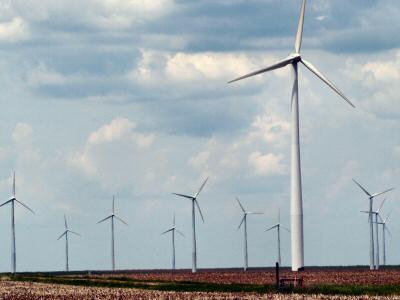
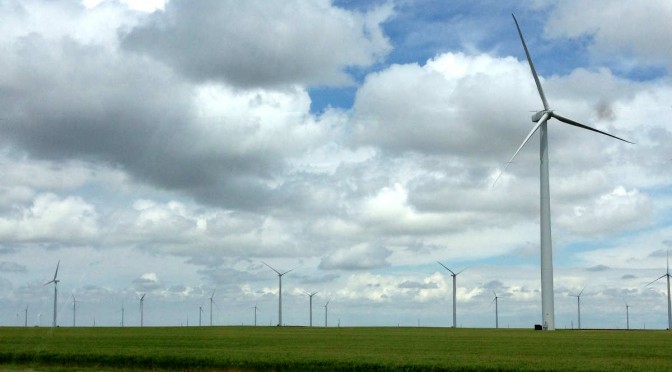
Kansas wind turbines

A report submitted to the Kansas House Standing Committee on Energy and Environment claims the Kansas economy benefits from the state’s Renewables Portfolio Standard, but an economist presented testimony rebutting the key points in the report.

RPS is a law that requires the state’s electricity utilities to generate or purchase a certain portion of their electricity from renewable sources, which in Kansas is almost all wind. An argument in favor of wind energy requirementy from the Polsinelli Shugart law firm is at The Economic Benefits of Kansas Wind Energy.

Michael Head, a Research Economist at Beacon Hill Institute presented a paper that examined each of Polsinell’s key findings. The paper may be read at The Economic Impact of the Kansas Renewable Portfolio Standard and Review of “The Economic Benefits of Kansas Wind Energy” or at the end of this article. An audio recording of Head speaking on this topic is nearby.

Michael Head, Beacon Hill Institute

Here are the five key findings claimed to be economic benefits to the Kansas economy, and portions of Head’s responses.

Key Finding #1: “New Kansas wind generation is cost-effective when compared to other sources of new intermittent or peaking electricity generation.”

The first observation to make from this key finding is that if it were true the state RPS policy is not necessary. If wind power is truly cost-effective compared to other sources of energy, state mandates that wind power be used should be repealed, allowing wind power to compete with other technologies to provide low cost electricity in Kansas.

This point is obvious. The actions of the wind power industry — insisting on mandates and subsidies — lets us know that they don’t believe their own claim.

Key Finding #2: “Wind generation is an important part of a well-designed electricity generation portfolio, and provides a hedge against future cost volatility of fossil fuels.”

Hedging has been, and will continue to be, a useful tool for utilities, and benefits the consumer. But the Kansas state government should not engage in this level of industrial policy by regulating just how much utilities can hedge, all for the sake of requiring wind power production. This is not a benefit in itself. Utilities will attempt to maximize profits by consistently analyzing the energy market and making the best decisions, often through long term purchasing agreements. … In short, hedging is a valuable tool when left to the discretion of the utility, but by utilizing a heavy-handed mandate, state lawmakers are actually constraining the ability of the utilities to make sound business decisions.

Key Finding #3: “Wind generation has created a substantial number of jobs for Kansas citizens.”

This key finding fails to take into consideration opportunity costs, a concept that Bastiat explained in his 1850 essay, and is a prime example of the reviewed paper only considering benefits. If a shopkeeper has a window broken, this creates work for a glazer to replace the window. However, this classic “broken window” fallacy mistakes breaking windows as job creation policy. At this point “The Economic Benefits of Kansas Wind Energy” is correct, wind generation does create jobs, just as a broken window creates jobs. But the report stops at this point and fails to provide a complete analysis of the effect of wind generation on total employment in Kansas.

As Bastiat showed, a consideration must be made to the opportunity cost. How would the shopkeeper have spent his money if he did not need to replace his window? He could use the money on capital investment, further growing his business, hire another worker or make various other purchases. Regardless of what it was, they would have all brought him more benefit, than replacing his window. If not, he would have broken the window himself.

This is one of the most important points: By forcing Kansans to pay for more expensive electricity, we lose the opportunity to use money elsewhere.

Key Finding #4: “Wind generation has created significant positive impact for Kansas landowners and local economics.”

This key finding makes a common mistake by assuming transfer payments are a benefit, a fallacy. The transfers of money via lease payments or property tax payments are not benefits. This transfer of money is a cost to one party and a benefit on the other, and can be illustrated easily.

What if Kansas wind farms vastly overpaid for their land and lease payments were valued at $1 billion a year. This report would place the benefit of wind power leasing this land at $1 billion a year. But the project has not changed, where did these new benefits come from?

In fact, there would not be any change to the net benefit of the project. Landowners would amass benefits equal to $1 billion minus the land value and utilities would amass costs equal to $1 billion minus the land value. These costs would in turn be passed along to rate payers in the form of higher utility costs. This illustrates the point that this policy is industrial policy. By dispersing the costs of a project to all citizens in the state, small, but powerful, groups with strong lobbying efforts are able to gather the rewards.

Key Finding #5 “The Kansas Renewable Portfolio Standard is an important economic development tool for attracting new business to the state.”

This key finding is related closely with the analysis of the job benefits that wind power purportedly conveys. Of course, legally requiring that utilities use specific sources of electricity will attract new business in that sector to the state. But we need to see the whole picture. This policy has costs, which will be borne by state residents and businesses via higher utility prices.

In conclusion, Head asked the obvious question: “With all of these supposed benefits of wind power, why does it require a government mandate and taxpayer funding?”

{ 2 comments }

Wind tax credit promotes expensive electricity

by Bob Weeks on December 13, 2012

Conservative and free-market groups are asking Congress to oppose extending the Production Tax Credit for production of electricity from wind.

The letter, presented below, is designed for representatives from states that don’t have a Renewable Portfolio Standard, which is a policy or law that requires a certain amount of electricity to be produced from renewable sources, which is primarily wind in most places. Kansas has an RPS, and Governor Sam Brownback actively supports maintaining this standard, which will require that more Kansas electricity be produced from wind. Kansas Policy Institute has found that RPS will result in higher electricity costs, fewer jobs, and less investment in Kansas. Its summary is at The Economic Impact of the Kansas Renewable Portfolio Standard, and the full report is here.

The letter points out that the PTC has the effect of transferring subsidy from states without RPS to those states, like Kansas, that do.

December 12, 2012
Dear Members of Congress:

We write to urge your opposition to extending the wind Production Tax Credit (PTC). Created in 1992 by the Energy Policy Act, the PTC has far outlived its usefulness. Moreover, as a member of Congress serving a state that does not have a renewable energy mandate, you should be aware that the PTC essentially transfers taxpayer dollars from your constituents and subsidizes the states with such mandates. Renewable energy mandates force utilities to buy politically-favored forms of energy such as wind, while your state has wisely chosen to allow the most abundant and affordable forms of energy to be purchased by consumers and industries.

The wind PTC provides a tax credit of 2.2 cents per kilowatt-hour, and lasts for ten years for anyone receiving it. With the wholesale price of electricity frequently ranging from 2.5 to 4.5 cents per kilowatt-hour, the PTC is worth a large percentage of the total price. This makes the wind industry one of the most heavily subsidized forms of energy. In 2010, federal subsidies paid $56 for every megawatt hour of wind energy compared to $0.64 for coal and natural gas electricity.

Despite having this generous subsidy for two decades, wind only produces 3 percent of America’s electricity. This corporate dependence on federal subsidies not only harms the taxpayers who finance the PTC, it also creates an improper incentive for wind companies to focus on obtaining lucrative subsidies rather than long-term sustainability and competitiveness. It is time the wind energy industry stood on its own and continued funding by the federal government will only hurt cost-effective energy sources as well as American taxpayers.

Lastly, for the twenty-one states that do not have a renewable energy mandate in place — states like your own — the stakes are much higher. Under the structure of the PTC, the bulk of the tax credits flow to those states that have the most wind generation capacity and those happen to be states with an RPS. This is because the PTC helps to disguise the true cost of the mandate. Extending the wind PTC ensures that your constituents will continue to subsidize wind power in other states that have made political decisions to force consumers to buy more expensive and less reliable forms of energy — like wind.

Reliable, affordable, and ‘always on’ electricity is critical to get our economy back on track. The wind PTC promotes unreliable and expensive energy to the detriment of dependable and cost-effective forms of electricity generation. By taking a principled stand against the PTC, you help taxpayers in your own state and ensure more cost-effective electricity generation overall. We urge you to allow this wasteful subsidy to expire, as planned, at the end of the year.

Freedom Action
Competitive Enterprise Institute
American Conservative Union
American Energy Alliance
Heritage Action
American Commitment

{ 0 comments }

Nation can no longer afford wind tax credit

by Bob Weeks on November 15, 2012

From The Hill:

Sen. Lamar Alexander (R-Tenn.) on Wednesday said the nation’s fiscal situation has become so dire that the government can no longer afford to maintain a wind power production credit that has been in place since in 1992.

“I think there is certainly the largest realization that we’ve ever had that it’s time for it to end,” Alexander said at a Wednesday event hosted by The Hill and sponsored by the American Energy Alliance.

In a longer story, The Hill reports on the efforts of U.S. Representative Mike Pompeo, a Republican representing the Kansas fourth district (Wichita metropolitan area and surrounding counties) to end the wind production tax credit:

Rep. Mike Pompeo (R-Kan.) said he hopes that conversation leads to the elimination of all energy subsidies.

Pompeo has led the House charge against the credit. He got 46 other House GOP members to sign a September letter urging Boehner to nix the provision.

Pompeo said the wind credit’s history is instructive when debating the benefits of tax carve-outs for specific industries.

He pointed to a steep decline in wind turbine installations when the credit last lapsed in 2004 as proof that subsidies distort markets and investment. And planned projects and investments already are down for next year as a result of the credit’s cloudy future.

“I think that’s further evidence that it’s non-economic,” Pompeo said.

Pompeo has been at the forefront of efforts to end subsidies that distort energy markets. He and Alexander recently contributed an op-ed to the Wall Street Journal, which may be read at Puff, the Magic Drag on the Economy: Time to let the pernicious production tax credit for wind power blow away. Pompeo also develops the argument in Governor Romney is right: End the wind production tax credit and Mike Pompeo: We need capitalism, not cronyism. The special interests that benefit from cronyism have struck back, but unsuccessfully: Kerr’s attacks on Pompeo’s energy policies fall short.

{ 1 comment }

We often see criticism of politicians for sensing “which way the wind blows,” that is, shifting their policies to pander to the prevailing interests of important special interest groups. The associated negative connotation is that politicians do this without regard to whether these policies are wise and beneficial for everyone.

So when a Member of Congress takes a position that is literally going against the wind in the home district and state, we ought to take notice. Someone has some strong convictions.

This is the case with U.S. Representative Mike Pompeo, a Republican representing the Kansas fourth district (Wichita metropolitan area and surrounding counties.)

The issue is the production tax credit (PTC) paid to wind power companies. For each kilowatt-hour of electricity produced, the United States government pays 2.2 cents. Wind power advocates contend the PTC is necessary for wind to compete with other forms of electricity generation. Without the PTC, it is said that no new wind farms would be built.

The PTC is an important issue in Kansas not only because of the many wind farms located there, but also because of wind power equipment manufacturers that have located in Kansas. An example is Siemens. That company, lured by millions in local incentives, built a plant in Hutchinson. Employment was around 400. But now the PTC is set to expire on December 31, and it’s uncertain whether Congress will extend the program. As a result, Siemens has laid off employees. Soon only 152 will be at work in Hutchinson, and similar reductions in employment have happened at other Siemens wind power equipment plants.

Rep. Pompeo is opposed to all tax credits for energy production, and has authored legislation to eliminate them. As the wind PTC is the largest energy tax credit program, Pompeo and others have written extensively of the market distortions and resultant economic harm caused by the PTC. A recent example is Puff, the Magic Drag on the Economy: Time to let the pernicious production tax credit for wind power blow away, which appeared in the Wall Street Journal.

The special interests that benefit from the PTC are striking back. An example comes from Dave Kerr, who as former president of the Hutchinson/Reno County Chamber of Commerce played a role in luring Siemens to Hutchinson. Kerr’s recent op-ed in the Hutchinson News is notable not only for its several attempts to deflect attention away from the true nature of the PTC, but for its personal attacks on Pompeo.

There’s no doubt that the Hutchinson economy was dealt a setback with the announcement of layoffs at the Siemens plant that manufactures wind power equipment. Considered in a vacuum, these jobs were good for Hutchinson. But we shouldn’t make our nation’s policy in a vacuum, that is, bowing to the needs of special interest groups — sensing “which way the wind blows.” When considering everything and everyone, the PTC paid to producers of power generated from wind is a bad policy. We ought to respect Pompeo for taking a principled stand on this issue, instead of pandering to the folks back home.

Kerr is right about one claim made in his op-ed: The PTC for wind power is not quite like the Solyndra debacle. Solyndra received a loan from the Federal Financing Bank, part of the Treasury Department. Had Solyndra been successful as a company, it would likely have paid back the government loan. This is not to say that these loans are a good thing, but there was the possibility that the money would have been repaid.

But with the PTC, taxpayers spend with nothing to show in return except for expensive electricity. And spend taxpayers do.

Kerr, in an attempt to distinguish the PTC from wasteful government spending programs, writes the PTC is “actually an income tax credit.” The use of the adverb “actually” is supposed to alert readers that they’re about to be told the truth. But truth is not forthcoming from Kerr — there’s no difference. Tax credits are government spending. They have the same economic effect as “regular” government spending. To the company that receives them, they can be used — just like cash — to pay their tax bill. Or, the company can sell them to others for cash, although usually at a discounted value.

From government’s perspective, tax credits reduce revenue by the amount of credits issued. Instead of receiving tax payments in cash, government receives payments in the form of tax credits — which are slips of paper it created at no cost and which have no value to government. Created, by the way, outside the usual appropriations process. That’s the beauty of tax credits for big-government spenders: Once the program is created, money is spent without the burden of passing legislation.

If we needed any more evidence that PTC payments are just like cash grants: As part of Obama’s ARRA stimulus bill, for tax years 2009 and 2010, there was in effect a temporary option to take the federal PTC as a cash grant. The paper PTC, ITC, or Cash Grant? An Analysis of the Choice Facing Renewable Power Projects in the United States explains.

Astonishingly, the wind PTC is so valuable that wind power companies actually pay customers to take their electricity. It’s called “negative pricing,” as explained in Negative Electricity Prices and the Production Tax Credit:

As a matter of both economics and public policy, no government production tax subsidy should ever be so large that it creates an incentive for a business to actually pay customers to take its product. Yet, the federal Production Tax Credit (“PTC”) for wind generation is doing just that with increasing frequency in electricity markets across the United States. In some “wind-rich” regions of the country, wind producers are paying grid operators to take their generation during periods of surplus supply. But wind producers more than make up the cost of the “negative price” payment, because they receive a $22/MWH federal production tax credit for every MWH generated.

In western Texas since 2008, wind power generators paid the electrical grid to take their electricity ten percent of the hours of each day.

Once we recognize that tax credits are the same as government spending, we can see the error in Kerr’s argument that if the PTC is ended, it is the same as “a tax increase on utilities, which, because they are regulated, will pass on to consumers.” Well, government passes along the cost of the PTC to taxpayers, illustrating that there really is no free lunch.

Kerr attacks Pompeo for failing to “crusade” against two subsidies that some oil companies receive: Intangible Drilling Costs and the Percentage Depletion Allowance. These programs are deductions, not credits. They do provide an economic benefit to the oil companies that can use them (“big oil” can’t use percentage depletion at all), but not to the extent that tax credits do.

Regarding these deductions, last year Pompeo introduced H. Res 267, titled “Expressing the sense of the House of Representatives that the United States should end all subsidies aimed at specific energy technologies or fuels.”

In the resolution, Pompeo recognized the difference between deductions and credits, the latter, as we’ve seen, being direct subsidies: “Whereas deductions and cost-recovery mechanisms available to all energy sectors are different than credits, loans and grants, and are therefore not taxpayer subsidies; [and] Whereas a deduction of costs and cost recovery with respect to timing is not a subsidy.”

Part of what the resolution calls for is to “begin tax simplification and reform by eliminating energy tax credits and deductions and reducing income tax rates.”

Kerr wants to deflect attention away from the cost and harm of the PTC. Haranguing Pompeo for failing to attack percentage depletion and IDC with the same fervor as tax credits is only an attempt to muddy the waters so we can’t see what’s happening right in front of us. It’s not, as Kerr alleges, “playing Clintonesque games of semantics with us.” As we’ve seen, Pompeo has called for the end of these two tax deductions.

If we want to criticize anyone for inconsistency, try this: Kerr criticizes Pompeo for ignoring the oil and gas deductions, “which creates a glut in natural gas that drives down the price to the lowest levels in a decade.” These low energy prices should be a blessing to our economy. Kerr, however, demands taxpayers pay to subsidize expensive wind power so that it can compete with inexpensive gas. In the end, the benefit of inexpensive gas is canceled. Who benefits from that, except for the wind power industry? The oil and gas targeted deductions also create market distortions, and therefore should be eliminated. But at least they work to reduce prices, not increase them.

By the way, Pompeo has been busy with legislation targeted at ending other harmful subsidies: H.R. 3090: EDA Elimination Act of 2011, H.R. 3994: Grant Return for Deficit Reduction Act, H.R. 3308: Energy Freedom and Economic Prosperity Act, and the above-mentioned resolution.

I did notice, however, that Pompeo hasn’t called for the end to the mohair subsidy. Will Kerr attack him for this oversight?

Finally, Kerr invokes the usual argument of government spenders: Cut the budget somewhere else. That’s what everyone says.

Creating entire industries that exist only by being propped up by government subsidy means that we all pay more to support special interest groups. A prosperous future is best built by relying on free enterprise and free markets in energy, not on programs motivated by the wants of politicians and special interests. Kerr’s attacks on Pompeo illustrate how difficult it is to replace cronyism with economic freedom.

{ 7 comments }

Pompeo: Wind production tax credit should expire

by Guest Author on September 20, 2012

U.S. Representative Mike Pompeo, a Republican who represents the Kansas fourth district, and U.S. Senator Lamar Alexander contribute the following article on the harm of the wind power production tax credit (PTC). The NorthBridge Group report referenced in the article is available at Negative electricity prices and the production tax credit.

Puff, the Magic Drag on the Economy
Time to let the pernicious production tax credit for wind power blow away

By Lamar Alexander And Mike Pompeo

As Congress works to reduce spending and avert a debt crisis, lawmakers will have to decide which government projects are truly national priorities, and which are wasteful. A prime example of the latter is the production tax credit for wind power. It is set to expire on Dec. 31 — but may be extended yet again, for the seventh time.

This special provision in the tax code was first enacted in 1992 as a temporary subsidy to enable a struggling industry to become competitive. Today the provision provides a credit against taxes of $22 per megawatt hour of wind energy generated.

From 2009 to 2013, federal revenues lost to wind-power developers are estimated to be $14 billion — $6 billion from the production tax credit, plus $8 billion courtesy of an alternative-energy subsidy in the stimulus package — according to the Joint Committee on Taxation and the Treasury Department. If Congress were to extend the production tax credit, it would mean an additional $12 billion cost to taxpayers over the next 10 years.

There are many reasons to let this giveaway expire, including wind energy’s inherent unreliability and its inability to stand on its own two feet after 20 years. But one of the most compelling reasons is provided in a study released Sept. 14 by the NorthBridge Group, an energy consultancy. The study discusses a government-created economic distortion called “negative pricing.”

This is how it works. Coal- and nuclear-fired plants provide a reliable supply of electricity when the demand is high, as on a hot summer day. They generate at lower levels when the demand is low, such as at night.

But wind producers collect a tax credit for every kilowatt hour they generate, whether utilities need the electricity or not. If the wind is blowing, they keep cranking the windmills.

Why? The NorthBridge Group’s report (“Negative Electricity Prices and the Production Tax Credit”) finds that government largess is so great that wind producers can actually pay the electrical grid to take their power when demand is low and still turn a profit by collecting the credit — and they are increasingly doing so. The wind pretax subsidy is actually higher than the average price for electricity in many of the wholesale markets tracked by the Energy Information Administration.

This practice drives the price of electricity down in the short run. Wind-energy supporters say that’s a good thing. But it is hazardous to the economy’s health in the long run.

Temporarily lower energy prices driven by wind-power’s negative pricing will cripple clean-coal and nuclear-power companies. But running coal and nuclear out of business is not good for the U.S. economy. There is no way a country like this one — which uses 20% to 25% of all the electricity in the world — can operate with generators that turn only when the wind blows.

The Obama administration and other advocates of wind power argue that the subsidy provided by the tax credit allows the wind industry to sustain American jobs. But they are jobs that exist only because of the subsidy. Keeping a weak technology alive that can’t make it on its own won’t create nearly as many jobs as the private sector could create if it had the kind of low-cost, reliable, clean electricity that wind power simply can’t generate.

While the cost of renewable energy has declined over the years, it is still far more expensive than conventional sources. And even the administration’s secretary of energy, Steven Chu, calls wind “a mature technology,” which should mean it is sufficiently advanced to compete in a free market without government subsidies. If wind power cannot compete on its own after 20 years without costly special privileges, it never will.

{ 7 comments }

Pickens changes his mind, again

by Bob Weeks on September 4, 2012

Energy investor T. Boone Pickens has changed his mind about government subsidy of energy markets — again.

Until recently Pickens has been promoting federal legislation titled H.R. 1380: New Alternative Transportation to Give Americans Solutions Act of 2011, or NAT GAS act. The bill provides a variety of subsidies, implemented through tax credits, to producers and users of natural gas. The goal is to promote the use of natural gas for a transportation fuel, particularly for long-haul trucks.

Now, according to reporting in Politico, Pickens said about the transition to natural gas “It’s going to happen, and you don’t have to have Washington do it, thank God.”

Later in the article Pickens is quoted as saying “You don’t have to have a tax credit; it’s going to happen.”

Before promoting subsidies for natural gas as a transportation fuel, Pickens actively promoted wind power, another form of energy production that receives government subsidy. In 2008 Pickens ordered 667 wind turbines worth $2 billion from General Electric. Now, in the Politico article, he concedes he lost a lot of money on this venture.

His plan, at that time, was to use wind power to generate electricity, and the natural gas saved would be used to power transportation. But there’s another relationship between wind power and gas, and it stems from the unreliability and variability of wind power. It’s difficult to quickly adjust the output of most power plants. But natural gas turbine plants are an exception. Kansas recently saw one of its major electric utilities complete a new natural gas power plant. The need for the plant was at least partly created by its investment in wind: A document produced by Westar titled The Greenhouse Gas Challenge noted the “Construction of the 665 MW natural gas-fired Emporia Energy Center, providing the ability to efficiently follow the variability of wind generation.” In another document announcing a request for a rate increase it stated “Our Emporia Energy Center is excellent for following the variability of wind production.”

At the time of these investments by Pickens and Westar, the price of natural gas was high. Now it is low — so low, and the prospects for future low prices certain enough — that Pickens has abandoned his wind farm projects. Even with all the subsidy granted to wind power, it’s cheaper to generate electricity with gas.

Let’s hope this is the last time Pickens develops a plan to tap the federal taxpayer to pay for his plans.

{ 2 comments }

U.S. Representative Mike Pompeo, a Republican who represents the Kansas fourth district, contributes the following article on the harm of government involvement in energy markets, wind power specifically. Pompeo has written extensively on energy; see Pompeo on energy tax simplification, Era of energy subsidies is over, and Free market energy solutions don’t jeopardize national security. He has also introduced legislation to end all tax credits for energy, H.R. 3308: Energy Freedom and Economic Prosperity Act.

There’s been a steady drumbeat from those seeking an extension of the wind production tax credit. For many reasons, including some that former Massachusetts Gov. Mitt Romney has carefully highlighted in his opposition, this is a bad idea.

First, an extension continues this unsettling policy trend in which citizens are asked to bear all the risks and gain none of the rewards. This socialization of risks and privatization of profits guarantees disasters, for corporate boards and even their federal overseers can become careless and, in some instances, reckless. This fact was clearly demonstrated by the Solyndra debacle — when a company with close ties to the Obama administration lost more than a half billion dollars of taxpayers’ money. At the heart of that fiasco was both the company and the administration’s indifference to the taxpayers.

Solyndra also revealed something else damaging about federal involvement in markets: the potential for political corruption. It’s clear that the Obama administration became emotionally, and inappropriately, invested in the fortunes of one company and one sector. When that happens, the system is compromised, cronyism flourishes and corruption is inevitable.

President Barack Obama talks about the need to “invest” in alternative energy sources. But the reality is that he is not investing his money — he’s spending yours. I’m not sure that too many Americans would choose the president to manage their retirement accounts. His record — a jobless and exceedingly shallow recovery — is not good.

With this production tax credit extension, the wisdom of the investment is especially dubious. Wind companies and their lobbyists have, for the last year, been telling all who would listen that the expiration of the tax credit could spell doom for their industry. Obama repeats this claim regularly on the campaign trail.

But what does that say about the industry? If you need a tax credit to compete, you are probably not that competitive.

Moreover, the tax credit is not de minimis for either taxpayers or companies that are lobbying for it. It will cost the taxpayers more than 12 billion dollars inside the budget window. Worse, the credit is set at 2.2 cents per kilowatt hour. Just to compare, the national average for produced power is around 6 cents per kilowatt hour. That means that the wind industry gets an almost 40 percent subsidy for each unit it produces. How many companies would like that?

You also have to remember that wind power enjoys a mandate in more than 30 states. That is, regardless of cost — or price to ratepayers — utilities must use wind or other renewables for specific amounts of power generation. So, the wind companies enjoy not only a tax credit, but a must-use mandate as well — regardless of cost.

It would be one thing if we were running out of natural gas and confronted a real national requirement to use alternative energy. But it’s the reverse. The United States has more traditional energy resources than anywhere else on Earth, according to the Congressional Research Service. With the surge in production from the shale formations, a new Barclays report just concluded, natural gas will likely dominate wind in the marketplace for the foreseeable future.

Even now, in places like Williston, N.D., companies are hiring everyone who can get there to work on rigs or in ancillary jobs. If the president is genuinely worried about jobs, maybe he should visit the Bakken in North Dakota, or the Marcellus in Pennsylvania or the Eagle Ford in Texas.

Using wind power to generate electricity is not a new idea. The first windmills used to generate electricity went up in the 19th Century. The production tax credit is also not a new idea. It is now about 20 years old.

Romney’s opposition to continuing the wind subsidy is absolutely correct. At some point, an industry has to either succeed or fail on its own merits.

For wind companies, we are at that point now.

{ 5 comments }

Renewable Portfolio Standard costly for Kansas

by Bob Weeks on August 28, 2012

A policy promoted by Kansas Governor Sam Brownback will result in higher electricity costs, fewer jobs, and less investment in Kansas.

This is the conclusion of a new study by Kansas Policy Institute and Beacon Hill Institute. The policy is Renewable Portfolio Standard, or RPS, which mandates that a minimum amount of a state’s electricity be produced by renewable sources. In Kansas, the primary renewable source of electricity is wind.

In a press release accompanying the report, KPI said “Renewable energy is more expensive than conventional energy, so government mandates are necessary to ensure that more renewable energy is purchased. However, the unseen consequences of well-intended efforts to increase energy independence are rarely considered. The authors estimate that by 2020, the average household’s electricity bill will increase by $660, approximately 12,000 fewer jobs will have been created, and business investment in the state will be $191 million less than without the mandate.” The press release and summary is at The Economic Impact of the Kansas Renewable Portfolio Standard, and the full report is here.

Brownback has supported, first as U.S. Senator and now Kansas Governor, renewable portfolio standards, mandating the production of wind power. U.S. Senator Jerry Moran favors the production tax credit that makes wind feasible, but forces taxpayers to subsidize an expensive form of energy. Together they penned an op-ed that tortures logic to defend the tax credits. Each has spoken out on his own on the national stage. See Brownback on wind, again and Wind energy split in Kansas.

Driving through western Kansas and marveling at all the wind farms might lead one to conclude that the efforts of Brownback and Moran are a success. Viewing the spinning turbines — when they are in fact spinning — is just the start of understanding the impact of wind power, mandates for its use, and taxpayer subsidy for its production. The KPI report is an important document that lets us understand more of the full effect of renewable portfolio standards.

{ 3 comments }

Energy subsidies exposed

by Bob Weeks on August 20, 2012

On the campaign trail, President Barack Obama calls for an end to energy subsidies for the fossil fuel industry. It turns out, however, that this industry receives relatively little subsidy, while the president’s favored forms of energy investment — wind and solar — receive much more. Additionally, coal, oil, and gas industries paid billions in taxes to the federal government, while electricity produced by solar and wind are a cost to taxpayers.

Saturday’s Wall Street Journal piece The Energy Subsidy Tally: Wind and solar get the most taxpayer help for the least production gathers the facts: “The nearby chart shows the assistance that each form of energy for electricity production received in 2010. The natural gas and oil industry received $2.8 billion in total subsidies, not the $4 billion Mr. Obama claims on the campaign trail, and $654 million for electric power. The biggest winner was wind, with $5 billion. Between 2007 and 2010, total energy subsidies rose 108%, but solar’s subsidies increased six-fold and wind’s were up 10-fold.”

When looking at subsidy received per unit of power produced, the Journal found that oil, gas, and coal received $0.64 per megawatt hour, hydropower $0.82, nuclear $3.14, wind $56.39, and solar $775.64. Commented the Journal: “So for every tax dollar that goes to coal, oil and natural gas, wind gets $88 and solar $1,212. After all the hype and dollars, in 2010 wind and solar combined for 2.3% of electric generation — 2.3% for wind and 0% and a rounding error for solar. Renewables contributed 10.3% overall, though 6.2% is hydro. Some ‘investment.’”

In Kansas, there is disagreement among elected officials over wind power. Kansas Governor Sam Brownback and U.S. Senator Jerry Moran favor the production tax credit that makes wind feasible. Together they penned an op-ed that tortures logic to defend the tax credits. Each has spoken out on his own on the national stage. See Brownback on wind, again and Wind energy split in Kansas.

Brownback has also supported, at both federal and state levels, renewable portfolio standards. These in effect mandate the production of wind power. Recently Kansas Policy Institute produced a report that details the harmful effect of this law: “Renewable energy is more expensive than conventional energy, so government mandates are necessary to ensure that more renewable energy is purchased. However, the unseen consequences of well-intended efforts to increase energy independence are rarely considered. The authors estimate that by 2020, the average household’s electricity bill will increase by $660, approximately 12,000 fewer jobs will have been created, and business investment in the state will be $191 million less than without the mandate.” See The Economic Impact of the Kansas Renewable Portfolio Standard.

In Wichita, Mayor Carl Brewer is recruiting wind power companies to come to Wichita. If he is successful, you can be sure it will be at great cost to Kansas and Wichita taxpayers.

Contrast with the position taken by U.S. Representative Mike Pompeo, a Republican who represents the Kansas fourth district, which includes the Wichita metropolitan area. Recently he wrote: “Supporters of Big Wind, like President Obama, defend these enormous, multi-decade subsidies by saying they are fighting for jobs, but the facts tell a different story. Can you say ‘stimulus’? The PTC’s logic is almost identical to the President’s failed stimulus spending of $750 billion — redistribute wealth from hard-working taxpayers to politically favored industries and then visit the site and tell the employees that ‘without me as your elected leader funneling taxpayer dollars to your company, you’d be out of work.’ I call this ‘photo-op economics.’ We know better. If the industry is viable, those jobs would likely be there even without the handout. Moreover, what about the jobs lost because everyone else’s taxes went up to pay for the subsidy and to pay for the high utility bills from wind-powered energy? There will be no ribbon-cuttings for those out-of-work families.”

Pompeo has introduced legislation in Congress that would end tax credits for all forms of energy production. See H.R. 3308: Energy Freedom and Economic Prosperity Act.

The Energy Subsidy Tally
Wind and solar get the most taxpayer help for the least production.

President Obama traveled to Iowa Tuesday and touted wind energy subsidies as the path to economic recovery. Then he attacked Mitt Romney as a tool of the oil and gas industry. “So my attitude is let’s stop giving taxpayer subsidies to oil companies that don’t need them, and let’s invest in clean energy that will put people back to work right here in Iowa,” he said. “That’s a choice in this election.”

There certainly is a subsidy choice in the election, but the facts are a lot different than Mr. Obama portrays them. What he isn’t telling voters is how many tax dollars his Administration has already steered to wind and solar power, and how much more subsidized they are than other forms of electricity generation.

Continue reading at the Wall Street Journal (subscription required)

{ 2 comments }

Brownback on wind, again

June 7, 2012

This week Kansas Governor Sam Brownback again made the case for extending the production tax credit for wind power.

Read the full article →

Five questions with Mike Pompeo

May 31, 2012

U.S. Representative Mike Pompeo from Wichita explains his opposition to tax credits for all energy production, the problems with over-regulation of business, and the state of the economic recovery.

Read the full article →

Pompeo: Ending tax credits for energy doesn’t violate pledge

May 14, 2012

In a news conference last week, U.S. Representative Mike Pompeo of Wichita and two others criticized President Barack Obama for misunderstanding of the meaning of a taxpayer protection pledge that Pompeo has signed.

Read the full article →

Wind tax credits are government spending in disguise

March 29, 2012

Wind power tax credits are government spending in disguise, despite the mistaken beliefs of Kansas Governor Sam Brownback and U.S. Senator Jerry Moran of Kansas regarding the economic effect of tax credits that benefit the wind power industry.

Read the full article →

Brownback, Moran wrong on wind tax credits

March 19, 2012

Kansas Governor Sam Brownback and U.S. Senator Jerry Moran of Kansas are mistaken regarding the economic effect of tax credits that benefit the wind power industry.

Read the full article →

Wind energy split in Kansas

March 7, 2012

Kansas politicians are split over the the government’s subsidy programs for wind energy.

Read the full article →

Kansas Senator Jerry Moran wants to pick losers in the market: His choice is big wind

February 22, 2012

U.S. Senator Jerry Moran of Kansas promotes government subsidy for wind power.

Read the full article →

An ill wind blows in Kansas: The politics of renewable energy

February 13, 2012

Kansas Representative Charlotte O’Hara, who represents Kansas House District 27 in southern Johnson County, offers a look at the politics surrounding wind power in Kansas.

Read the full article →

Kansas and Wichita quick takes: Friday December 9, 2011

December 9, 2011

Today: Ethanol subsidy; Cronyist Warren Buffet; Natural gas subsidies for Pickens; Planning grant to be topic of meeting; Tilting at wind turbines;

Read the full article →

Pompeo to introduce ‘Energy Freedom and Economic Prosperity Act’

November 1, 2011

U. S. Representative Mike Pompeo of Wichita plans to introduce the “Energy Freedom and Economic Prosperity Act,” a bill that would eliminate all tax credits related to energy.

Read the full article →

Kansas Governor Sam Brownback on wind energy

September 14, 2011

Not everyone agrees with the Kansas Governor Sam Brownback’s rosy assessment of wind power.

Read the full article →

Clusters as economic development in Kansas

July 20, 2011

Is the promotion by Kansas government of industry clusters as economic development good for the future of Kansas?

Read the full article →

Pickens criticism illustrates divide between free markets and intervention

May 24, 2011

Criticism by energy investor T. Boone Pickens of U.S. Representative Mike Pompeo and Koch Industries continues to illustrate the difference between those who believe in economic freedom and free markets, and those — like Pickens — who invest in politicians, bureaucrats, and the hope of a government subsidy.

Read the full article →

Kansas and Wichita quick takes: Wednesday March 23, 2011

March 23, 2011

Today: Health information campaign; Eisenhower book author to speak in Wichita; Kansas agencies mum on travel spending; Kansas wind energy jobs; the role of profits and losses.

Read the full article →

Kansas and Wichita quick takes: Friday March 11, 2011

March 11, 2011

Today: Owens said to be blocking judicial selection reform; Cabela’s bank; Scott Walker; outsourcing opposed by Kansas state workers; tilting at wind turbines.

Read the full article →

Kansas and Wichita quick takes: Thursday March 10, 2011

March 10, 2011

Today: Kansas 2011 budget; green jobs; America, welfare nation; politics vs. free markets.

Read the full article →

Kansas and Wichita quick takes: Thursday December 30, 2010

December 30, 2010

Today: Kansas Meadowlark blog recast; Longwell site noted; Kansas legislative issues to watch; Local governments are a model; Truce in culture wars; Wind power: the transmission subsidy.

Read the full article →

Wind power again reaps subsidy

December 29, 2010

Despite poor economics, wind power again reaps taxpayer subsidy.

Read the full article →

Kansas Governor Parkinson says “thank you”

December 29, 2010

Outgoing Kansas Governor Mark Parkinson has released a list of his favorite achievements, almost all of which decreased economic freedom and business vitality in Kansas.

Read the full article →

Wind power: a wise investment for Wichita and Kansas?

December 23, 2010

The economics of wind power should cause us to question the wisdom of Kansas and Wichita pursuing it as an economic development strategy.

Read the full article →

Kansas and Wichita quick takes: Tuesday November 16, 2010

November 16, 2010

Today: American Majority, Community Improvement Districts, Kansas legislature, Kansas Reporter, Sam Brownback, Tea Party, Wind power, Global warming alarmism, Government spending, Wind power.

Read the full article →

Fifteen bad things with wind power — and three reasons why

September 21, 2010

Here’s an article full of important observations about the drive to produce more of our electricity from wind power. For example, promoters of wind (and solar) say we can use it to reduce our dependence on foreign oil. But this article points out that only one percent of our electricity is generated from oil.

Read the full article →

Not all birds are equal, it seems

September 14, 2009

Recently ExxonMobil plead guilty to killing 85 birds. It paid $600,000 in fines and fees. An Oregon electric utility paid $1.4 million in fines for killing 232s eagle that had come into contact with poorly-designed power lines. Wind energy producers, however, can kill with impunity.

Read the full article →

Faust-Goudeau’s concern selective

June 22, 2009

In today’s Wichita Eagle, Oletha Faust-Goudeau, a Democratic member of the Kansas Senate representing parts of north-central and northeast Wichita, writes this in a letter to the editor:

I would like to commend Mayor Carl Brewer and the Wichita City Council for having the courage to vote down a rate increase for water and sewer charges for customers in our city (“Water rates to hold steady,” June 17 Local & State). As we continue to face economic down times, I am very concerned about our senior citizens and people with disabilities who are on fixed incomes and struggling to make ends meet. This increase would have certainly added an additional financial burden for them in paying utility bills.

Read the full article →

Articles of Interest

April 23, 2009

Kansas budget, wind power, alternative fuels gone wild, newspaper bailouts, journalism entrepreneurship.

Read the full article →

Wind power: it’s not free

April 6, 2009

A letter from a citizen in today’s Wichita Eagle makes the case that electricity generated from coal is less expensive than electricity from wind. I don’t know if the writer’s numbers are correct. Considering all costs, though, it is true that wind power is very expensive.

Read the full article →

GPACE poll on Kansas energy

April 1, 2009

Great Plains Alliance for Clean Energy recently released a poll that purportedly shows great interest in Kansas for clean energy sources. Looking at the poll, however, leads to little confidence in its results.

Read the full article →

Green energy policies causing harm in Europe

March 30, 2009

In their Washington Times article Lessons from Europe, Iain Murray, Gabriel Calzada, and Carlo Stagnaro warn us in the United States about “green” energy policies that have been implemented in Europe. These harmful policies are just like the ones we are considering here.

Read the full article →

Earl Watkins, Sunflower Chief Executive, speaks at AFP event

March 13, 2009

Earl Watkins, President and CEO of Sunflower Electric Power Corporation recently spoke to a group of citizen activists as part of AFP – Kansas Day at the Capitol. Here’s a few notes from his talk.

Read the full article →

Global warming alarmism: coming to a faith-based organization near you

February 24, 2009

Has global warming alarmism become a religious issue? Judging by a recent op-ed in the Wichita Eagle, it seems so. (Moti Rieber and Connie Pace-Adair: Make clean-energy generation a priority, February 22, 2009 Wichita Eagle. Link is to article at the Eagle, or see Eagle op-ed: Clean energy is a faith issue at Rieber’s blog.)

As always, we must recognize that the science behind global warming alarmism is not a settled issue. What else is there in this op-ed to be concerned about?

Read the full article →

A Cautionary Note for Kansas Wind Power

January 25, 2009

A piece in the Wall Street Journal contains some useful information that we should keep in mind as we consider the future of energy in Kansas, even though the focus of the column is the debate over wind power on Nantucket Sound. (Blowhards, January 24, 2009).

One thing is the hypocrisy of “green” power proponents.

Read the full article →

Wind power: look at costs of “boom”

January 20, 2009

There’s been a lot of investment in Nolan County, Texas. Things are booming.

That’s pretty much the entire point of an op-ed piece in the Wichita Eagle by Scott Allegrucci. (Money Blowing in the Wind in Texas, January 16, 2009)

Read the full article →