Wichita Pachyderm Club

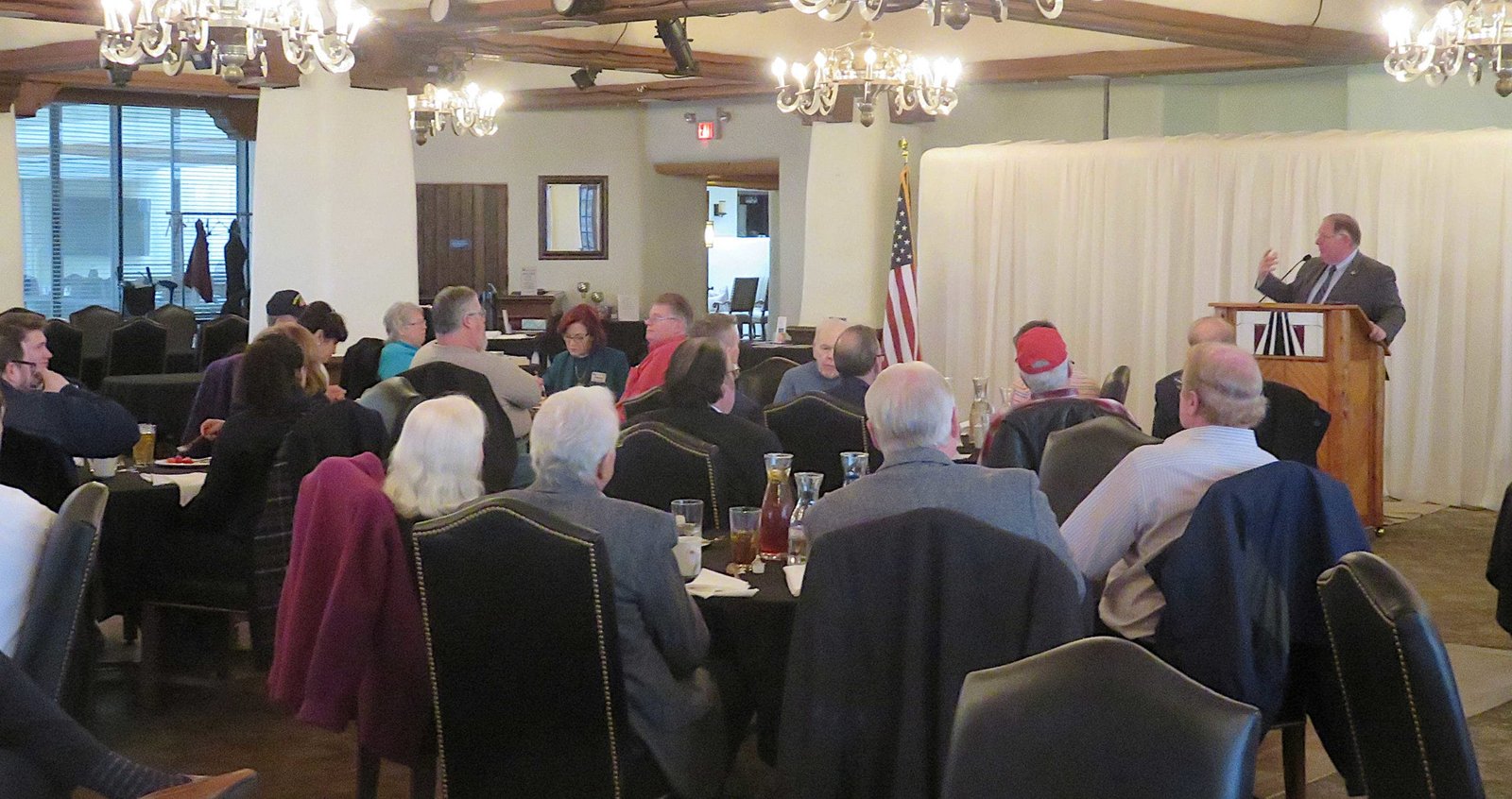
Wichita Pachyderm Club: John Todd

by Bob Weeks on February 10, 2013

John Todd, American Patriot

John Todd calls in to the Joseph Ashby Show to talk about the Wichita Pachyderm Club. Bob Weeks (that’s me) is the guest host. Listen below.

{ 1 comment }

Joseph and Titus went to New York, so I substituted

by Bob Weeks on February 9, 2013

Thursday I was guest host on the Joseph Ashby Show. If you haven’t been aware of this, Joseph’s son Titus — just two years old — has the amazing ability to shoot a basketball. Recently Joseph put together a video of Titus and his accomplishments and posted it to YouTube. As of this writing the video has been viewed 4,914,950 times, and that’s just since it was premiered on Sunday. (Click here to view the video.)

As a result, Titus has been receiving quite a bit of media attention. Thursday the entire Ashby family appeared on the NBC Today Show (video here). On Friday Joseph and Titus appeared on Fox and Friends (video here). There have been countless other media mentions.

So I was quite happy to substitute as a guest host on the Joseph Ashby Show Thursday. Callers included Sedgwick County Commissioner Karl Peterjohn, Jennifer Baysinger speaking about the death penalty and Kansas Coalition Against the Death Penalty, John Todd speaking about the Wichita Pachyderm Club, Terence Grado of Generation Opportunity talking about youth unemployment, and Drew, a frequent caller to the show who is very perceptive. You can listen to the show below.

{ 0 comments }

Focus on two Kansas school efficiency panels, school spending, and the surrounding politics is deflecting attention away from what Kansas schoolchildren and parents really need: Choice.

As part of an effort to increase the efficiency of Kansas public schools, Kansas Governor Sam Brownback announced an online portal for reporting inefficiencies. People may remain anonymous if the want. To view the form or report an inefficiency, click on Kansas school efficiency task force inefficiency form.

Here’s an example to get started: I have received several letters from the Wichita School District using priority mail — an expensive service — to me one sheet of paper. Other government agencies are content to deliver similar correspondence by email.

This effort, like the Kansas school efficiency task force itself has been harshly criticized by those in the school system. An example from Twitter yesterday is this: “Another Brownback salvo against public education. An insult to all KS schools. Red meat for the uneducated.”

In response to the governor’s task force, another has been created by KASB, the Kansas Association of School Boards. Its purpose, as described in Topeka Capital-Journal reporting, is to “to analyze options available to local district officials to maximize educational return on investments in K-12 public schools.”

One might think that the prime mission of a school board advocacy group would already be to “maximize educational return on investments.” What could be more important when considering the lives of Kansas schoolchildren and the plight of taxpayers?

But I guess schools have to be prodded a bit. Does anyone notice the irony: Those already in charge of Kansas public schools have had the power to implement efficiency measures. They don’t need permission or a task force.

There’s an incongruity here. On one hand, the public schools are (almost) entirely dependent on tax revenue for their funding. But public school officials object to the term “government schools.” In an email from Wichita School District Interim Superintendent Martin Libhart to Wichita school employees during the 2008 bond issue campaign, he took issue with those who, using his words, “openly refer to public education as ‘government schools.’” To him, this is something that shouldn’t be mentioned.

I don’t blame them. Last year ABC News reported on the low opinion Americans have of government: “Only 26 percent of Americans in a new ABC News/Washington Post poll say they’re optimistic about ‘our system of government and how well it works,’ down 7 points since October to the fewest in surveys dating to 1974. Almost as many, 23 percent, are pessimistic, the closest these measures ever have come. The rest, a record high, are ‘uncertain’ about the system.”

Schools want (what they consider) the good things about government — people being forced to pay taxes to support them — while at the same time they try to avoid the justifiably low esteem in which people hold government programs.

Governmental decisions are made through our political system — that is, unless we want to cede total control to bureaucrats. So we can’t keep politics out of school decisions as long as they are government schools. In today’s Wichita Eagle editorial writer Phillip Brownlee expressed concern for the role of politics in schools, especially surrounding the governor’s efficiency task force, concluding: “Though politics are swirling around the task force, it still may be able to come up with some good suggestions for reducing overhead without harming educational outcomes. If it does, great.” (Eagle editorial: School task force has rocky start)

I don’t think Brownlee meant to perform this public service, but his editorial is an example of why we need less government involvement in education. Our government — excuse me, public — schools are one of the most powerful ways through which civil society is destroyed. In the process, we replace the innovation and creativity of free markets and economic freedom with moribund governmental programs for our children.

As an example, take the controversy over what percent of school spending should go into the classroom. This is one of the motivating factors behind the school efficiency task force.

But consider this: Do we worry about how much the grocery store spends on administration versus other expenses? Do we quarrel over the number of assembly workers vs. managers at a manufacturing company?

Of course we don’t, at least we who don’t own these organizations. Instead, we recognize that these business firms operate in a competitive environment. That competition is a powerful force that motivates them to find the right mix of management and other expenses, or at least a good mix.

We also recognize that there are different types of grocery stores. Some offer more customer service than others. People are free to choose which type of store they like best, even on different days.

Schools in Kansas, however, face few competitive forces. There is little incentive for the public schools to find the right mix of spending, or to increase efficiency, or to offer the wide variety of choice that we have come to expect in the private sector. (It also seems that we’re failing to consider that different types of schools might work best with different mixes of classroom and other spending.)

This is what we are missing in Kansas. With greater choices available to students and parents, there will be less need for government oversight of schools and all the bickering that accompanies decisions made through the political process.

Unfortunately, we’re not moving in that direction in Kansas. Last week in Wichita, Governor Brownback had two opportunities to promote school choice in Kansas. On the Joseph Ashby radio program he was asked about school choice, but wouldn’t commit to it as a priority.

Later that day at the Wichita Pachyderm Club a similar question was asked, and again Brownback wouldn’t commit to school choice. The focus right now is efficiency and to get fourth grade reading levels up, Brownback said. He added that about 28 percent of fourth graders can’t read at basic level, which he described as a “real problem. If you can’t read, the world starts really shrinking around you.”

It’s a mystery why Governor Brownback hasn’t made school choice a priority in Kansas. Many governors are doing that and instituting other wide-reaching reforms.

{ 1 comment }

Pachyderm speaker lineup announced

by Bob Weeks on October 11, 2012

The Wichita Pachyderm Club has announced its speaker lineup for the next four weeks.

October 12, 2012: Kansas Governor Sam Brownback, speaking on “Economic Growth and Tax Policy”

October 19, 2012: A panel discussion of the fluoridation issue, which will appear on the November 6 ballot for Wichita residents. Speakers will include Dr. Stephen C. L’Hommedieu and Don Landis, spokespersons for Wichitans Opposed to Fluoridation. The club is still seeking someone to appear for the pro-fluoridation side.

October 26, 2012: Republican General Election Candidates Leslie D. “Les” Donovan (Kansas Senate District 27), Mike Peterson (tentative, Kansas Senate District 28), Susan Wagle (Kansas Senate District 30), and Emanuel Banks (Kansas House District 89).

November 2, 2012: Ken Ciboski, Ph.D., Associate Professor of Political Science at Wichita State University, speaking on “The Electoral College: Is it relevant for today’s presidential elections?”

The public is welcome and encouraged to attend Wichita Pachyderm Club meetings. Meetings are held almost every Friday at noon in the Wichita Petroleum Club on the top floor of the Bank of America Building at 100 N. Broadway. The meeting costs $10, which includes a delicious buffet lunch and beverage. For more information click on Wichita Pachyderm Club.

{ 0 comments }

Debbie Wasserman Schultz lies about lying

During these convention weeks, advocates on both sides have been fact-checking the other side, and charges are being made about which side is the biggest, boldest liar. But when people lie about lying … that’s a whole new level. Human Events reports on DNC chair Debbie Wasserman Schultz and sums up this way: “It was already common knowledge that Wasserman Schultz is a serial liar — on one memorable recent occasion, when CNN host Wolf Blitzer called her out for lying about Paul Ryan’s Medicare reform proposals, she essentially insisted that the urgency of her political agenda gives her the right to lie as necessary.” See Debbie Wasserman Schultz Caught Lying about Lying.

Speaking of facts and Politifact

What happens when the fact checker of record isn’t reliable? That’s the situation Politifact finds itself in, according to reporting by Jon Cassidy in Human Events: “Once widely regarded as a unique, rigorous and reasonably independent investigator of political claims, PolitiFact now declares conservatives wrong three times more often than liberals. More pointedly, the journalism organization concludes that conservatives have flat out lied nine times more often than liberals.” More at PolitiFact bias: Does the GOP tell nine times more lies than left? Really?

Your share of the debt

Now that the U.S. national debt has passed $16 trillion (or $16,000,000 million as I like to say) you might be interested in learning the magnitude of your personal liability. The Economic Freedom Project has a calculator to tell you. Click on What’s Your Lifetime Share of the National Debt?

Pachyderms to host House candidates

This week the Wichita Pachyderm Club features Republican candidates for the Kansas House of Representatives. Scheduled to appear are: Jim Howell (District 81), John Stevens (86), George F. “Joe” Edwards II (93), Benny Boman (95), and Phil Hermanson (98). The public is welcome and encouraged to attend Wichita Pachyderm meetings. Meetings are Fridays at noon, in the Wichita Petroleum Club on the top floor of the Bank of America Building at 100 N. Broadway. The meeting costs $10, which includes a delicious buffet lunch and beverage. For more information click on Wichita Pachyderm Club.

Even garage sales can’t escape the regulatory regime

Kansas Policy Institute comments on garage sale regulations in Wichita.

Apply for Wichita’s civilian sign corps

Related to garage sale signs, Wichitans can now apply to be part of the civilian sign enforcement patrol. The city has made these documents available on its website: Overview of the Volunteer Sign Removal Program and Sign Removal Volunteer Application. If you want to participate in this program, you’ll need to complete a volunteer sign removal application, complete the required training course, sign a liability release, sign an oath or statement agreeing to abide by city codes and the program rules, submit to and successfully pass a background check, have valid Kansas drivers license, have a currently registered vehicle in good operating condition, have current vehicle insurance, commit to a geographic area and time, commit to safety first; appropriately use provided vests and tools, commit to provide required reports, commit to dispose of signs as directed, commit to wear the provided identification badge, and commit to allowing only authorized (city trained and approved) persons to remove signs. The city also advises applicants to check with their insurance agents for coverage relative to the use of vehicles in this program. I can’t imagine most auto insurance companies will be happy that their customers are using their cars in a quasi-law enforcement application. … For more on why this law is a bad idea, see Proposed Wichita sign ordinance problematic.

Activists organize!

As a result of an excellent day-long training session recently produced in Wichita by Campaign for Liberty, activists that support limited government and free markets are meeting regularly. For information about the Wichita meetings, contact John Axtell.

The seven rules of bureaucracy

In this article, authors Loyd S. Pettegrew and Carol A. Vance quote Thomas Sowell: “When the government creates some new program, nothing is easier than to show whatever benefits that program produces. … But it is virtually impossible to trace the taxes that paid for the program back to their sources and to show the alternative uses of that same money that could have been far more beneficial.” In order to understand the foundation of America’s morass, we must examine bureaucracy. At the root of this growing evil is the very nature of bureaucracy, especially political bureaucracy. French economist Frédéric Bastiat offered an early warning in 1850 that laws, institutions, and acts — the stuff of political bureaucracy — produce economic effects that can be seen immediately, but that other, unforeseen effects happen much later. He claimed that bad economists look only at the immediate, seeable effects and ignore effects that come later, while good economists are able to look at the immediate effects and foresee effects, both good and bad, that come later. … Both the seen and the unseen have become a necessary condition of modern bureaucracy. (Bastiat: That Which Is Seen, and That Which Is Not Seen.) The first rule? “Maintain the problem at all costs!”

Democracy, or majority rule?

A new video from LearnLiberty.org, a project of Institute for Humane Studies is titled Should Majorities Decide Everything? To me, the most important part is near the end, when the speaker says that without a properly limited government, rule by majority “substitute[s] the tyranny of a king with the tyranny of a larger group.” LearnLiberty also explains: “According to Professor Munger, democratic constitutions consist of two parts: one defining the limits within which decisions can be made democratically, and the other establishing the process by which decisions will be made. In the United States Constitution, the individual is protected from majority decisions. Professor Munger warns, however, that these protections are slowly being stripped away as American courts of law fail to recognize the limits of what can be decided by majority rule.”

{ 0 comments }

Watchdog reporter at Pachyderm. This Friday (May 18th) the Wichita Pachyderm Club features Paul Soutar, Reporter for Kansas Watchdog, speaking on “The evolution of journalism and how the new media empowers citizens.” The public is welcome and encouraged to attend Wichita Pachyderm meetings. For more information click on Wichita Pachyderm Club. … The club has an exceptional lineup of future speakers as follows: On May 25th: Ron Estes, State Treasurer of Kansas, speaking on “A report from the Kansas Treasurer.” … On June 1st: Gary Oborny, Chairman/CEO Occidental Management and Real Estate Development, CCIM Designated member of the Storm Water Advisory Board to the City of Wichita, speaking on “What is the economic impact of EPA mandates on storm water quality in Wichita?”

Kansas senators vote for cronyism. Veronique de Rugy explains the harm of the Export-Import Bank of the United States in Why Would Anyone be Against the Export-Import Bank? “First, the Ex-Im Bank is nothing more than corporate welfare. This is an agency that is in the business of subsidizing private companies with taxpayer dollars. … An excellent paper by Cato Institute’s trade analyst Sallie James exposes just how unseemly, inefficient, and irrelevant the Export-Import Bank is. As James explains, the Bank not only picks winners and losers by guaranteeing the loans of private companies, but it also introduces unfair competition for all the U.S. firms that do not benefit from such special treatment.” The bill is H.R. 2072: Export-Import Bank Reauthorization Act of 2012. Both Kansas senators Jerry Moran and Pat Roberts voted for this bill. So did U.S. Representative Kevin Yoder of the Kansas third district. But Representatives Tim Huelskamp, Lynn Jenkins, and Mike Pompeo voted against it.

Koch = big oil? Politico: “The Koch brothers have an unlikely ally in the war of words with their liberal adversaries: the nation’s journalistic fact-checkers. Both The Washington Post’s Fact Checker blog and the nonpartisan site FactCheck.org have dinged critics of David and Charles Koch in recent weeks for referring to the billionaire brothers as Big Oil. Why? Because Koch Industries’ business interests extend well beyond the company’s involvement in petroleum refining and other oil-based operations. And while no corporate midget, the company isn’t anywhere near as big as true oil giants like ExxonMobil. ‘So even if all of Koch Industries’ revenues came from its refining business — which they do not — they would still be a fraction of the revenues of the companies that actually represent ‘Big Oil,” the FactCheck.org critique read.” More at Fact-checkers and Kochs’ ‘Big Oil’. Another example of how facts don’t get in the way of Koch critics. Or try For New York Times, facts about Kochs don’t matter.

Economic freedom. Why does the political left criticize Charles and David Koch? In the following video from last year, Koch Industries CEO and board chairman Charles G. Koch explains the principles of economic freedom, something that he and David Koch have worked to advance for many years. These principles, according to Koch, include private property rights, impartial rule of law, free trade, sound money which reduces boom and bust cycles, and a small and limited government. These principles are good for everyone, I should add, including those currently at the bottom of the economic ladder.

We aren’t Greece … yet. “Once again, Greece finds the international community questioning its ability to pay its debts. Default and an exit from the Euro Zone (or countries which share the Euro as a common currency) threatens on the horizon. Here in the U.S., we face high debts and have a lowered credit rating due to Washington’s inability to agree on deficit reduction. Just how alike are our two nations?” An infographic from Bankrupting America explains.


Bankrupting America

{ 0 comments }

Kansas tax reform. A message from Americans for Prosperity, Kansas: “‘Today’s vote on a much-needed tax reform bill will provide an immediate boost to Kansas families and businesses,’ said AFP-Kansas state director Derrick Sontag. ‘The approved tax bill cuts the income tax for Kansas families and small businesses, which is certainly good news for taxpayers. The current leadership of the state Senate helped lead Kansas down a path of economic destruction as indicated by the past decade being one of lost private sector jobs, stagnant population growth, and taxpayers fleeing to other states. Yet in spite of all the evidence pointing to the failure of the tax and spend approach, the actions of Senate leadership today indicated that they wanted more of the same. Today’s action by a majority of the House led by leadership was a step in the right direction to reverse the failed economic policies of the past. We applaud the leaders of the Kansas House for this bold move toward tax relief.’”

School funding. Two Wichita legislators on Kansas school funding. First, Representative Jim Ward: “The question is do we spend money on tax cuts for rich people and out-of-state corporations or do we spend money restoring the cuts to education.” … Then Senator Jean Schodorf: “Schodorf said business as usual is not funding schools. ‘That has become kind of the status quo in the legislature, and this year we desperately need to get a funding increase for schools.’” I wonder if either of these two legislators, both of whom hold leadership positions on education committees, know that this will likely be a record-setting year for school spending in Kansas, when all sources are considered? Fighting for school funding is a distraction from the reforms that Kansas schools really need.

Separation of art and state. David Boaz, writing at “Room for Debate” at the New York Times: “What do art, music, and religion have in common? They all have the power to touch us in the depths of our souls. As one theater director said, ‘Art has power. It has the power to sustain, to heal, to humanize … to change something in you. It’s a frightening power, and also a beautiful power. … And it’s essential to a civilized society.’ Which is precisely why art, music, and religion should be kept separate from the state. Government involves the organization of coercion. In a free society coercion should be reserved only for such essential functions of government as protecting rights and punishing criminals. People should not be forced to contribute money to artistic endeavors that they may not approve, nor should artists be forced to trim their sails to meet government standards.” Read more at Separation of Art and State. We failed this important test in Kansas, as funding for arts is now a concern for the state.

Stimulus spending. Robert J. Barro in the Wall Street Journal, available at the Hoover Institution: “The weak economic recovery in the U.S. and the even weaker performance in much of Europe have renewed calls for ending budget austerity and returning to larger fiscal deficits. … This viewpoint is dangerously unstable. Every time heightened fiscal deficits fail to produce desirable outcomes, the policy advice is to choose still larger deficits. If, as I believe to be true, fiscal deficits have only a short-run expansionary impact on growth and then become negative, the results from following this policy advice are persistently low economic growth and an exploding ratio of public debt to GDP. The last conclusion is not just academic, because it fits with the behavior of Japan over the past two decades.” On the idea of Keynesian solutions to economic problems: “Despite the lack of evidence, it is remarkable how much allegiance the Keynesian approach receives from policy makers and economists. I think it’s because the Keynesian model addresses important macroeconomic policy issues and is pedagogically beautiful, no doubt reflecting the genius of Keynes. The basic model — government steps in to spend when others won’t — can be presented readily to one’s mother, who is then likely to buy the conclusions. … Keynes worshipers’ faith in this model has actually been strengthened by the Great Recession and the associated financial crisis. Yet the empirical support for all this is astonishingly thin. The Keynesian model asks one to turn economic common sense on its head in many ways. For instance, more saving is bad because of the resultant drop in consumer demand, and higher productivity is bad because the increased supply of goods tends to lower the price level, thereby raising the real value of debt. Meanwhile, transfer payments that subsidize unemployment are supposed to lower unemployment, and more government spending is good even if it goes to wasteful projects.” See Stimulus Spending Keeps Failing.

Drug court to be Pachyderm topic. This Friday (May 11th) the Wichita Pachyderm Club Judge Joe Kisner of the Sedgwick County Drug Court speaking on “A new approach to an old problem.” The public is welcome and encouraged to attend Wichita Pachyderm meetings. For more information click on Wichita Pachyderm Club. … The club has an exceptional lineup of future speakers as follows: On May 18th: Paul Soutar, Reporter for Kansas Watchdog, speaking on “The evolution of journalism and how the new media empowers citizens.” … On May 25th: Ron Estes, State Treasurer of Kansas, speaking on “A report from the Kansas Treasurer.” … On June 1st: Gary Oborny, Chairman/CEO Occidental Management and Real Estate Development, CCIM Designated member of the Storm Water Advisory Board to the City of Wichita, speaking on “What is the economic impact of EPA mandates on storm water quality in Wichita?”

Elizabeth Warren. Writes Ann Coulter: “For liberals, it should be a mortal sin: Elizabeth Warren cheated on affirmative action.” A funny — and sad, because it tells us a lot about our country — column on how Elizabeth Warren, the Massachusetts Senatorial Candidate, apparently lied about being a member of a minority group (being 1/32 Cherokee) and how universities lapped it up.

Failure of socialism to be shown. The Wichita Chapter Meeting of Americans for Prosperity Foundation continues its video presentation of Milton Friedman’s “Free to Choose” series. The next episode to be shown is “The Failure of Socialism,” followed by a group discussion on Monday, May 14, 2012 at the Alford Branch Wichita Public Library, from 7:00 pm to 8:30 pm. There is no admission charge. RSVP not required. The Lionel D. Alford Library located at 3447 S. Meridian in Wichita. The library is just north of the I-235 exit on Meridian. For more information on this event contact John Todd at john@johntodd.net or 316-312-7335, or Susan Estes, AFP Field Director at sestes@afphq.org or 316-681-4415.

Yes we can! No they can’t! “It’s a fatal conceit. The politicians in there think they can run our economy, run our lives. But no — they can’t.” That’s John Stossel standing in front of the U.S. Capitol at the start of a television program featuring his new book No, They Can’t: Why Government Fails-But Individuals Succeed. The complete show is available on the free hulu service at Stossel – Thursday, Apr 12, 2012.

{ 0 comments }

When government pays, government controls. Although most liberals would not admit this, it sometimes slips through: When government is paying for our health care, government then feels it must control our behavior. The Wichita Eagle’s Rhonda Holman provides an example of this, when she wrote in a blog post about Kansas relaxing its smoking ban: “Especially with Medicaid costs swallowing up the state budget, lawmakers should be discouraging smoking, not accommodating more of it.”

The moral case for capitalism. “Two main charges are typically marshaled against capitalism: it generates inequality by allowing some to become wealthier than others; and it threatens social solidarity by allowing individuals some priority over their communities. … Capitalism does allow — and perhaps even requires — inequality. Because people’s talents, skills, values, desires, and preferences vary and because of sheer luck, some people will be able to generate more wealth in a free-enterprise system than others will; inequality will result. But it is not clear that we should worry about that. … If you could solve only one social ill — either inequality or poverty — which would it be? Or suppose that the only way to address poverty would be to allow inequality: Would you allow it? … More by James R. Otteson in An Audacious Promise: The Moral Case for Capitalism at the Manhattan Institute.

Moran to address Pachyderms. This Friday (May 4th) the Wichita Pachyderm Club features United States Senator Jerry Moran speaking on “A legislative update.” The public is welcome and encouraged to attend Wichita Pachyderm meetings. For more information click on Wichita Pachyderm Club. … The club has an exceptional lineup of future speakers as follows: On May 11th: Gary Oborny, Chairman/CEO Occidental Management and Real Estate Development, CCIM Designated member of the Storm Water Advisory Board to the City of Wichita, speaking on “What is the economic impact of EPA mandates on storm water quality in Wichita?” … On May 18th: Paul Soutar, Reporter for Kansas Watchdog, speaking on “The evolution of journalism and how the new media empowers citizens.” … On May 25th: Ron Estes, State Treasurer of Kansas, speaking on “A report from the Kansas Treasurer.”

Funding pet projects without earmarks. Wonderful! While this plan still relies on government to some degree, it is largely voluntary, which is the direction we need to steer things. “There is a creative workaround that allows funds to flow to those prized pet projects: a commemorative coin bill.” Read more at Heritage Action for America.

Harm of taxes. In introducing the new edition of Rich States, Poor States, authors Arthur Laffer and Stephen Moore explain the importance of low taxes. “Barack Obama is asking Americans to gamble that the U.S. economy can be taxed into prosperity. That’s the message of his campaign for the Buffett Rule, which raises income-tax rates on millionaires to a minimum of 30%, and for the expiration of the Bush tax cuts. He wants to raise the highest income tax rate by 20%, double the rate on capital gains, add a new 3.8% tax on all capital earnings, and nearly triple the dividend tax rate. All this will enhance “economic efficiency,” insists a White House economic report. As for those who disagree, says President Obama, they’re just pushing “the same version of trickle-down economics tried for much of the last century. … But prosperity sure didn’t trickle down.” Mr. Obama needs a refresher course on the 1920s, 1960s, 1980s and even the 1990s, when government spending and taxes fell and employment and incomes grew rapidly.” More in the Wall Street Journal at Laffer and Moore: A 50-State Tax Lesson for the President: Over the past decade, states without an income levy have seen much higher growth than the national average. Which state will be next to abolish theirs?

Role of prices. Prices convey information more accurately and efficiently than any centralized organization — such a government. It provides a, well, automatic mechanism for adjusting to the changes in the world, changes which happen every day, and even every minute. Sometimes we may not like the information that price signals are sending, but they represent the truth. Daniel J. Smith of Troy University explains in this video from LearnLiberty.org, a project of the Institute for Humane Studies: “Why are prices important? Prof. Daniel J. Smith of Troy University describes the role that prices play in generating, gathering, and transmitting information throughout the economy. Information about the supply and demand of different goods are dispersed among different buyers and sellers in an economy. Nobody has to know all this dispersed information; individuals only need to know the relative prices. Based on the simple information contained in a price, people adjust their behavior to account for conditions in supply and demand, even if they are unaware of that information.”

{ 0 comments }

Action on sustainability. This Wednesday (April 4th) the Sedgwick County Commission takes up the issue of whether to participate in a HUD Sustainable Communities Regional Planning Grant. Coverage of the last discussion the commission had on this matter is at Sedgwick County considers a planning grant. So that citizens may be informed on this issue, Americans for Prosperity, Kansas is holding an informational event tonight (April 2nd), from 7:00 pm to 8:30 pm at Spangles Restaurant, corner of Kellogg and Broadway. (Even though the Kansas Jayhawks are playing tonight in the NCAA men’s basketball title game, the television broadcast doesn’t start until 8:00 pm, with tip off at 8:23 pm.) The meeting is described as follows: “On April 4, 2012 at 9:00 am on the 3rd floor of the Sedgwick County Courthouse, the Sedgwick County Commission will be holding a public hearing to consider approval of Sedgwick County’s participation as the fiscal agent on behalf of the Regional Economic Area Partnership (REAP) Consortium with an ‘in-kind’ commitment of $120,707 to implement a Regional Plan for Sustainable Communities Grant for South Central Kansas. Public comment will be invited. Learn about the Sustainable Communities Plan for South Central Kansas. Find out how you can get involved in this issue as a citizen. Consider testifying before the County Commission. Consider attending the Commission meeting as an interested citizen.” … For more information on this event contact John Todd at john@johntodd.net or 316-312-7335, or Susan Estes, AFP Field Director at sestes@afphq.org or 316-681-4415.

Economic development through competitiveness. Next week (Wednesday, April 11th) Kansas Policy Institute will host an educational event focusing on local economic development. This event is vitally important as it is becoming apparent that Wichita’s traditional process of economic development is not working very well. Also, we’ve recently learned that in both Kansas and Wichita, business tax costs are very high, with only a handful of states ranking worse. The full agenda for this event, which is open to the public and which KPI is generously hosting at no charge to attendees, is A true path to economic growth and prosperity. A link to registration is there, or call 316-634-0218.

Those populist Pachyderms. This Friday (April 6th) the Wichita Pachyderm Club features Jordan A. Poland, who will discuss his Master of Arts thesis in Public History at Wichita State University, titled “A case study of Populism in Kansas. The election of Populist Governor Lorenzo Lewelling from Wichita, and the Legislative War of 1893.” Lewelling — wasn’t he the last governor from Wichita? … The public is welcome and encouraged to attend Wichita Pachyderm meetings. For more information click on Wichita Pachyderm Club. … The club has an exceptional lineup of future speakers as follows: On April 13th: Alvin Sarachek, Ph.D., Geneticist, Distinguished Professor Emeritus of Natural Sciences at Wichita State University, speaking on “Human Genetic Individuality and Confused Public Policy Making.” … On April 20th: Senator Steve Morris, President of the Kansas Senate, speaking on “Legislative update.” … On April 27th: Dr. Malcolm C. Harris, Sr., Professor of Finance, Friends University, speaking on “The Open Minded Roots of American Exceptionalism, and the Decline of America’s Greatness.”

We just don’t understand, they say. “Reeling from the possibility the Supreme Court might undermine ObamaCare, two members in good standing of the liberal media elite, both with the New York Times, took to the Sunday shows to lament the lack of public recognition for the great benefits of the law. ‘On health care,’ columnist Tom Friedman rationalized on NBC’s Meet the Press, ‘that’s partly a failure of communication.’ A befuddled Friedman advanced the liberal narrative that blames communication, not facts, as he wondered: ‘How do you go a year and a half where so many Americans don’t even understand the benefits of this legislation when they apply to them? And that gets to this administration, which I think has been abysmal at communicating some of its most important agenda items.’ That framework would make a lot more sense if applied to a conservative President facing a media hostile to his policies. That’s certainly not the case with this administration where the media have been consistently promoting Obamacare.” (Brent Baker, writing at Media Research Center in Sunday Guests Fret Public Naivete on ObamaCare Benefits as Friedman Blames Poor Communication. … I would say the problem is that people are starting to understand the impact of PPACA, or Obamacare. We find that the more people learn, the less they like it.

Colleges indoctrinate students. The report studied only the California university system, but it applies nationwide, writes Peter Berkowitz in the Wall Street Journal (available at the Hoover Institution at How California’s Colleges Indoctrinate Students.) He quotes the study A Crisis of Competence: The Corrupting Effect of Political Activism in the University of California: “The politicization of higher education by activist professors and compliant university administrators deprives students of the opportunity to acquire knowledge and refine their minds. It also erodes the nation’s civic cohesion and its ability to preserve the institutions that undergird democracy in America.” … He goes on to explain: “The analysis begins from a nonpolitical fact: Numerous studies of both the UC system and of higher education nationwide demonstrate that students who graduate from college are increasingly ignorant of history and literature. They are unfamiliar with the principles of American constitutional government. And they are bereft of the skills necessary to comprehend serious books and effectively marshal evidence and argument in written work. … This decline in the quality of education coincides with a profound transformation of the college curriculum. None of the nine general campuses in the UC system requires students to study the history and institutions of the United States. None requires students to study Western civilization, and on seven of the nine UC campuses, including Berkeley, a survey course in Western civilization is not even offered.” … We should note that at the same time this has happened, the cost of college has exploded, and students are laden with debt.

Job creation. Governments often fall prey to the job creation trap — that the goal of economic development is to create jobs. We see this in Wichita where the campaign for subsidy to hotel developers was presented as a jobs program. To most of our political and bureaucratic leaders, the more jobs created, the better — without regard to the underlying economics and how much these jobs actually cost. These costs destroy other jobs. Many of our business leaders don’t do any better understanding the difference between capitalism and business. In his introduction to the recently-published book The Morality of Capitalism, Tom G. Palmer writes: “Capitalism is not just about building stuff, in the way that socialist dictators used to exhort their slaves to ‘Build the Future!’ Capitalism is about creating value, not merely working hard or making sacrifices or being busy. Those who fail to understand capitalism are quick to support ‘job creation’ programs to create work. They have misunderstood the point of work, much less the point of capitalism. In a much-quoted story, the economist Milton Friedman was shown the construction on a massive new canal in Asia. When he noted that it was odd that the workers were moving huge amounts of earth and rock with small shovels, rather than earth moving equipment, he was told ‘You don’t understand; this is a jobs program.’ His response: ‘Oh, I thought you were trying to build a canal. If you’re seeking to create jobs, why didn’t you issue them spoons, rather than shovels?” … After describing crony capitalism — the type practiced in Wichita, Sedgwick County, and Kansas, with deals like the Ambassador Hotel — Palmer explains: “Such corrupt cronyism shouldn’t be confused with ‘free-market capitalism,’ which refers to a system of production and exchange that is based on the rule of law, on equality of rights for all, on the freedom to choose, on the freedom to trade, on the freedom to innovate, on the guiding discipline of profits and losses, and on the right to enjoy the fruits of one’s labors, of one’s savings, of one’s investments, without fearing confiscation or restriction from those who have invested, not in production of wealth, but in political power.”

Markets: exploitation or empowerment? Do markets lead to a centralization of political and economic power, or do markets decentralize and disseminate wealth? In an eight-minute video from LearnLiberty.org, a project of Institute for Humane Studies, Antony Davies presents evidence and concludes that markets and free trade empower individuals rather than exploit them.

{ 0 comments }

Sustainable development presented in Wichita

March 30, 2012

Information, including an audio presentation, is available regarding sustainable development planning and U.N. Agenda 21 in Kansas.

Read the full article →

Kansas and Wichita quick takes: Thursday March 29, 2012

March 29, 2012

Today: Sustainable development; Climate models; Shy regulators; Just say no to taxes.

Read the full article →

Kansas and Wichita quick takes: Monday March 26, 2012

March 26, 2012

Today: Pachyderms to feature talk on sustainable development; PPACAction; The seven rules of bureaucracy; Civil society; One down, 48 to go; Economic freedom in America: The decline, and what it means.

Read the full article →

Kansas and Wichita quick takes: Monday March 19, 2012

March 19, 2012

Today: Eisenhower expert to present; Pompeo town hall meeting; Crises of Governments; What are the limits of democracy?

Read the full article →

Kansas and Wichita quick takes: Thursday March 15, 2012

March 15, 2012

Today: Wichita school board members to meet public.

Read the full article →

Kansas and Wichita quick takes: Thursday March 8, 2012

March 8, 2012

Today: Candidate representatives at Pachyderm; Sedgwick County pre-caucus rally; Libertarian ideals; High Kansas taxes; Harm of individual mandate explained.

Read the full article →

Sedgwick County Commissioner to present on sustainable development

February 16, 2012

Sedgwick County Commissioner Richard Ranzau will deliver a talk on the topic of sustainable development.

Read the full article →

Discussion on Ambassador Hotel tax issue to be this Friday

February 1, 2012

The Wichita Pachyderm Club, as part of its regular Friday luncheon series of educational meetings, will conduct a public forum on the February 28th Wichita city election. The subject of the election is a Wichita city charter ordinance that rebates 75 percent of the Ambassador Hotel’s guest tax collection back to the hotel.

Read the full article →

Kansas and Wichita quick takes: Monday January 30, 2012

January 30, 2012

Today: Kansas school forum; Ambassador Hotel to be subject of discussion; Capital gains tax rate; Kan-ed audit; Huelskamp and Sharpton; Education reform blog started; Super PACs.

Read the full article →

Kansas and Wichita quick takes: Monday January 16, 2012

January 16, 2012

Today: Tax cuts = extra income?; Revenue-neutral tax reform; Peterjohn to speak; Southwest to fly to Wichita; Kansas economic development incentives; Story is broken.

Read the full article →

Kansas and Wichita quick takes: Monday January 9, 2012

January 9, 2012

Today: Wichita City Council; Kansas House Speaker speaking in Wichita; Legislature starts; State of the State address; Kansas State Sovereignty Rally; Making Economics Come Alive.

Read the full article →

Good news coming for Wichita, says Brownback top aide

January 6, 2012

Speaking to the Wichita Pachyderm Club today, David Kensinger, Chief of Staff for Kansas Governor Sam Brownback, said that Brownback will be in Wichita Tuesday “with a very specific announcement as relates to jobs in the aviation industry.”

Read the full article →

Kansas and Wichita quick takes: Tuesday January 3, 2012

January 3, 2012

Today: Legislators to hear from citizens; Romney seen as ‘good enough’; Brownback Chief of Staff in Wichita; Arrogance of Trump; Ethanol; 180 miles in an electric car; Kansas Policy Institute research; Capitalism.

Read the full article →

Kansas and Wichita quick takes: Monday December 19, 2011

December 19, 2011

Today: Boeing tanker and Wichita; Wichita school dress code; Kansas legislator briefing book; Velvet Revolution voice has died; Open records in Wichita; Cellulosic ethanol; Overcriminilization; Stevens, Pachyderm President, honored; Occupiers and crony capitalism.

Read the full article →

Kansas and Wichita quick takes: Monday December 12, 2011

December 12, 2011

Today: Kansas budget; Trade protectionism makes us poorer; A new day in politics?; Harm of expanding government explained; Youthful senator to speak; Markets: exploitation or empowerment?

Read the full article →

Kansas and Wichita quick takes: Wednesday December 7, 2011

December 7, 2011

Today: Wichita petitions; Petitions being contested; Smart Taxpayers Exposing Waste; Planning grant to be topic of meeting; Kansas history writer to speak; Wichita City Council.

Read the full article →

Kansas and Wichita quick takes: Monday November 28, 2011

November 28, 2011

Today: FHA risk; Boeing in Wichita; Wichita City Council; Harm of public-sector unions; Rep. Hedke, author of new book, to speak; Myth of spending cuts.

Read the full article →

Kansas and Wichita quick takes: Thursday November 10, 2011

November 10, 2011

Today: Occupy Wall Street; Johnson Controls; Save-A-Lot store opens; Teacher pay; Ranzau, Skelton to speak; Making economics come alive; Economics in two minutes.

Read the full article →

Huelskamp on spending, health information database, and Buffett

November 2, 2011

Addressing members and guests of the Wichita Pachyderm Club last Friday, U.S. Representative Tim Huelskamp of the Kansas first district updated the audience on national spending and debt, a health information database that poses privacy risks, and Warren Buffett’s taxes.

Read the full article →

Kansas and Wichita quick takes: Monday October 31, 2011

October 31, 2011

Today: Wichita City Council; Crony capitalism; Kansas pensions; Global economics to be discussed in Wichita; Progress, or not; Business and politics.

Read the full article →

Kansas and Wichita quick takes: Monday October 24, 2011

October 24, 2011

Today: Wichita City Council; ‘Federalists’ author to appear in Wichita this week; Rep. Huelskamp to speak in Wichita; Kansas tax reform; The debt of the states; Freedom of the press; Student loans; Obama makes a great appointment; Libertarianism works both ways.

Read the full article →

Kansas and Wichita quick takes: Thursday October 13, 2011

October 13, 2011

Today: Wichita city leaders too cozy with developers?; Obama economic strategy questioned; Public vs. private; Kansas tax policy; Petition drive is on; Kansas education scores mixed; ‘Federalists’ author to appear in Wichita; Kansas gas wells appraisals; Lieutenant Governor in Wichita; Urban renewal.

Read the full article →

Kansas and Wichita quick takes: Monday October 10, 2011

October 10, 2011

Today: AFP meeting features former Congressman Tiahrt; Government planning; Longwell joins Democrats to defeat Republicans; Optimal size of government; Steve Jobs; Lieutenant Governor in Wichita; When governments cut spending.

Read the full article →

Pompeo at Pachyderm on economy, budget

October 3, 2011

U. S. Representative Mike Pompeo of Wichita addressed members and guests of the Wichita Pachyderm Club, with members interested in the economy and budget issues.

Read the full article →

Kansas and Wichita quick takes: Monday October 3, 2011

October 3, 2011

Today: Wichita City Council; What if the NFL Played by Teachers’ Rules?; Do-nothing Hoover?; Kansas school cash; John Locke to appear in Wichita.

Read the full article →

Kansas and Wichita quick takes: Monday September 26, 2011

September 26, 2011

Today: Who creates jobs?; Pompeo to address Pachyderms; Supremes to make road trip; March for the chicken; Economic freedom.

Read the full article →

Kansas and Wichita quick takes: Tuesday September 20, 2011

September 20, 2011

Today: Douglas Place value; Douglas Place vote delayed; Solyndra unnoticed by some; On Solyndra, the real lesson; Spreading the wealth: the costs; Kansas schools to be topic; Natural rights.

Read the full article →

Kansas and Wichita quick takes: Monday September 12, 2011

September 12, 2011

Today: TIF not good for everyone, it seems; Wichita City Council; Williams lecture not noticed; Energy and politics to be topic; Pompeo on ideological internships; Spending to create jobs; Kansas education summit; Why liberals should like libertarian ideas.

Read the full article →

Kansas and Wichita quick takes: Tuesday September 6, 2011

September 6, 2011

Today: Live music example of overcriminilization, regulation in Wichita; Tax reform in Kansas; Downtown Wichita site launched; Juvenile justice system to be topic; Campaign contributions flow to Wichita’s subsidy supporters; Organ events; Urban planning in Wichita: an outside perspective.

Read the full article →

Kansas and Wichita quick takes: Monday August 29, 2011

August 29, 2011

Today: Wichita City Council; Government and business; Developer welfare shop opened; ‘Kansans United’ formed; Kansas education summit; No Wichita Pachyderm this week; Myths of capitalism.

Read the full article →

Kansas and Wichita quick takes: Monday August 22, 2011

August 22, 2011

Today: How not to grow an economy; Son of TARP; Wichita City Council; Critique of Keynesian policies; Junior Kansas legislators to speak.

Read the full article →

Kansas and Wichita quick takes: Wednesday August 10, 2011

August 10, 2011

Today: Kansas House Appropriations Chair to speak; Sebelius responds to waivers inquiry; Brownback to Sebelius: No thanks; ‘Nullify Now’ tour in Kansas City; ‘Birth of Freedom’ screening.

Read the full article →