The sale of a radio tower owned by Sedgwick County reveals another case of local government not looking out for the interests of citizens and taxpayers, with the realization that the stain of cronyism is alive and well.
As a result of system upgrades, the county no longer needs a radio tower located near 77th Street North and Interstate 135. Pixius Communications, LLC made an offer to purchase the tower and the five acre tower site for $280,000. The county proceeded making arrangements for the sale, preparing a sales agreement contract between Sedgwick County and Pixius with a sales price of $280,000, along with several other legal documents necessary to support the sale. These documents are available at the agenda file for this item.
According to sources, County Manager William Buchanan supported the Pixius offer. So did commissioners Dave Unruh and Jim Skelton.
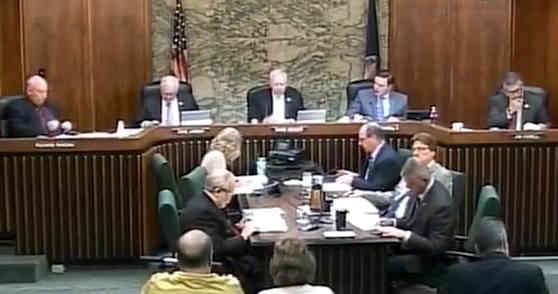
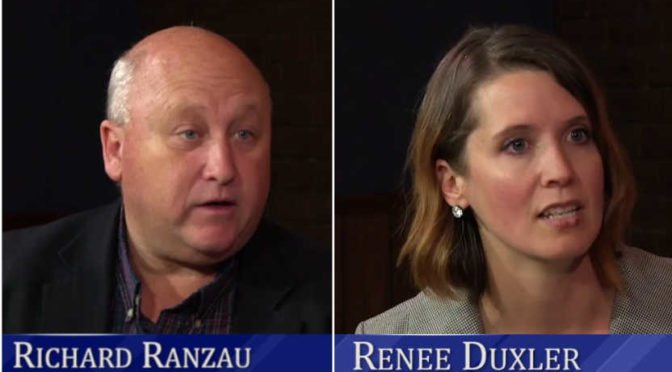
But commissioners Richard Ranzau and Karl Peterjohn felt that the best way to sell the tower was through an auction.
Commission Chair Tim Norton, because of his receipt of campaign contributions from Pixius, Jay Maxwell (owner of Pixius), and Penny Maxwell (spouse of owner), was going to abstain from voting. (Skelton has accepted contributions from the Maxwells, but he was going to vote nonetheless.)
So there was not a majority of three votes to accept the Pixius offer. Buchanan suggested the auction. All commissioners agreed.
Now we know the results of the auction: A Florida company offered $610,000. After a sales commission ($55,000) and half of closing costs ($1,128), the county will net $553,872. That’s almost twice the price the county manager and two commissioners were willing to sell the tower for.
There’s something else: What will be the appraised value of the tower and site for tax purposes? The selling price of a property is strong evidence of its value. As a result of the auction, therefore, this property is likely to be appraised at $610,000 instead of $280,000. That’s good for those who think it’s good for government to bring in more tax revenue.
This episode is another instance where no-bid contracts and cronyism cost taxpayers. Maxwell, the almost-beneficiary of this sweetheart no-bid contract, has been the recipient of many benefits at taxpayer expense, such as tax increment financing and community improvement district taxes. He’s tried for more, but even the Wichita City Council has a limit to its cronyism, now and then. Although cronyism and no-bid contracts have been a problem at Wichita City Hall.
Interestingly, a recent KSN Television news story characterized Ranzau and Peterjohn as “hardline fiscal conservatives.” The story went on to report “Incumbent Democrat Tim Norton often sides with the two more moderate members of the commission with many votes being decided by a 3-2 margin.” Those moderate members are, of course, Unruh and Skelton.
Norton didn’t have to take sides — at least publicly — on this issue, but I’m confident that if this was not an election year for Norton, he would have voted for the original Pixius deal that we now see was a disaster for taxpayers.
In the KSN story Norton was quoted as saying “I’m a business man of many years in Wichita. I understand the business climate and job retention.”
Unruh and Skelton are also businessmen. I hope these commissioners look after their personal business with more care and concern than they have shown for the business of taxpayers.
Special interest groups are likely to co-opt the government planning process started in south-central Kansas as these groups see ways to benefit from the plan. The public choice school of economics and political science has taught us how special interest groups seek favors from government at enormous costs to society, and we will see this at play over the next few years.
Sedgwick County has voted to participate in a HUD Sustainable Communities Regional Planning Grant. While some justified their votes in favor of the plan because “it’s only a plan,” once the planning process begins, special interests plot to benefit themselves at the expense of the general public. Once the plan is formed, it’s nearly impossible to revise it, no matter how evident the need.
An example of how much reverence is given to government plans comes right from the U.S. Supreme Court in the decision Kelo v. New London, in which the Court decided that government could use the power of eminent domain to take one person’s property and transfer it to someone else for the purposes of economic development. In his opinion for the Court, Justice Stevens cited the plan: “The City has carefully formulated an economic development plan that it believes will provide appreciable benefits to the community.” Here we see the importance of the plan and due reverence given to it.
Stevens followed up, giving even more weight to the plan: “To effectuate this plan, the City has invoked a state statute that specifically authorizes the use of eminent domain to promote economic development. Given the comprehensive character of the plan, the thorough deliberation that preceded its adoption, and the limited scope of our review, it is appropriate for us, as it was in Berman, to resolve the challenges of the individual owners, not on a piecemeal basis, but rather in light of the entire plan. Because that plan unquestionably serves a public purpose, the takings challenged here satisfy the public use requirement of the Fifth Amendment.”
To Stevens, the fact that the plan was comprehensive was a factor in favor of its upholding. The sustainable communities plan, likewise, is nothing but comprehensive, as described by county manager Bill Buchanan in a letter to commissioners: “[the plan will] consist of multi-jurisdictional planning efforts that integrate housing, land use, economic and workforce development, transportation, and infrastructure investments in a manner that empowers jurisdictions to consider the interdependent challenges of economic prosperity, social equity, energy use and climate change, and public health and environmental impact.”
That pretty much covers it all. When you’re charged with promoting economic prosperity, defending earth against climate change, and promoting public health, there is no limit to the types of laws you might consider.
But these plans are rarely by and for the public. Almost always the government planning process is taken over and captured by special interests. We see this in public schools, where the planning and campaigning for new facilities is taken over by architectural and construction firms that see school building as a way to profit. It does not matter to them whether the schools are needed.
Our highway planning is hijacked by construction firms that stand to benefit, whether or not new roads are actually needed.
Our planning process for downtown Wichita is run by special interest groups that believe that downtown has a special moral imperative, and another group that sees downtown as just another way to profit at taxpayer expense. Both believe that taxpayers across Wichita, Kansas, and even the entire country must pay to implement their vision. As shown in Kansas and Wichita need pay-to-play laws the special interests that benefit from public spending on downtown make heavy political campaign contributions to nearly all members of the Wichita City Council. They don’t have a political ideology. They contribute only because they know council members will be voting to give them money.
In Wichita’s last school bond election, 72 percent of the contributions, both in-kind and cash, was given by contractors, architects, engineering firms and others who directly stand to benefit from new school construction, no matter whether schools are actually needed. The firm of Schaefer Johnson Cox Frey Architecture led the way in making these contributions. It’s not surprising that this firm was awarded a no-bid contract for plan management services for the bond issue valued at $3.7 million. This firm will undoubtedly earn millions more for those projects on which it serves as architect.
The special interest groups that benefit from highway construction: They formed a group called Economic Lifelines. It says it was formed to “provide the grassroots support for Comprehensive Transportation Programs in Kansas.” Its motto is “Stimulating economic vitality through leadership in infrastructure development.”
A look at the membership role, however, lets us know whose economic roots are being stimulated. Membership is stocked with names like AFL-CIO, Foley Equipment Company, Heavy Constructors Association of Greater Kansas City, Kansas Aggregate & Concrete Associations, Kansas Asphalt Pavement Association, Kansas Contractors Association, Kansas Society of Professional Engineers, and PCA South Central Cement Promotion Association. Groups and companies like these have an economic interest in building more roads and highways, whether or not the state actually needs them.
The planners themselves are a special interest group, too. They need jobs. Like most government bureaucrats, they “profit” from increasing their power and sphere of influence, and by expansion of their budgets and staffs. So when Sedgwick County Commissioner Jim Skelton asks a professional planner questions about the desirability of planning, what answer does he think he will get? It’s not that the planners are not honest people. But they have a vested economic and professional interest in seeing that we have more government planning, not less.
And we have evidence that planners watch out for themselves. It is not disputed that this planning grant benefits Regional Economic Area Partnership (REAP). Sedgwick County Commissioner Richard Ranzau says that John Schlegel, Wichita’s Director of Planning, told him that “acceptance of this grant will take REAP to another level, because right now they are struggling, and this will help plot the course for REAP.” He said that REAP, which is housed at the Hugo Wall School of Public Affairs at Wichita State University, needs to expand its role and authority in order to give it “something to do.”
We see that REAP is another special interest group seeking to benefit itself. In this case, our best hope is that REAP engages in merely make-work, that the plan it produces is put on a shelf and ignored, and that the only harm to us is the $1.5 million cost of the plan.
By the way, did you know that Sedgwick County Commissioner Dave Unruh, who voted in favor of the plan that benefits REAP, is now chairman of REAP? Special interest groups know how to play the political game.
While commissioners Karl Peterjohn and Richard Ranzau spoke in favor of government transparency and compliance with records requests, not all their colleagues agreed.
Dave Unruh asked Trabert if GWEDC had responded to his records request. Trabert said yes, and the response from GWEDC is that the agency believes it has complied with the open records law. This, he explained, is a common response from agencies.
Commission Chair Tim Norton expressed concern that any non-profit the commission gives money to would have to hire legal help, which he termed an unintended consequence. He made a motion to receive and file Trabert’s remarks, which is routine. His motion also included taking this matter under advisement, which is what politicians do in order to bury something. Unruh seconded the motion.
Peterjohn made a substitute motion that a representative from GWEDC would appear before the commission and discuss the open records act. This motion passed four to one, with Unruh in the minority. Even though Norton voted in favor of Peterjohn’s motion, it’s evident that he isn’t in favor of more government transparency. Unruh’s vote against government transparency was explicit.
Wichita school district records request
USD 259, the Wichita public school district, also declined to fulfill a records request submitted by KPI. In a press release, KPI details the overly-legalistic interpretation of the KORA statute that the Wichita school district uses to claim that the records are exempt from disclosure.
In a news report on KSN Television, school board president Lynn Rogers explained the district’s reason for denying the records request: “But some school board members with USD 259 in Wichita say, the numbers brought up in court are preliminary numbers. That’s the reason they are not handing them over to KPI. ‘We have worked very hard over the years to be very forthright and we’ve tried to disclose the information when we have it,’ says Lynn Rogers.’”
Until recently the Wichita school district had placed its monthly checkbook register on its website each month, and then removed it after a month had passed. Rogers explained that the district didn’t have space on its servers to hold these documents. That explanation is total nonsense, as the pdf check register documents are a very small fraction of the size of video files that the district hosted on its servers. Video files, by the way, not related to instruction, but holding coverage of groundbreaking ceremonies.
The Kansas Open Records Act (KORA), in KSA 45-216 (a) states: “It is declared to be the public policy of the state that public records shall be open for inspection by any person unless otherwise provided by this act, and this act shall be liberally construed and applied to promote such policy.”
But in my recent experience, our city’s legal staff has decided to act contrary to this policy. It’s not only the spirit of this law that the city is violating, but also the letter of the law as well.
Recently I requested some records from the Wichita Downtown Development Corporation. Although the WDDC cooperated and gave me the records I requested, the city denies that the WDDC is a public agency as defined in the Kansas Open Records Act.
This is an important issue to resolve.
In the future, requests may be made for records for which the WDDC may not be willing to cooperate. In this case, citizens will have to rely on compliance with the law, not voluntary cooperation. Or, other people may make records requests and may not be as willing as I have been to pursue the matter. Additionally, citizens may want to attend WDDC’s meetings under the provisions of the Kansas Open Meetings Act.
Furthermore, there are other organizations similarly situated. These include the Greater Wichita Economic Development Coalition and the Go Wichita Convention and Visitors Bureau. These organizations should properly be ruled public agencies as defined in the Kansas Open Records Act so that citizens and journalists may freely request their records and attend their meetings.
Here’s why the WDDC is a public agency subject to the Open Records Act. KSA 45-217 (f)(1) states: “‘Public agency’ means the state or any political or taxing subdivision of the state or any office, officer, agency or instrumentality thereof, or any other entity receiving or expending and supported in whole or in part by the public funds appropriated by the state or by public funds of any political or taxing subdivision of the state.”
The Kansas Attorney General’s office offers additional guidance: “A public agency is the state or any political or taxing subdivision, or any office, officer, or agency thereof, or any other entity, receiving or expending and supported in whole or part by public funds. It is some office or agency that is connected with state or local government.”
The WDDC is wholly supported by a special property tax district. Plain and simple. That is the entire source of their funding, except for some private fundraising done this year.
The city cites an exception under which organizations are not subject to the Kansas Open Records Act: “Any entity solely by reason of payment from public funds for property, goods or services of such entity.”
The purpose of this exception is so that every vendor that sells goods and services to government agencies is not subject to the Kansas Open Records Act. For example, if a city buys an automobile, the dealer is not subject simply because it sold a car to the city.
But this statute contains an important qualifier: the word “solely.” In this case, the relationship between the City of Wichita and the WDDC is not that of solely customer and vendor. Instead, the city created a special tax district that is the source of substantially all WDDC’s revenue, and the existence of the district must be renewed by the city soon. The WDDC performs a governmental function that some cities decide to keep in-house. The WDDC has only one “customer,” to my knowledge, that being the City of Wichita.
Furthermore, the revenue that the WDDC receives each year is dependent on the property tax collected in the special taxing district.
The only reasonable conclusion to draw is that in terms of both funding and function, the WDDC is effectively a branch of Wichita city government.
The refusal of the city’s legal department to acknowledge these facts and concede that the WDDC is a public agency stands reason on its head. It’s also contrary to the expressly stated public policy of the state of Kansas. It’s an intolerable situation that cannot be allowed to exist.
Mr. Mayor and members of the council, it doesn’t take a liberal application of the Kansas Open Records Act to correct this situation. All that is required is to read the law and follow it. That’s what I’m asking this body to do: ask the city legal department to comply with the clear language and intent of the Kansas Open Records Act.
The following year when WDDC’s contract was before the council for renewal, I asked that the city, as part of the contract, agree that WDDC is a public agency as defined in Kansas law. (Video is at Kansas Open Records Act at Wichita City Council.) Then-council member Paul Gray, after noting that he had heard all council members speak in favor of government transparency, said that even if WDDC is not a public agency under the law, why can’t it still proceed and fulfill records requests? This is an important point. The Kansas Open Records Act contains many exclusions that agencies use to avoid releasing records. But agencies may release the records if they want.
Any council member could have made the motion that I asked for. But no one, including Gray, former council member Sue Schlapp, former member Jim Skelton (now on the Sedgwick County Commission), Mayor Carl Brewer, and council members Jeff Longwell (district 5, west and northwest Wichita), Janet Miller (district 6, north central Wichita), and Lavonta Williams (district 1, northeast Wichita) would make a motion to increase government transparency and citizens’ right to know. Wichita city manager Robert Layton offered no recommendation to the council.
Last year I appeared again before the council to ask that Go Wichita agree that it is a public agency as defined in the open records act. Randy Brown, who is chair of the Kansas Sunshine Coalition for Open Government and former opinion page editor of the Wichita Eagle was at the meeting and spoke on this matter. In his remarks, Brown said “It may not be the obligation of the City of Wichita to enforce the Kansas Open Records Act legally, but certainly morally you guys have that obligation. To keep something cloudy when it should be transparent I think is foolishness on the part of any public body, and a slap in the face of the citizens of Kansas. By every definition that we’ve discovered, organizations such as Go Wichita are subject to the Kansas Open Records Act.”
Brown said that he’s amazed when public officials don’t realize that transparency helps build trust in government, thereby helping public officials themselves. He added “Open government is essential to a democracy. It’s the only way citizens know what’s going on. … But the Kansas Open Records Act is clear: Public records are to be made public, and that law is to be construed liberally, not by some facile legal arguments that keep these records secret.”
He recommended to the council, as I did, that the contract be contingent on Go Wichita following the Kansas Open Records Act.
Discussion on this matter revealed a serious lack of knowledge by some council members regarding the Kansas Open Records Act. In remarks from the bench James Clendenin (district 3, southeast and south Wichita) asked the city manager a series of questions aimed at determining whether the city was satisfied with the level of service that Go Wichita has provided. He then extended that argument, wondering if any company the city contracts with that is providing satisfactory products or service would be subject to “government intrusion” through records requests. Would this discourage companies from wanting to be contractors?
First, the Kansas Open Records Act does not say anything about whether a company is providing satisfactory service to government. That simply isn’t a factor, and is not a basis for my records request to Go Wichita. Additionally, the Kansas Open Records Act contains a large exception, which excepts: “Any entity solely by reason of payment from public funds for property, goods or services of such entity.” So companies that sell to government in the ordinary course of business are not subject to the open records law. Go Wichita is distinguished, since it is almost entirely funded by taxes and has, I believe, just a single client: the City of Wichita.
Finally, we should note that the open records law does not represent government intrusion, as Clendenin claimed. Open records laws offer citizens the ability to get an inside look at the working of government. That’s oversight, not intrusion.
Pete Meitzner (district 2, east Wichita) asked that there might be a workshop to develop a policy on records requests. He expressed concern that departments might be overwhelmed with requests from me that they have to respond to in a timely fashion, accusing me of “attempt to bury any of our departments in freedom of information acts [sic].” Such a workshop would probably be presented by Wichita City Attorney Gary Rebenstorf. His attitude towards the open records law is that of hostility, and is not on the side of citizens.
In making this argument, Mr. Meitzner might have taken the time to learn how many records requests I’ve made to the city. The answer, to the best of my recollection, is that I made no requests that year to the city citing the open records act. I have made perhaps a half-dozen informal requests, most of which I believe were fulfilled consuming just a few moments of someone’s time.
As to Meitzner’s concern over the costs of fulfilling records requests: The law allows for government and agencies to charge fees to fulfill requests. They often do this, and I have paid these fees. But more important than this, the attitude of council member Meitzner is troubling. Government should be responsive to citizens. As Randy Brown told the council, government should welcome opportunities to share information and be open and transparent.
Michael O’Donnell (district 4, south and southwest Wichita) made a motion that the contract be approved, but amended that Go Wichita will comply with the Kansas Open Records Act. That motion didn’t receive a second.
In Kansas, when citizens believe that agencies are not complying with the Kansas Open Records Act, they have three options. One is to ask the Kansas Attorney General for help. But the policy of the Attorney General is to refer all cases to the local District Attorney, which is what I did. The other way to proceed is for a citizen to pursue legal action at their own expense.
When newspapers have their records requests refused, they usually give publicity to this. The Wichita Eagle is aware of my difficulties with records requests in Wichita, as their reporters have attended a number of meetings where my records requests were discussed, sometimes at length. But so far no coverage of an issue that, were the newspaper in my shoes, would undoubtedly covered on the front page. Something tells me that KPI won’t get any coverage, either.
Two of the five Kansas counties that were asked to participate in a sustainable communities planning grant have decided not to join the effort. Of the five counties (Sedgwick, Butler, Reno, Harvey and Sumner), Butler and Sumner county commissioners voted against participation.
The REAP sustainable communities planning process is designed to, in the words of REAP, “create a long-term regional plan for ensuring the health and productivity of our local economy. The grant will support community engagement to identify common values and goals, followed by local and regional efforts to enhance economic development, connect people with jobs, reduce housing and transportation costs, ensure public safety, and use of limited public funds efficiently in the years ahead.”
Critics of government planing processes such as this are concerned that the planning process would subject us to additional control by the federal government. These are the so-called strings that are thought to accompany federal grants.
(For those who are interested in what strings look like, here’s an example of one that is relatively innocuous. A HUD document titled Program Policy Guidance OSHC-2012-01 explains “Applicants that reach a certain qualifying score under the Regional Planning Grant Program or the Community Challenge Grant Program will receive PSS designation. PSS designation provides your entity access to bonus points for selected other HUD grant programs, technical assistance, and other capacity building opportunities that will strengthen future efforts to apply to the program.” REAP has been awarded this status, as it complied with this “string.”)
When the Wichita City Council deliberated its endorsement of and participation in this program, Council Member James Clendenin (district 3, southeast and south Wichita), asked a series of questions of Joe Yager, chief executive officer of REAP, as to whether these concerns were true. Yager said no, there are no strings accompanying the grant. But what about after the planning process is over in three years? Will the plan be forced upon us, Clendenin asked?
Yager answered no, that local governing bodies would have to vote to implement any of the ideas or programs that resulted from the plan. Nothing will be forced upon us, nothing is mandated, he said. We wold simply have a “toolkit” of things to use.
This view or attitude — that local elected officials will protect us from the harmful elements that will emerge from the plan — is dangerously naive. First, in his short time in office, Clendenin has regularly voted for expansions of government planning, power, and spending. He doesn’t stand out from most other council members, not even the Republican members (except for one), as they also regularly vote for these things.
Second, we know that after the plan is complete there will be the argument that since we have the plan, that since we spent three years and $2.2 million on the process, we might as well go ahead and implement it.
Then, there will be the future grants and undoubtedly increased local spending required to implement the plan. There is now research that looks at the effect of federal grants on future local spending. In their research paper titled Do Intergovernmental Grants Create Ratchets in State and Local Taxes? Testing the Friedman-Sanford Hypothesis economists Russell S. Sobel and George R. Crowley concluded this: “Federal grants often result in states creating new programs and hiring new employees, and when the federal funding for that specific purpose is discontinued, these new state programs must either be discontinued or financed through increases in state own source taxes.”
The authors cautioned: “Far from always being an unintended consequence, some federal grants are made with the intention that states will pick up funding the program in the future.” See Federal grants increase future local spending.
Randal O’Toole, Senior Fellow at the Cato Institute, has written extensively on government planning, especially regarding land use and transportation. His op-ed on this topic follows:
The vast majority of Americans, surveys say, aspire to live in a single-family home with a yard. The vast majority of American travel — around 85 percent — is by automobile. Yet the Obama administration thinks more Americans should live in apartments and travel on foot, bicycle, or mass transit.
To promote this idea, the administration wants to give the south central Regional Economic Area Partnership (REAP) the opportunity to apply for a $1.5 million grant to participate in “sustainable communities.” Also sometimes called “smart growth,” the ideas promoted by these programs are anything but sustainable or smart. (As members of REAP, the governing bodies for both Wichita and Sedgwick County endorsed this grant.)
The urban plans that come out of these kinds of programs typically call for:
Redesigning streets to increase traffic congestion in order to discourage people from driving;
Increasing subsidies to transit, bike paths, and other “alternative” forms of travel even though these alternatives are used by few people;
Denying owners of land on the urban fringes the right to develop their property in order to make single-family housing more expensive;
Subsidizing high-density, developments that combine housing with retail shops in the hope that people will walk to shopping rather than drive;
Rezoning neighborhoods of single-family homes for apartments with zoning so strict that, if someone’s house burns down, they will have to replace it with an apartment.
My former hometown of Portland, Oregon has followed these policies for two decades, and the results have been a disaster. In their zeal to subsidize transit and high-density developments, the region’s officials have taken money from schools, libraries, fire, and police, leaving those programs starved and in disarray.
Since 1980, Portland has spent more than $3 billion building light-rail lines. Far from improving transit, the share of commuters taking transit to work has fallen from 9.8 percent in 1980 to 7.5 percent today, mainly because the region cut bus service to pay for the trains. Traffic congestion quadrupled between 1984 and 2004, which planners say was necessary to get people to ride transit.
The region’s housing policies made single-family homes so expensive that most families with children moved to distant suburbs where they can afford a house with a yard. Residents of subsidized high-density housing projects drive just about as much as anyone else in the Portland area, and developers have learned to their sorrow that if they follow planners’ guidelines in providing less parking for these projects, they will end up with high vacancy rates.
Despite these problems, Portland has received lots of positive publicity. The reason for this is simple: by forcing out families with children, inner Portland is left mainly with young singles and childless couples who eat out a lot, making Portland a Mecca for tourists who like exciting new restaurants. This makes Portland a great place to visit, but you wouldn’t want to live there unless you like noisy, congested streets.
The idea of “sustainable communities” is that planners can socially engineer people into changing their travel behavior by redesigning cities to favor pedestrians and transit over automobiles. Beyond the fact that this is an outrageous intrusion of government into people’s lives, it simply doesn’t work. Such experts as University of California economist David Brownstone and University of Southern California planning professor Genevieve Giuliano have shown that the link between urban design and driving is too weak to make a difference.
To protect livability and avoid unsustainable subsidies to transit and high-density development, Wichita, Sedgwick County, and other REAP members of south central Kansas should reject the $1.5 million grant offered by the federal government.
The government planning process started in south-central Kansas will likely be captured by special interest groups that see ways to benefit from the plan. The public choice school of economics and political science has taught us how special interest groups seek favors from government at enormous costs to society, and we will see this at play again over the next few years.
This week the Sedgwick County Commission voted to participate in a HUD Sustainable Communities Regional Planning Grant. While some justified their votes in favor of the plan because “it’s only a plan,” once the planning process begins, special interests plot how to benefit themselves at the expense of the general public. Then once the plan is formed, it’s nearly impossible to revise it, no matter how evident the need.
An example of how much reverence is given to government plans comes right from the U.S. Supreme Court in the decision Kelo v. New London, in which the Court decided that government could use the power of eminent domain to take one person’s property and transfer it to someone else for the purposes of economic development. In his opinion for the Court, Justice Stevens cited the plan: “The City has carefully formulated an economic development plan that it believes will provide appreciable benefits to the community.” Here we see the importance of the plan and due reverence given to it.
Stevens followed up, giving even more weight to the plan: “To effectuate this plan, the City has invoked a state statute that specifically authorizes the use of eminent domain to promote economic development. Given the comprehensive character of the plan, the thorough deliberation that preceded its adoption, and the limited scope of our review, it is appropriate for us, as it was in Berman, to resolve the challenges of the individual owners, not on a piecemeal basis, but rather in light of the entire plan. Because that plan unquestionably serves a public purpose, the takings challenged here satisfy the public use requirement of the Fifth Amendment.”
To Stevens, the fact that the plan was comprehensive was a factor in favor of its upholding. The sustainable communities plan, likewise, is nothing but comprehensive, as described by county manager Bill Buchanan in a letter to commissioners: “[the plan will] consist of multi-jurisdictional planning efforts that integrate housing, land use, economic and workforce development, transportation, and infrastructure investments in a manner that empowers jurisdictions to consider the interdependent challenges of economic prosperity, social equity, energy use and climate change, and public health and environmental impact.”
That pretty much covers it all. When you’re charged with promoting economic prosperity, defending earth against climate change, and promoting public health, there is no limit to the types of laws you might consider.
But these plans are rarely by and for the public. Almost always the government planning process is taken over and captured by special interests. We see this in public schools, where the planning and campaigning for new facilities is taken over by architectural and construction firms that see school building as a way to profit. It does not matter to them whether the schools are needed.
Our highway planning is hijacked by construction firms that stand to benefit, whether or not new roads are actually needed.
Our planning process for downtown Wichita is run by special interest groups that believe that downtown has a special moral imperative, and another group that sees downtown as just another way to profit at taxpayer expense. Both believe that taxpayers across Wichita, Kansas, and even the entire country must pay to implement their vision. As shown in Kansas and Wichita need pay-to-play laws the special interests that benefit from public spending on downtown make heavy political campaign contributions to nearly all members of the Wichita City Council. They don’t have a political ideology. They contribute only because they know council members will be voting to give them money.
In Wichita’s last school bond election, 72 percent of the contributions, both in-kind and cash, was given by contractors, architects, engineering firms and others who directly stand to benefit from new school construction, no matter whether schools are actually needed. The firm of Schaefer Johnson Cox Frey Architecture led the way in making these contributions. It’s not surprising that this firm was awarded a no-bid contract for plan management services for the bond issue valued at $3.7 million. This firm will undoubtedly earn millions more for those projects on which it serves as architect.
The special interest groups that benefit from highway construction: They formed a group called Economic Lifelines. It says it was formed to “provide the grassroots support for Comprehensive Transportation Programs in Kansas.” Its motto is “Stimulating economic vitality through leadership in infrastructure development.”
A look at the membership role, however, lets us know whose economic roots are being stimulated. Membership is stocked with names like AFL-CIO, Foley Equipment Company, Heavy Constructors Association of Greater Kansas City, Kansas Aggregate & Concrete Associations, Kansas Asphalt Pavement Association, Kansas Contractors Association, Kansas Society of Professional Engineers, and PCA South Central Cement Promotion Association. Groups and companies like these have an economic interest in building more roads and highways, whether or not the state actually needs them.
The planners themselves are a special interest group, too. They need jobs. Like most government bureaucrats, they “profit” from increasing their power and influence, and by expansion of their budgets and staffs. So when Sedgwick County Commissioner Jim Skelton asks a professional planner questions about the desirability of planning, what answer does he think he will get? It’s not that the planners are not honest people. But they have a vested economic and professional interest in seeing that we have more government planning, not less.
And we have evidence that planners watch out for themselves. It is not disputed that this planning grant benefits Regional Economic Area Partnership (REAP). Sedgwick County Commissioner Richard Ranzau says that John Schlegel, Wichita’s Director of Planning, told him that “acceptance of this grant will take REAP to another level, because right now they are struggling, and this will help plot the course for REAP.” He said that REAP, which is housed at the Hugo Wall School of Public Affairs at Wichita State University, needs to expand its role and authority in order to give it “something to do.”
We see that REAP is another special interest group seeking to benefit itself. In this case, our best hope is that REAP engages in merely make-work, that the plan it produces is put on a shelf and ignored, and that the only harm to us is the $1.5 million cost of the plan.
By the way, did you know that Sedgwick County Commissioner Dave Unruh, who voted in favor of the plan that benefits REAP, is a board member of REAP, and may become the next chairman? Special interest groups know how to play the political game, that’s for sure.
Next week the Sedgwick County Commission takes up the issue of whether to participate in a HUD Sustainable Communities Regional Planning Grant. This is part of an initiative to replace personal freedom with government planning.
Today Tom DeWeese, President, American Policy Center, addressed members and guests of the Wichita Pachyderm Club on the topic “U.N. Agenda 21: Sustainable Development.” An audio presentation of his address is below.
Also, so that citizens may be informed on this issue, Americans for Prosperity, Kansas is holding an informational event on Monday April 2, from 7:00 pm to 8:30 pm at Spangles Restaurant, corner of Kellogg and Broadway. (If the Kansas Jayhawks make it to the NCAA basketball title game, the television broadcast doesn’t start until 8:00 pm, with tip off sometime later.) The meeting is described as follows: “On April 4, 2012 at 9:00 am on the 3rd floor of the Sedgwick County Courthouse, the Sedgwick County Commission will be holding a public hearing to consider approval of Sedgwick County’s participation as the fiscal agent on behalf of the Regional Economic Area Partnership (REAP) Consortium with an ‘in-kind’ commitment of $120,707 to implement a Regional Plan for Sustainable Communities Grant for South Central Kansas. Public comment will be invited. Learn about the Sustainable Communities Plan for South Central Kansas. Find out how you can get involved in this issue as a citizen. Consider testifying before the County Commission. Consider attending the Commission meeting as an interested citizen.” … For more information on this event contact John Todd at john@johntodd.net or 316-312-7335, or Susan Estes, AFP Field Director at sestes@afphq.org or 316-681-4415.
Sustainable development.Sedgwick County Commissioner Richard Ranzau writes that next week the commission will vote on the issue of sustainable development, and whether Sedgwick County should participate in a planning process. Writes Ranzau: “Sedgwick County will be voting on this issue next Wednesday, April 4th, 2012. Those of you that have concerns about this need to speak up now. Please email and call the commissioners and encourage them to vote NO on this. If you are a property owner, business owner, home owner, builder, developer, farmer, or taxpayer you should strongly oppose this agenda. Now is the time to stop this. This is President Obama’s plan to use HUD, DOT, and EPA to implement Sustainable Development/Smart Growth/UN Agenda 21.” Ranzau has written on this issue. His paper is at Sustainable Development and U.N. Agenda 21: Economic Development or Economic Destruction? Contact information for commissioners may be found at Board of County Commissioners. As of this writing the agenda and explanatory material for the April 4th meeting is not available. When it is, it can be found at the same page.
Pachyderms to feature talk on sustainable development. On a related matter, this Friday (March 30rd) the Wichita Pachyderm Club features Tom DeWeese, President, American Policy Center, speaking on the topic “U.N. Agenda 21: Sustainable Development.” DeWeese is one of the nation’s leading advocates of individual liberty, free enterprise, private property rights, personal privacy, back-to-basics education and American sovereignty and independence. … The public is welcome and encouraged to attend Wichita Pachyderm meetings. For more information click on Wichita Pachyderm Club.
Climate models.William Happer, professor of physics at Princeton, calls attention to the problems of modern climate science in the pages of the Wall Street Journal. He asks: “What is happening to global temperatures in reality? The answer is: almost nothing for more than 10 years. … The lack of any statistically significant warming for over a decade has made it more difficult for the United Nations Intergovernmental Panel on Climate Change (IPCC) and its supporters to demonize the atmospheric gas CO2 which is released when fossil fuels are burned.” While there has been warming over the past two centuries, Happer warns of linking this to the activity of mankind: “There has indeed been some warming, perhaps about 0.8 degrees Celsius, since the end of the so-called Little Ice Age in the early 1800s. Some of that warming has probably come from increased amounts of CO2, but the timing of the warming — much of it before CO2 levels had increased appreciably — suggests that a substantial fraction of the warming is from natural causes that have nothing to do with mankind.” While we need high-quality science regarding the earth’s climate, the current climate models are not providing that: “It is easy to be confused about climate, because we are constantly being warned about the horrible things that will happen or are already happening as a result of mankind’s use of fossil fuels. But these ominous predictions are based on computer models. It is important to distinguish between what the climate is actually doing and what computer models predict. The observed response of the climate to more CO2 is not in good agreement with model predictions.” … The complete article in the Wall Street Journal (no subscription required) is Global Warming Models Are Wrong Again: The observed response of the climate to more CO2 is not in good agreement with predictions. … Some will discount this article because Happer’s specialty is modern optics, optical and radiofrequency spectroscopy of atoms and molecules, and spin-polarized atoms and nuclei — not climate science. But, we see the problems with modern climate science and its predictive abilities.
Shy regulators. The Obama administration is so out of touch with the public that it appears shy about publicity over its actions. The Hill reports: “The Obama administration announced landmark carbon emissions standards for new power plants Tuesday, but hardly shouted from the rooftops about them. The administration rolled out the proposal with relatively little fanfare, and President Obama — who was in South Korea at nuclear security summit — did not issue a statement about the regulation. In contrast, when the Environmental Protection Agency issued final rules to control power plant mercury emissions in December, Obama praised them as major public health protections while touting White House efforts to ensure they don’t affect power grid reliability.” … More at White House, rather quietly, advances climate change agenda.
Just say no to taxes. Those who reject tax increases under all conditions are often described unflatteringly. The New York Times house conservative David Brooks has called them “fanatics” with “no sense of moral decency.” William Voegeli, writing in City Journal explains why we should not consider higher taxes as a solution to problems. “In rejecting tax hikes, Republicans aren’t trading in fanaticism. Rather, they’re confronting a governing failure — an abiding lack of candor about what our welfare state costs — that voters grasp but Democrats refuse to admit.” … The problem is soaring spending, growing faster than the economy: “What we can say is that over the last 40 years, government revenues have kept pace with economic growth while government spending has run steadily ahead of it. … Gross Domestic Product and federal revenues, both expressed in per-capita terms and adjusted for inflation, were about two and a half times as large at the end of the period as at the beginning. Federal expenditures were three times as large.” It is welfare-state expenditures that have grown the fastest, and by far. … Voegeli lays the problem at the feet of the Democrats: “For years, the Democratic Party’s raison d’être has been to establish, defend, and expand the welfare state. The Democrats could have told us all along — forthrightly, scrupulously, and unambiguously — that their project would cost a lot of money and that, should economic growth be insufficient to pay for it, big tax increases would be necessary. Had they done so, they would be in a strong position to argue that the terms of the deal they struck with yesterday’s voters oblige today’s Americans to pay higher taxes. But that’s not what they did.” … Much more to read at Not a Penny More: The case for antitax absolutism.
Sustainable development, sometimes called “smart growth,” is an effort to increase government’s ability to plan many areas of the economy and the personal lives of citizens. In a letter to commissioners, Sedgwick County Manager Bill Buchanan wrote that the grant will “consist of multi-jurisdictional planning efforts that integrate housing, land use, economic and workforce development, transportation, and infrastructure investments in a manner that empowers jurisdictions to consider the interdependent challenges of economic prosperity, social equity, energy use and climate change, and public health and environmental impact.”
In his paper, Ranzau wrote: “Proponents of these grants often speak in general terms that make it difficult to disagree. But as they say, the devil is in the details. It is very important for you to know what they are not telling you. We all need to look beyond the fancy talk and find out what the agenda is really about. … The intent of this paper is to share information and insight about ‘sustainable development’ so that citizens and elected officials can have a more complete understanding of what the planning grants will entail and what possible consequences our communities may face if these policies are implemented.”
Ranzau will present as part of the Wichita Pachyderm Club’s regular Friday luncheon meeting. The public is welcome and encouraged to attend Wichita Pachyderm Club meetings. The meeting starts at noon in the Wichita Petroleum Club on the top floor of the Bank of America Building at 100 N. Broadway (north side of Douglas between Topeka and Broadway). The cost of the meeting is $10, which includes a buffet lunch. For more information click on Wichita Pachyderm Club.
This morning the Sedgwick County Commission voted to select member Tim Norton of Haysville as chairman for the upcoming year. Norton, a Democrat, received the votes of two of the board’s four Republican members: Those of outgoing Chairman Dave Unruh and Jim Skelton.
It may be remarkable that a board with a four to one majority in one party elected a member of the minority party to serve as chair, or it may simply be a reflection of the actual ideological makeup of the board. Peterjohn and Ranzau consistently take stances and make votes that favor limited government and free markets, while Unruh and Skelton generally join with the politically-liberal Norton on most issues. The chairman is more than just a ceremonial position, as the chairman presides over commission meetings. On many agenda items, the commission is not obligated to hear testimony from citizens, although it must when there are items that have public hearings required by law. It was the practice of Kelly Parks and Peterjohn, when they served as chair, to allow anyone who appeared at meetings to speak. In his term as chair, Unruh was seen as less accommodating, although I think that anyone who really cared to was allowed to speak, sometimes with a gentle admonition to hurry along. It is unknown in what manner Norton will run the meetings while he is chair. A hint: He’s objected to the term “ObamaCare” as pejorative, so I wouldn’t use that word around the courthouse.
For Chairman Pro Tem, the commissioners selected Skelton. Ranzau’s name was placed into nomination by Peterjohn, and he received the same two votes as he did for chairman. The votes for Skelton by Norton and Unruh are surprising. Skelton’s recent behavior has been erratic, even bizarre at times. His recent appearance at the Wichita City Council (video here) brought laughter and guffaws from both the bench and the public. I got the sense, however, the people were laughing at Skelton, not with him.
Unruh’s selection for 2011 Chairman’s award
Chairman Unruh selected Visioneering Wichita as the recipient of the annual Chairman’s award. This organization is in favor of government intervention into the economy — and people’s lives — on a large and increasing scale. Most of the items on its legislative agenda involve more government spending. While Visioneering — its chair Jon Rolph, anyway — denies advocating for increased taxes, Milton Friedman has taught us that it is the level of spending that is the true measure of the size of government. The size of that Visioneering seeks to expand.
Discussion at a Wichita City Council meeting provided an opportunity for citizens to discover the difference in the thinking of the political class and those who value limited government and capitalism.
Today: Occupy Wall Street; Johnson Controls; Save-A-Lot store opens; Teacher pay; Ranzau, Skelton to speak; Making economics come alive; Economics in two minutes.
Sedgwick County’s consideration of a federal planning grant raised a host of issues, including buying in to the Obama Administration agenda and the roles and relationships of federal and local governments.
Today: Jobs report; Sedgwick County budget; There are emergencies, and then there aren’t; Debt ceiling bill seen as feckless; Higher fuel standards mean higher death toll; Myths about markets; What are rights?
Discussion at a Wichita City Council meeting provided an opportunity for citizens to discover the difference in the thinking of the political class and those who value limited government and capitalism.
A decision by the Sedgwick County Commission to grant a forgivable loan of $48,000 to The Golf Warehouse is yet another example of local government relying on corporate welfare as economic development, and exposes how little deliberation is given to making these decisions.
An award of $2.5 million by the City of Wichita to aircraft manufacturer Hawker Beechcraft to ward off a threatened move to Louisiana stands out as an example of corporate welfare given for its own sake, and not in response to any real threat.
Today: Elections tomorrow; Kansas schools can transfer funds?; Ranzau stand on federal funds profiled; Kansas legislative chambers don’t agree; Kansas Economic Freedom Index; citizens, not taxpayers; increasing taxes not seen as solution.
Wednesday Waste from Bankrupting America The tip for this week’s Wednesday #Waste story comes from @bob_weeks via our mobile app. Give it a try! bnkrpt.am/10sPdfZ
— Bankrupting America (@BankruptingAm) May 15, 2013 […] Quick Takes
NAACP chairman emeritus: Tea party is the Taliban of American politics Former NAACP Chairman Julian Bond states on MSNBC that the targeting of Tea Party Groups by the IRS is legitimate, and compares the Tea Party to the Taliban. Thank you to Washington Free Beacon for transcript:
BOND: I hope not. I hope they don’t get any more air. They are the […] Quick Takes
Social media in local news coverage This Friday (May 17, 2013) the Wichita Pachyderm Club features Jeff Herndon, News Anchor on KAKE TV, Wichita’s ABC affiliate. The title of his presentation is “The Role of Social Media in Local News Coverage.”
The public is welcome and encouraged to attend Wichita Pachyderm Club meetings. Meetings are held almost […] Quick Takes
We had no knowledge It’s shocking to realize the accumulated gravity of this. #WeHadNoKnowledge […] Quick Takes
Stossel looks at affordable medical care Now available to view for free on hulu: “John Stossel looks at affordable medical care offered by a Oklahoma doctor. Guests debate the merits of Obama’s health care law and a veterinarian fights his state to keep his online consultations active.” […] Quick Takes
Americans for Prosperity Kansas supports limited government and responsible tax and budget policies that force state government to live within its means. Click here to learn more.
The Kansas Economic Freedom Index identifies Kansas legislators who vote in favor of economic freedom — and those who don’t.
Featured thoughts
We hold these truths to be self-evident, that all men are created equal, that they are endowed by their Creator with certain unalienable Rights, that among these are Life, Liberty and the pursuit of Happiness — Declaration of Independence
The enumeration in the Constitution, of certain rights, shall not be construed to deny or disparage others retained by the people. — Ninth Amendment to the U.S. Constitution
Government is essentially the negation of liberty. — Ludwig von Mises
It is the responsibility of the patriot to protect his country from its government. — Thomas Paine
It does not take a majority to prevail, but an irate, tireless minority keen to set brushfires of freedom in the minds of men. — Samuel Adams
You do not know, and will never know, who the Remnant are, nor where they are, nor how many of them there are, nor what they are doing or will do. Two things you know, and no more: first, that they exist; second, that they will find you. — Albert Jay Nock
A major source of objection to a free economy is precisely that ... it gives people what they want instead of what a particular group thinks they ought to want. Underlying most arguments against the free market is a lack of belief in freedom itself. — Milton Friedman
As the coercive power of the state will alone decide who is to have what, the only power worth having will be a share in the exercise of this directing power. — F.A. Hayek
The kind of rules we should have are the kind that we'd make if our worst enemy were in charge. — Walter E. Williams
Your principle has placed these words above the entrance of the legislative chamber: “whosoever acquires any influence here can obtain his share of legal plunder.” And what has been the result? All classes have flung themselves upon the doors of the chamber crying: “A share of the plunder for me, for me!” — Frederic Bastiat
This was all before politicians gave us the idea that the things we could not afford individually we could somehow afford collectively through the magic of government. — Thomas Sowell
While the short-run prospects for liberty at home and abroad may seem dim, the proper attitude for the Libertarian to take is that of unquenchable long-run optimism. — Murray N. Rothbard
Barbra Streisand told Diane Sawyer that we're in a global warming crisis, and we can expect more and more intense storms, droughts and dust bowls. But before they act, weather experts say they're still waiting to hear from Celine Dion. — Jay Leno
The great virtue of free enterprise is that it forces existing businesses to meet the test of the market continuously, to produce products that meet consumer demands at lowest cost, or else be driven from the market. It is a profit-and-loss system. Naturally, existing businesses generally prefer to keep out competitors in other ways. That is why the business community, despite its rhetoric, has so often been a major enemy of truly free enterprise. — Milton Friedman
Increasingly, it seems that the biggest difference between conservatives and liberals is that the conservatives know government is force. But that doesn't stop them from using it. — John Stossel
One of the annoying things about believing in free will and individual responsibility is the difficulty of finding somebody to blame your problems on. And when you do find somebody, it's remarkable how often his picture turns up on your driver's license. — P.J. O'Rourke
Late one night in Washington, D.C. a mugger wearing a ski mask jumped into the path of a well-dressed man and stuck a gun in his ribs. "Give me your money!" he demanded. Indignant, the affluent man replied, "You can't do this. I'm a United States Congressman!" "In that case," replied the robber, "give me my money!" — Related by Walter Block
The libertarian creed, finally, offers the fulfillment of the best of the American past along with the promise of a far better future. Even more than conservatives, who are often attached to the monarchical traditions of a happily obsolete European past, libertarians are squarely in the great classical liberal tradition that built the United States and bestowed on us the American heritage of individual liberty, a peaceful foreign policy, minimal government, and a free-market economy. Libertarians are the only genuine current heirs of Jefferson, Paine, Jackson, and the abolitionists. — From "For A New Liberty: The Libertarian Manifesto" by Murray N. Rothbard
No matter how disastrously some policy has turned out, anyone who criticizes it can expect to hear: “But what would you replace it with?” When you put out a fire, what do you replace it with? — Thomas Sowell
Here’s Williams’ law: Whenever the profit incentive is missing, the probability that people’s wants can be safely ignored is the greatest. — Walter E. Williams
I would remind you that extremism in the defense of liberty is no vice. And let me remind you also that moderation in the pursuit of justice is no virtue. — Barry Goldwater
A society that puts equality — in the sense of equality of outcome — ahead of freedom will end up with neither equality nor freedom. The use of force to achieve equality will destroy freedom, and the force, introduced for good purposes, will end up in the hands of people who use it to promote their own interests. — Milton Friedman
When it becomes dominated by a collectivist creed, democracy will inevitably destroy itself. — F.A. Hayek
The most dangerous man, to any government, is the man who is able to think things out for himself, without regard to the prevailing superstitions and taboos. Almost inevitably he comes to the conclusion that the government he lives under is dishonest, insane and intolerable, and so, if he is romantic, he tries to change it. — H.L. Mencken
Of all tyrannies, a tyranny exercised for the good of its victims may be the most oppressive. It may be better to live under robber barons than under omnipotent moral busybodies. The robber baron's cruelty may sometimes sleep, his cupidity may at some point be satiated; but those who torment us for our own good will torment us without end, for they do so with the approval of their own conscience. — C.S. Lewis
When the people find they can vote themselves money, that will herald the end of the republic. — Benjamin Franklin
What is euphemistically called government-corporate "partnership" is just government coercion, political favoritism, collectivist industrial policy, and old-fashioned federal boondoggles nicely wrapped up in a bright-colored ribbon. It doesn’t work. — Ronald Reagan
Those fighting for free enterprise and free competition do not defend the interests of those rich today. They want a free hand left to unknown men who will be the entrepreneurs of tomorrow. — Ludwig von Mises
The problem is big government. If whoever controls government can impose his way upon you, you have to fight constantly to prevent the control from being harmful. With small, limited government, it doesn’t much matter who controls it, because it can’t do you much harm. — Harry Browne
Life, liberty, and property do not exist because men have made laws. On the contrary, it was the fact that life, liberty, and property existed beforehand that caused men to make laws in the first place. — Frederic Bastiat
It is indeed probable that more harm and misery have been caused by men determined to use coercion to stamp out a moral evil than by men intent on doing evil. — F.A. Hayek
Freedom in economic arrangements is itself a component of freedom broadly understood, so economic freedom is an end in itself ... Economic freedom is also an indispensable means toward the achievement of political freedom. — Milton Friedman
Be thankful we're not getting all the government we're paying for. — Will Rogers
The American people will never knowingly adopt socialism, but under the name of liberalism, they will adopt every fragment of the socialist program until one day America will be a socialist nation without ever knowing how it happened. — Norman Thomas
[The political system] tends to give undue political power to small groups that have highly concentrated interests; to give greater weight to obvious, direct and immediate effects of government action than to possibly more important but concealed, indirect and delayed effects; to set in motion a process that sacrifices the general interest to serve special interests rather than the other way around. There is, as it were, an invisible hand in politics that operates in precisely the opposite direction to Adam Smith's invisible hand. — Milton Friedman
I'd rather be governed by the first 2,000 names in the Boston telephone directory than by the faculty of Harvard. — William F. Buckley Jr.
Liberty is not a means to a political end. It is itself the highest political end. — Lord Acton
The great virtue of a free market system is that it does not care what color people are; it does not care what their religion is; it only cares whether they can produce something you want to buy. It is the most effective system we have discovered to enable people who hate one another to deal with one another and help one another. — Milton Friedman
It is not from the benevolence of the butcher, the brewer, or the baker, that we expect our dinner, but from regard to their own interest. We address ourselves, not to their humanity but to their self-love, and never talk to them of our own necessities but of their advantages. Nobody but a beggar chooses to depend chiefly upon the benevolence of his fellow citizens. — Adam Smith
Democracy is a pathetic belief in the collective wisdom of individual ignorance. — H.L. Mencken
This is the shabby secret of the welfare statists' tirades against gold. Deficit spending is simply a scheme for the "hidden" confiscation of wealth. Gold stands in the way of this insidious process. It stands as a protector of property rights. If one grasps this, one has no difficulty in understanding the statists' antagonism toward the gold standard. — Alan Greenspan, “Gold and Economic Freedom” [1966]
Fundamentally, there are only two ways of coordinating the economic activities of millions. One is central direction involving the use of coercion — the technique of the army and of the modern totalitarian state. The other is voluntary cooperation of individuals — the technique of the marketplace. — Milton Friedman
The compelling issue to both conservatives and liberals is not whether it is legitimate for government to confiscate one’s property to give to another, the debate is over the disposition of the pillage. — Walter Williams
In Germany, they came first for the Communists,
And I didn’t speak up because I wasn’t a Communist;
And then they came for the trade unionists,
And I didn’t speak up because I wasn’t a trade unionist;
And then they came for the Jews,
And I didn’t speak up because I wasn’t a Jew;
And then ... they came for me ...
And by that time there was no one left to speak up.
— Pastor Martin Niemöller
There is no virtue in compulsory government charity, and there is no virtue in advocating it. A politician who portrays himself as "caring" and "sensitive" because he wants to expand the government's charitable programs is merely saying that he's willing to try to do good with other people's money. Well, who isn't? And a voter who takes pride in supporting such programs is telling us that he'll do good with his own money — if a gun is held to his head. — P.J. O'Rourke
The difference between libertarianism and socialism is that libertarians will tolerate the existence of a socialist community, but socialists can't tolerate a libertarian community. — David Boaz
When the people fear their government, there is tyranny; when the government fears the people, there is liberty. — Thomas Jefferson
After all, only the imagination limits the kind of laws and restrictions that can be written in the name of saving the planet. — Walter E. Williams
One of the methods used by statists to destroy capitalism consists in establishing controls that tie a given industry hand and foot, making it unable to solve its problems, then declaring that freedom has failed and stronger controls are necessary. — Ayn Rand
People of the same trade seldom meet together, even for merriment and diversion, but the conversation ends in a conspiracy against the publick. ... It is impossible indeed to prevent such meetings, by any law which either could be executed, or would be consistent with liberty and justice. But though the law cannot hinder people of the same trade from sometimes assembling together, it ought to do nothing to facilitate such assemblies; much less to render them necessary. — Adam Smith
Act only on that maxim through which you can at the same time will that it should become a universal law. — Immanuel Kant
When plunder becomes a way of life for a group of men living together in society, they create for themselves in the course of time a legal system that authorizes it and a moral code that justifies it. — Frederic Bastiat