Michael O’Donnell

Is graft a problem in Wichita?

by Bob Weeks on February 21, 2013

Dump truck carrying coins

In his paper History and Constitutionality of Pay-to-Play Campaign Finance Restrictions in America Greg Schmid explains the problems that result from the “soft corruption” that pay-to-play laws combat.

Is this a problem in Wichita? Is it possible that “Graft takes the collective wealth of working taxpayers and transfers that wealth to the benefit of corrupt government officials and their private sector accomplices” in Wichita?

Yes. Absolutely. As explained in In Wichita, a quest for campaign finance reform, we have a problem.

An example: In August 2011 the Wichita City Council voted to award Key Construction a no-bid contract to build the parking garage that is part of the Ambassador Hotel project, now known as Block One. The no-bid cost of the garage was to be $6 million, according to a letter of intent. Later the city decided to place the contract for competitive bid. Key Construction won the bidding, but for a price $1.3 million less.

The no-bid contract for the garage was just one of many subsidies and grants given to Key Construction and Dave Burk as part of the Ambassador Hotel project. Both of these parties are heavy campaign contributors to nearly all city council members.

What citizens need to know is that the Wichita City Council was willing to spend an extra $1.3 million of taxpayer money to reward a politically-connected construction firm that makes heavy campaign contributions to council members. Only one council member, Michael O’Donnell, voted against this no-bid contract. No city bureaucrats expressed concern about this waste of taxpayer money.

As elections approach, Wichita voters ought to remember that the three incumbents running for reelection all accepted campaign contributions from the parties that they voted to reward with an overpriced no-bid construction contract.

Following, Greg Schmid explains the problem in this excerpt from History and Constitutionality of Pay-to-Play Campaign Finance Restrictions in America:

The Problem
Graft is nothing new in the world, especially soft “white collar” corruption involved in the award of government contracts based on “special relationships” between public officials and government contractors. Particular acts of corruption are often hard to detect, one at a time, but the aggregate effects of “Pay to Play” are reflected by the heavy financial toll that corrupted actors within our government system take on the taxpayer. Graft takes the collective wealth of working taxpayers and transfers that wealth to the benefitof corrupt government officials and their private sector accomplices. Graft increases the cost of government by motivating officials “on the take” to mismanage government project spending. An inside deal, that is good for the corrupt official personally, usually leads to a bad economic decision for the public because the extra cost of corruption must be passed on to the taxpayer; a bought politician tends to make distorted choices. This “mismanagement effect” is costly to the public trust. One dollar of corruption is estimated to impose a burden of $1.67 on the taxpayers. …

Efforts to make government transactions transparent are met with disdain and with incredulous personalized claims that people who don’t trust their public officials are just paranoid, and should not be allowed to interrupt the people’s business by prying into the inner workings of government procurements. Fear of being targeted for ridicule or worse by society’s powerful elite makes it easy to look the other way, live in denial, or just accept government corruption as the way of the world. This is the most dangerous attitude of all; the perception that our government system is just unethical and corrupt and that there is nothing anyone can do about it. By this attitude, the perception of pervasive corruption at all levels of government, citizens lose hope and lose faith in their governing institutions. When this fundamental disconnect occurs people disengage from government, and self-governance is at risk.

{ 6 comments }

Wichita City Hall Sign

At a recent Wichita City Council meeting, Council Member Jeff Longwell (district 5, west and northwest Wichita) was critical of topics broached by two speakers, admonishing them to “take a different approach.”

The speakers had mentioned votes made and actions taken by the council and the appearance of influence or linkage to campaign contributions.

Longwell’s concern is understandable. As perhaps the most accomplished practitioner of cronyism on the council, he’s dished out millions in taxpayer subsidy to his significant campaign contributors. His acceptance of campaign contributions last summer from a Michigan construction company that had business before the council lifted cronyism to new heights.

After that, I thought that we wouldn’t ever see a more blatant instance of the appearance of impropriety. That is, until Mayor Carl Brewer started selling his barbeque sauce at a movie theater he’s voted to grant taxpayer subsidy to, several times.

These incidents are embarrassing for Wichita. So I can understand that Longwell doesn’t want them mentioned in public. I’m sure that’s what he would prefer.

That’s why it’s surprising that he would speak out at a council meeting. Why call additional attention to your bad behavior?

I think I know the answer: It is not possible to shame Longwell, Brewer, and most other council members. They believe their conduct is honest, forthright, and above reproach. They believe it is their critics who are harming the city’s reputation.

But in many cities, the routine practice of most Wichita City Council members would be a violation of the city’s ethics code, or even of city law. An example is from Westminster, Colorado. Its charter reads:

The acceptance or receipt by any Councillor or member of that Councillor’s immediate family, or an organization formed to support the candidacy of that Councillor, of any thing of value in excess of one-hundred dollars ($100) from any person, organization, or agent of such person or organization, shall create a conflict of interest with regard to that Councillor’s vote on any issue or matter coming before the Council involving a benefit to the contributing person, organization, or agent, unless such interests are merely incidental to an issue or question involving the common public good.

In commenting on this ordinance, CityEthics.org noted:

Westminster goes right to the heart of the matter — not the contribution itself, which is central to citizens’ expressions of their political preferences — but the effect of the other sort of contribution, the large contribution intended, possibly, not only to express a political preference (or not even, since often large contributions are given to both or all candidates by the same individual or entity), but also to influence the candidate.

If the contribution was not intended to influence the candidate, then the contributor won’t mind that the candidate cannot participate or vote on any matter dealing with the contributor’s interests. In addition, the candidate will not be placed in the position of appearing to favor someone who gave him or her a sizeable contribution or — and this is certainly possible if the candidate is truly independent — having to vote against a strong supporter. It’s a win-win situation for everyone, so long as there was no intent to influence.

In Wichita, we don’t have any laws or codes of ethics that prohibit or discourage what Westminster, Colorado does. We don’t even have many council members who think these are desirable.

Instead, the solution preferred by Wichita’s political class is to follow Jeff Longwell’s advice: Just don’t talk about it.

Troubling incidents involving Council Member Jeff Longwell

In August 2011 the council voted to award Key Construction a no-bid contract to build the parking garage that is part of the Ambassador Hotel project, now known as Block One. The no-bid cost of the garage was to be $6 million, according to a letter of intent. Later the city decided to place the contract for competitive bid. Key Construction won the bidding, but for a price $1.3 million less.

The no-bid contract for the garage was just one of many subsidies and grants given to Key Construction and Dave Burk as part of the Ambassador Hotel project. In Wichita city elections, individuals may contribute up to $500 to candidates, once during the primary election and again during the general election. As you can see in this table complied from Wichita City Council campaign finance reports, spouses often contribute as well. So it’s not uncommon to see the David and DJ Burk family contribute $2,000 to a candidate for their primary and general election campaigns. That’s a significant sum for a city council district election campaign cycle. Click here for a compilation of campaign contributions made by those associated with the Ambassador Hotel project.

Council Member Jeff Longwell (district 5, west and northwest Wichita), in his second term as council member, led the pack in accepting campaign contributions from parties associated with the Ambassador Hotel project. For his most recent election, he received $4,000 from parties associated with Key Construction, and $2,000 from David Burk and his wife. Total from parties associated with the Ambassador Hotel project: $6,000. When Longwell ran for Sedgwick County Commission this summer, these parties donated generously to that campaign, too.

What citizens need to know is that the Wichita City Council was willing to spend an extra $1.3 million of taxpayer money to reward a politically-connected construction firm that makes heavy campaign contributions to council members. Only one council member, Michael O’Donnell, voted against this no-bid contract. No city bureaucrats expressed concern about this waste of taxpayer money.

Then, last summer while Longwell was campaigning for the Sedgwick County Commission, campaign contributions from parties associated with Walbridge, a Michigan-based construction company appeared on Longwell’s campaign finance reports. Why would those in Michigan have an interest in helping a Wichita City Council member fund his campaign for a county office? Why should we in Wichita care if they do?

These contributions are of interest because on July 17, 2012, the Wichita City Council, sitting in a quasi-judicial capacity, made a decision in favor of Key and Walbridge that will cost some group of taxpayers or airport customers an extra $2.1 million. Five council members, including Longwell, voted in favor of this decision. Two members were opposed.

On July 16 — the day before the Wichita City Council heard the appeal that resulted in Key Construction apparently winning the airport contract — John Rakolta, Chairman and Chief Executive Officer of Walbridge and his wife contributed $1,000 to Longwell’s campaign for Sedgwick county commissioner.

Then on July 20, three days after the council’s decision in favor of Key/Walbridge, other Walbridge executives contributed $2,250 to Longwell’s campaign. Besides the Walbridge contributions, Key Construction and its executives contributed $6,500 to Longwell’s county commission campaign. Key and its executives have been heavy contributors to Longwell’s other campaigns, as well as to Wichita Mayor Carl Brewer and many other Wichita City Council members.

When asked about the Michigan contributions, Longwell stated “We often get contributions from a wide variety of sources, including out-of-town people,” according to the Wichita Eagle.

But analysis of Longwell’s July 30, 2012 campaign finance report shows that the only contributions received from addresses outside Kansas are the Walbridge contributions from Michigan, which contradicts Longwell’s claim. Additionally, analysis of ten recent campaign finance reports filed by Longwell going back to 2007 found only three contributions totaling $1,500 from addresses outside Kansas.

{ 5 comments }

Wichita, again, fails at open government

by Bob Weeks on December 19, 2012

The Wichita City Council, when presented with an opportunity to increase the ability of citizens to observe the workings of the government they pay for, decided against the cause of open government, preferring to keep the spending of taxpayer money a secret.

The occasion was consideration of renewing its contract with Go Wichita Convention and Visitors Bureau. I asked, as I have in the past for this agency and also for Wichita Downtown Development Corporation and Greater Wichita Economic Development Coalition, that they consider themselves to be what they are: public agencies as defined in the Kansas Open Records Act.

In the past I’ve argued that Go Wichita is a public agency as defined in the Kansas Open Records Act. But the city disagreed. And astonishingly, the Sedgwick County District Attorney agrees with the city’s interpretation of the law.

So I asked that we put aside the law for now, and instead talk about good public policy. Let’s recognize that even if the law does not require Go Wichita, WDDC, and GWEDC to disclose records, the law does not prohibit them from fulfilling records requests.

Once we understand this, we’re left with these questions:

Why does Go Wichita, an agency funded almost totally by tax revenue, want to keep secret how it spends that money, over $2 million per year?

Why is this city council satisfied with this lack of disclosure of how taxpayer funds are spent?

Why isn’t Go Wichita’s check register readily available online, as it is for Sedgwick County?

For that matter, why isn’t Wichita’s check register online?

It would be a simple matter for the council to declare that the city and its taxpayer-funded partner agencies believe in open government. All the city has to have is the will to do this. It takes nothing more.

Only Wichita City Council Member Michael O’Donnell (district 4, south and southwest Wichita) gets it, and yesterday was his last meeting as a member of the council. No other council members would speak up in favor of citizens’ right to open government.

But it’s much worse than a simple failure to recognize the importance of open government. Now we have additional confirmation of what we already suspected: Many members of the Wichita City Council are openly hostile towards citizens’ right to know.

In his remarks, Wichita City Council Member Pete Meitzner (district 2, east Wichita) apologized to the Go Wichita President that she had become “a pawn in the policy game.” He said it was “incredibly unfair that you get drawn into something like this.”

He added that this is a matter for the Attorney General and the District Attorney, and that not being a lawyer, she shouldn’t be expected to understand these issues. He repeated the pawn theme, saying “Unfortunately there are occasions where some people want to use great people like yourself and [Wichita Downtown Development Corporation President] Jeff Fluhr as pawns in a very tumultuous environment. Please don’t be deterred by that.”

Mayor Brewer added “I would have to say Pete pretty much said it all.”

We’ve learned that city council members rely on — as Randy Brown told the council last year — facile legal reasoning to avoid oversight: “It may not be the obligation of the City of Wichita to enforce the Kansas Open Records Act legally, but certainly morally you guys have that obligation. To keep something cloudy when it should be transparent I think is foolishness on the part of any public body, and a slap in the face of the citizens of Kansas. By every definition that we’ve discovered, organizations such as Go Wichita are subject to the Kansas Open Records Act.”

But by framing open government as a legal issue — one that only lawyers can understand and decide — Wichita city government attempts to avoid criticism for their attitude towards citizens.

It’s especially absurd for this reason: Even if we accept the city’s legal position that the city and its quasi-governmental taxpayer-funded are not required to fulfill records request, there’s nothing preventing from doing that — if they wanted to.

In some ways, I understand the mayor, council members, and bureaucrats. Who wants to operate under increased oversight?

What I don’t understand is the Wichita news media’s lack of interest in this matter. Representatives of all major outlets were present at the meeting.

I also don’t understand what Council Member Lavonta Williams (district 1, northeast Wichita) suggested I do: “schmooze” with staff before asking for records. (That’s not my word, but a characterization of Williams’ suggestion made by another observer.)

I and others who have made records requests of these quasi-governmental taxpayer-funded organizations have alleged no wrongdoing by them. But at some point, citizens will be justified in wondering whether there is something that needs to be kept secret.

The actions of this city have been noticed by the Kansas Legislature. The city’s refusal to ask its tax-funded partners to recognize they are public agencies as defined in the Kansas Open Records Act is the impetus for corrective legislation that may be considered this year.

Don’t let this new law be known as the “Wichita law.” Let’s not make Wichita an example for government secrecy over citizens’ right to know.

Unfortunately, that bad example has already been set, led by the city’s mayor and city council.

{ 5 comments }

Tomorrow the Wichita City Council will consider renewing its contract with Go Wichita Convention and Visitors Bureau. The renewal will provide another opportunity for the council to decide whether it is truly in favor of open government and citizen access to records.

Go Wichita, along with the Wichita Downtown Development Corporation and Greater Wichita Economic Development Coalition, contends that it is not a “public agency” as defined in Kansas law, and therefore does not have to fulfill records requests. Mayor Carl Brewer and all council members except Wichita City Council Member Michael O’Donnell (district 4, south and southwest Wichita) are comfortable with this tortured interpretation of the law. Inexplicably, the Sedgwick County District Attorney agreed with the city.

I, along with many others, believe the city’s interpretation of the law is incorrect. So do many in the Kansas Legislature, and action may be taken there soon to eliminate the ability of Wichita to keep public records from the public. We can call it Gary’s Law, after Wichita City Attorney Gary Rebenstorf, who provides the legal advice the city relies upon.

The legal stance of the City of Wichita certainly isn’t good public policy. Citizens should be able to learn how taxpayer money is spent. Agencies like Go Wichita, WDDC, and GWEDC need to open their check registers as has Sedgwick County, for example.

In the meantime, there is nothing to prevent the city from asking Go Wichita to act as though it was a public agency as defined in the Kansas Open Records Act and to fulfill records requests. This would let Wichitans know that the city is truly interested in open and transparent government.

It’s easy to bluster about open government. In his “State of the City” address last year, Mayor Brewer promoted the city’s efforts in accountability and transparency, telling the audience: “We must continue to be responsive to you. Building on our belief that government at all levels belongs to the people. We must continue our efforts that expand citizen engagement. … And we must provide transparency in all that we do.” Many other city documents mention transparency as a goal for the city.

Until the city asks that these quasi-governmental organizations subject themselves to the Kansas Open Records Act, the message from the City of Wichita is clear: Accountability and transparency is provided on the city’s terms, not on citizens’ terms and the law.

Why open records are important

Here’s an example as to why this issue is important: In 2009 Mike Howerter, a trustee for Labette Community College, noticed that a check number was missing from a register. Based on his inquiry, it was revealed that the missing check was used to reimburse the college president for a political contribution. While it was determined that the college president committed no crime by making this political contribution using college funds, this is an example of the type of information that citizens may want regarding the way public funds are spent.

This is the type of information that I have requested. It is what is needed to perform effective oversight. It is what the City of Wichita has decided to avoid.

This item, last year

Last year I asked that the city council approve the contract with Go Wichita only after adding a provision that Go Wichita consider itself a public agency under the Kansas Open Records Act. Following are a few notes from the meeting (video may be viewed here or at the end of this article):

Discussion of this matter at the meeting reveals that city staff believes that the annual reports filed by Go Wichita along with periodic checks by city staff are sufficient oversight.

City Attorney Gary Rebenstorf cited the law regarding enforcement of the Kansas Open Records Act, stating that the Kansas Attorney General or the courts is the next step to seek enforcement of KORA. While Rebenstorf is correct on the law, the policy of the Kansas Attorney General is to refer all cases to the local district attorney. The Kansas AG will not intervene in this matter.

Randy Brown, who is chair of the Kansas Sunshine Coalition for Open Government and former opinion page editor of the Wichita Eagle was at the meeting and spoke on this matter. In his remarks, Brown said “It may not be the obligation of the City of Wichita to enforce the Kansas Open Records Act legally, but certainly morally you guys have that obligation. To keep something cloudy when it should be transparent I think is foolishness on the part of any public body, and a slap in the face of the citizens of Kansas. By every definition that we’ve discovered, organizations such as Go Wichita are subject to the Kansas Open Records Act.”

Brown said that he’s amazed when public officials don’t realize that transparency helps build trust in government, thereby helping public officials themselves. He added “Open government is essential to a democracy. It’s the only way citizens know what’s going on. … But the Kansas Open Records Act is clear: Public records are to be made public, and that law is to be construed liberally, not by some facile legal arguments that keep these records secret.”

He recommended to the council, as I did, that the contract be contingent on Go Wichita following the Kansas Open Records Act.

John Rolfe, president of Go Wichita, told the council that he has offered to provide me “any information that is relevant” regarding Go Wichita. He mentioned the various financial reports his organization provides. He said he is unclear on the transparency question, and what isn’t transparent.

Wichita City Council Member Michael O’Donnell (district 4, south and southwest Wichita) asked Rolfe if he had ever denied a KORA request. Rolfe replied no, perhaps not remembering that Go Wichita denied my request.

Misunderstanding the scope of KORA

In remarks from the bench Wichita City Council Member James Clendenin (district 3, southeast and south Wichita) asked the city manager a series of questions aimed at determining whether the city was satisfied with the level of service that Go Wichita has provided. He then extended that argument, wondering if any company the city contracts with that is providing satisfactory products or service would be subject to “government intrusion” through records requests. Would this discourage companies from wanting to be contractors?

First, the Kansas Open Records Act does not say anything about whether a company is providing satisfactory service to government. That simply isn’t a factor, and is not a basis for my records request to Go Wichita. Additionally, the Kansas Open Records Act contains a large exception, which excepts: “Any entity solely by reason of payment from public funds for property, goods or services of such entity.” So companies that sell to government in the ordinary course of business are not subject to the open records law. Go Wichita is distinguished, since it is almost entirely funded by taxes and has, I believe, just a single client: the City of Wichita.

Finally, we should note that the open records law does not represent government intrusion, as Clendenin claimed. Open records laws offer citizens the ability to get an inside look at the working of government. That’s oversight, not intrusion.

Is the city overwhelmed with records requests?

Wichita City Council Member Pete Meitzner (district 2, east Wichita) asked that there might be a workshop to develop a policy on records requests. He expressed concern that departments might be overwhelmed with requests from me that they have to respond to in a timely fashion, accusing me of “attempt to bury any of our departments in freedom of information acts [sic].”

In making this argument, Mr. Meitzner might have taken the time to learn how many records requests I’ve made to the city. The answer, to the best of my recollection, is that I have made no requests this year to the city citing the open records act. I have made perhaps a half-dozen informal requests, most of which I believe were fulfilled consuming just a few moments of someone’s time.

As to his concern over the costs of fulfilling records requests: The law allows for government and agencies to charge fees to fulfill requests. They often do this, and I have paid these fees. But more important than this, the attitude of council member Meitzner is troubling. Government should be responsive to citizens. As Randy Brown told the council, government should welcome opportunities to share information and be open and transparent.

As for a workshop for city council on the topic of open records: This would probably be presented by Rebenstorf, and his attitude towards the open records law is known, and is not on the side of citizens.

O’Donnell made a motion that the contract be approved, but amended that Go Wichita will comply with the Kansas Open Records Act. That motion didn’t receive a second.

Wichita’s attitude towards citizens

Randy Brown’s remarks are an excellent summation of the morality and politics of the city’s action and attitude regarding this matter.

The council ought to be wary of taking legal advice from city attorney Gary Rebenstorf. He has been wrong several times before when issuing guidance to this council regarding the Kansas Open Meetings Act, which is similar to the Open Records Act. He’s taken the blame and apologized for these violations. He was quoted in the Wichita Eagle as saying “I will make every effort to further a culture of openness and ensure that like mistakes are avoided in the future.”

But Rebenstorf’s attitude, as gauged accurately by Randy Brown, is to rely on facile legal arguments to avoid complying with the clear meaning and intent of the law.

Why city council members — except for Michael O’Donnell — would be opposed to what I have asked is unknown. Perhaps they know that among the public, issues relating to open records generally aren’t that important. Citizens ought to note the actions of Mayor Brewer. The mayor could easily put this matter to an end. He speaks of wanting to have open and transparent government, but when it comes time to make a tough call, his leadership is missing.

It’s becoming evident that Kansans need a better way to enforce compliance with the Kansas Open Records Act. It seems quite strange that local district attorneys are placed in a quasi-judicial role of deciding whether citizen complains are justified. If citizens disagree — and nearly everyone I’ve talked to thinks that the opinion issued by the Sedgwick County District Attorney is this matter is nonsensical and contrary to the letter and spirit of the law — they find themselves in the position of suing their government. That is costly, and citizens soon realize their own taxpayer dollars are used against them.

{ 2 comments }

O’Donnell critics should look inward first

by Bob Weeks on December 17, 2012

Wichita City Council Member Michael O’Donnell (district 4, south and southwest Wichita) made a mistake when he recently offered his opinion to the Sedgwick County Commission. The mistake was noted and corrected before the commissioners voted, so it had no influence on how the commissioners voted.

Yet, all members of the Wichita City Council have “expressed varying degrees of anger” over O’Donnell’s statement, according to Wichita Eagle reporting. (O’Donnell won’t be censured for remarks to County Commission)

Before these council members and the mayor express much more angst, they should take a look at their own actions, and how O’Donnell successfully opposed their assault on Wichita taxpayers.

In September 2011, all council members except O’Donnell voted to award a no-bid contract to a construction company for a parking garage and retail space as part of the Ambassador Hotel project, then known as Douglas Place and now known as Block One. (Mayor Carl Brewer was absent that day, but earlier he voted for the letter of intent to do the same.)

Then, thanks to O’Donnell and Pete Meitzner (district 2, east Wichita), the city put the contract out for competitive bid. The result was a price about 20 percent less, saving taxpayers over $1.2 million. (Wichita city manager proposes eliminating no-bid construction projects, February 5, 2012 Wichita Eagle.)

Ironically, the company that submitted the winning bid was the same company that received the no-bid contract: Key Construction, a company well-known for its owners’ and executives’ campaign contributions to Mayor Brewer and nearly all council members, regardless of political ideology. Also involved in the project was Dave Burk, who along with his wife also make large and regular contributions to a broad range of council members.

Wichitans need to know that all except O’Donnell — and belatedly, Meitzner — thought it was proper to award their significant campaign contributors with a padded contract that awarded excess profits to Key at the expense of taxpayers.

Wastefully squandering taxpayer money in order to reward significant campaign contributors is not productive economic development. Instead, it’s cronyism of the worst kind, and illegal in some places. In Wichita, however, this is standard operating practice for some council members.

Such blatant cronyism reduces the prosperity of our community. It causes citizens to lose confidence in government. It stirs citizens to petition their government for redress. That literally happened in Wichita, motivated in part by behavior like this.

The bad behavior of the Wichita City Council has received national attention. In its commentary on the successful referendum in Wichita this year, the Wall Street Journal remarked: “Local politicians like to get in bed with local business, and taxpayers are usually the losers. So three cheers for a voter revolt in Wichita, Kansas last week that shows such sweetheart deals can be defeated.”

Now citizens are investigating campaign finance reform laws that would, hopefully, reduce the incentive for the shameful practice of awarding no-bid contracts to significant campaign contributors. As the Wichita City Council, except for O’Donnell, has shown no interest in reforming itself, citizens must do it themselves.

Instead of being angry with the departing O’Donnell, the council and mayor should look at themselves first and reform their proven harmful practices.

{ 7 comments }

In Wichita, a quest for campaign finance reform

by Bob Weeks on December 3, 2012

Actions of the Wichita City Council have shown that campaign finance reform is needed. Citizen groups are investigating how to accomplish this needed reform, since the council has not shown interest in reforming itself.

Consider recent actions by the council and its members:

The common thread running through these incidents? Council members voting to enrich their campaign contributors. Each of these — and there are others — are examples of a “pay-to-play” environment created at Wichita City Hall. It’s harmful to our city in a number of ways.

First, overpriced no-bid contracts and other giveaways to campaign contributors isn’t economic development. It’s cronyism. It’s wasteful and abusive of taxpayers and erodes their trust in government.

Second: Citizens become cynical when they feel there is a group of insiders who get whatever they want from city hall at the expense of taxpayers. At one time newspaper editorial pages crusaded against cronyism like this. But no longer in Wichita.

Additionally, when it is apparent that a “pay-to-play” environment exists at Wichita City Hall, it creates a toxic and corrosive political and business environment. Companies are reluctant to expand into areas where they don’t have confidence in the integrity of local government. Will I find my company bidding against a company that made bigger campaign contributions than I did? If I don’t make the right campaign contributions, will I get my zoning approved? Will my building permits be slow-walked through the approval process? Will my projects face unwarranted and harsh inspections? Will my bids be subjected to microscopic scrutiny?

We need laws to prohibit Wichita city council members from voting on or advocating for decisions that enrich their significant campaign contributors. A model law for Wichita is a charter provision of the city of Santa Ana, in Orange County, California, which states: “A councilmember shall not participate in, nor use his or her official position to influence, a decision of the City Council if it is reasonably foreseeable that the decision will have a material financial effect, apart from its effect on the public generally or a significant portion thereof, on a recent major campaign contributor.”

We’d also need to add — as does New Jersey law — provisions that contributions from a business owner’s spouse and children will be deemed to be from the business itself. Additionally the contributions of principals, partners, officers, and directors, and their spouses, are considered to be from the business itself for purposes of the law. These provisions are important, as many city council members in Wichita receive campaign contributions from business owners’ family members and employees as a way to skirt our relatively small contribution limits.

Such campaign finance reform would not prohibit anyone from donating as much as they want (under the current restrictions) to any candidate. Nor would the law prevent candidates from accepting campaign contributions from anyone.

This reform, however, would remove the linkage between significant contributions and voting to give money to the contributor. This would be a big step forward for Wichita, its government, and its citizens.

Proponents see three paths towards campaign finance reform. One would be to press for a law in the upcoming session of the Kansas Legislature. Such a law would be statewide in scope, and could apply to city councils, county commissions, school boards, and other elective bodies.

A second path would be to use the municipal initiative process, which was used by community water fluoridation advocates in Wichita this year. Under this process, a group writes a proposed ordinance. Then, it must collect about 6,200 valid signatures on petitions. If a successful petition is verified, the city council must either (a) pass the ordinance as written, or (b) set an election. For the fluoridation initiative the council voted to call an election, which was held as part of the November general election. (The initiative failed to obtain a majority of votes, so the proposed ordinance did not take effect.)

There is also a third path, which is for the Wichita City Council to recognize the desirability of campaign finance reform and pass such an ordinance on its own initiative.

If we take the affected parties at their word, this third path should face little resistance. That’s because politicians who accept these campaign contributions say it doesn’t affect their voting, and those who give the contributions say they don’t do it to influence votes.

If politicians and contributors really mean what they say, there should be no opposition to such a law. Citizens should ask the Wichita City Council to pass a campaign finance reform ordinance that prohibits voting to enrich significant campaign contributors.

Incidents

In 2008 the Wichita City Council approved a no- and low-interest loan to Bill Warren and his partners. Reported the Wichita Eagle: “Wichita taxpayers will give up as much as $1.2 million if the City Council approves a $6 million loan to bail out the troubled Old Town Warren Theatre this week. That’s because that $6 million, which would pay off the theater’s debt and make it the only fully digital movie theater in Kansas, would otherwise be invested and draw about 3 percent interest a year.”

When questioned about election donations:

“I would never do anything because of a campaign contribution,” said [former council member Sharon] Fearey, who received $500 from David Burk and $500 from David Wells.

“I don’t think $500 buys a vote,” said [former council member Sue] Schlapp.

“One has nothing to do with the other,” [Wichita Mayor Carl] Brewer said.

Also in 2008, the Reverend Dr. Kevass J. Harding wanted to spruce up the Ken-Mar shopping center at 13th and Oliver, now known as Providence Square. Near the end of June, Kevass Harding and his wife contributed a total of $1,000, the maximum allowed by law, to the campaign of Wichita City Council Member Lavonta Williams (district 1, northeast Wichita). This was right before Harding appeared before the city council in July and August as an applicant for tax increment district financing (TIF).

These campaign contributions, made in the maximum amount allowable, were out of character for the Hardings. They had made very few contributions to political candidates, and they appear not to have made many since then.

But just before the Ken-Mar TIF district was to be considered for approval, the Hardings made large contributions to Williams, who is the council member representing Ken-Mar’s district. Harding would not explain why he made the contributions. Williams offered a vague and general explanation that had no substantive meaning.

In August 2011 the council voted to award Key Construction a no-bid contract to build the parking garage that is part of the Ambassador Hotel project, now known as Block One. The no-bid cost of the garage was to be $6 million, according to a letter of intent. Later the city decided to place the contract for competitive bid. Key Construction won the bidding, but for a price $1.3 million less.

The no-bid contract for the garage was just one of many subsidies and grants given to Key Construction and Dave Burk as part of the Ambassador Hotel project. In Wichita city elections, individuals may contribute up to $500 to candidates, once during the primary election and again during the general election. As you can see in this table complied from Wichita City Council campaign finance reports, spouses often contribute as well. So it’s not uncommon to see the David and DJ Burk family contribute $2,000 to a candidate for their primary and general election campaigns. That’s a significant sum for a city council district election campaign cycle. Click here for a compilation of campaign contributions made by those associated with the Ambassador Hotel project.

Council Member Jeff Longwell (district 5, west and northwest Wichita), in his second term as council member, led the pack in accepting campaign contributions from parties associated with the Ambassador Hotel project. For his most recent election, he received $4,000 from parties associated with Key Construction, and $2,000 from David Burk and his wife. Total from parties associated with the Ambassador Hotel project: $6,000. When Longwell ran for Sedgwick County Commission this summer, these parties donated generously to that campaign, too.

Council Member Lavonta Williams (district 1, northeast Wichita) received $5,000 from parties associated with the Ambassador Hotel: $3,000 from parties associated with Key Construction, and $2,000 from David Burk and his wife.

Wichita Mayor Carl Brewer received $5,000 from parties associated with the Ambassador Hotel: $4,500 from parties associated with Key Construction, and $500 DJ Burk, David Burk’s wife.

Council Member and Vice Mayor Janet Miller (district 6, north central Wichita) received $3,500 during her 2009 election campaign from parties associated with the Ambassador Hotel: $1,500 from parties associated with Key Construction, and $2,000 from David Burk and his wife.

For his 2011 election campaign, Council Member Pete Meitzner (district 2, east Wichita) received $3,500 from parties associated with the Ambassador Hotel: $2,500 from parties associated with Key Construction, and $1,000 from David Burk and his wife.

For his 2011 election campaign, Council Member James Clendenin (district 3, southeast and south Wichita) received $1,500 from parties associated with the Ambassador Hotel: $1,000 from parties associated with Key Construction, and $500 from David Burk and his wife.

What citizens need to know is that the Wichita City Council was willing to spend an extra $1.3 million of taxpayer money to reward a politically-connected construction firm that makes heavy campaign contributions to council members. Only one council member, Michael O’Donnell, voted against this no-bid contract. No city bureaucrats expressed concern about this waste of taxpayer money.

Finally: This summer while Longwell was campaigning for the Sedgwick County Commission, campaign contributions from parties associated with Walbridge, a Michigan-based construction company appeared on Longwell’s campaign finance reports. Why would those in Michigan have an interest in helping a Wichita City Council member fund his campaign for a county office? Would the fact that Walbridge is a partner with Key Construction on the new Wichita Airport terminal provide a clue?

These contributions are of interest because on July 17, 2012, the Wichita City Council, sitting in a quasi-judicial capacity, made a decision in favor of Key and Walbridge that will cost some group of taxpayers or airport customers an extra $2.1 million. Five council members, including Longwell, voted in favor of this decision. Two members were opposed.

On July 16 — the day before the Wichita City Council heard the appeal that resulted in Key Construction apparently winning the airport contract — John Rakolta, Chairman and Chief Executive Officer of Walbridge and his wife contributed $1,000 to Longwell’s campaign for Sedgwick county commissioner.

Then on July 20, three days after the council’s decision in favor of Key/Walbridge, other Walbridge executives contributed $2,250 to Longwell’s campaign. Besides the Walbridge contributions, Key Construction and its executives contributed $6,500 to Longwell’s county commission campaign. Key and its executives have been heavy contributors to Longwell’s other campaigns, as well as to Wichita Mayor Carl Brewer and many other Wichita City Council members.

{ 3 comments }

Open records again an issue in Kansas

by Bob Weeks on September 13, 2012

Responses to records requests made by Kansas Policy Institute are bringing attention to shortcomings in the Kansas Open Records Act.

Those who have made records requests in Kansas are probably not surprised that KPI has had difficulty in having its records requests respected and filled. In 2007 Better Government Association and National Freedom of Information Coalition gave Kansas a letter grade of “F” for its open records law. Last year State Integrity Investigation looked at the states, and Kansas did not rank well there, either. See Kansas rates low in access to records.

This week KPI president Dave Trabert appeared before the Sedgwick County Commission to express his concerns regarding the failure of Greater Wichita Economic Development Coalition to fulfill a records request made under the provisions of the Kansas Open Records Act. Video is at Open government in Sedgwick County Kansas.

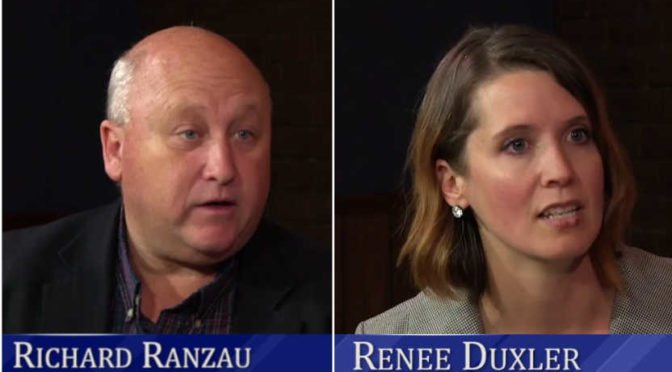
While commissioners Karl Peterjohn and Richard Ranzau spoke in favor of government transparency and compliance with records requests, not all their colleagues agreed.

Dave Unruh asked Trabert if GWEDC had responded to his records request. Trabert said yes, and the response from GWEDC is that the agency believes it has complied with the open records law. This, he explained, is a common response from agencies.

Commission Chair Tim Norton expressed concern that any non-profit the commission gives money to would have to hire legal help, which he termed an unintended consequence. He made a motion to receive and file Trabert’s remarks, which is routine. His motion also included taking this matter under advisement, which is what politicians do in order to bury something. Unruh seconded the motion.

Peterjohn made a substitute motion that a representative from GWEDC would appear before the commission and discuss the open records act. This motion passed four to one, with Unruh in the minority. Even though Norton voted in favor of Peterjohn’s motion, it’s evident that he isn’t in favor of more government transparency. Unruh’s vote against government transparency was explicit.

Wichita school district records request

USD 259, the Wichita public school district, also declined to fulfill a records request submitted by KPI. In a press release, KPI details the overly-legalistic interpretation of the KORA statute that the Wichita school district uses to claim that the records are exempt from disclosure.

In a news report on KSN Television, school board president Lynn Rogers explained the district’s reason for denying the records request: “But some school board members with USD 259 in Wichita say, the numbers brought up in court are preliminary numbers. That’s the reason they are not handing them over to KPI. ‘We have worked very hard over the years to be very forthright and we’ve tried to disclose the information when we have it,’ says Lynn Rogers.’”

This claim by Rogers — if sincere — is a break from the past. In 2008 Rogers told me that it is a burden when citizens make requests for records.

Until recently the Wichita school district had placed its monthly checkbook register on its website each month, and then removed it after a month had passed. Rogers explained that the district didn’t have space on its servers to hold these documents. That explanation is total nonsense, as the pdf check register documents are a very small fraction of the size of video files that the district hosted on its servers. Video files, by the way, not related to instruction, but holding coverage of groundbreaking ceremonies.

City of Wichita

KPI has made records requests to other local governmental agencies. Some have refused to comply on the basis that they are not public agencies as defined in Kansas statutes. This was the case when I made records requests to Wichita Downtown Development Corporation, Greater Wichita Economic Development Coalition, and Go Wichita Convention and Visitors Bureau.

In 2009 I addressed the Wichita City Council and asked that the city direct that WDDC follow the law and fulfill my records requests. (Video is at Video: City of Wichita and the Kansas Open Records Act.)

In my remarks, I told Mayor Carl Brewer and the council this:

The Kansas Open Records Act (KORA), in KSA 45-216 (a) states: “It is declared to be the public policy of the state that public records shall be open for inspection by any person unless otherwise provided by this act, and this act shall be liberally construed and applied to promote such policy.”

But in my recent experience, our city’s legal staff has decided to act contrary to this policy. It’s not only the spirit of this law that the city is violating, but also the letter of the law as well.

Recently I requested some records from the Wichita Downtown Development Corporation. Although the WDDC cooperated and gave me the records I requested, the city denies that the WDDC is a public agency as defined in the Kansas Open Records Act.

This is an important issue to resolve.

In the future, requests may be made for records for which the WDDC may not be willing to cooperate. In this case, citizens will have to rely on compliance with the law, not voluntary cooperation. Or, other people may make records requests and may not be as willing as I have been to pursue the matter. Additionally, citizens may want to attend WDDC’s meetings under the provisions of the Kansas Open Meetings Act.

Furthermore, there are other organizations similarly situated. These include the Greater Wichita Economic Development Coalition and the Go Wichita Convention and Visitors Bureau. These organizations should properly be ruled public agencies as defined in the Kansas Open Records Act so that citizens and journalists may freely request their records and attend their meetings.

Here’s why the WDDC is a public agency subject to the Open Records Act. KSA 45-217 (f)(1) states: “‘Public agency’ means the state or any political or taxing subdivision of the state or any office, officer, agency or instrumentality thereof, or any other entity receiving or expending and supported in whole or in part by the public funds appropriated by the state or by public funds of any political or taxing subdivision of the state.”

The Kansas Attorney General’s office offers additional guidance: “A public agency is the state or any political or taxing subdivision, or any office, officer, or agency thereof, or any other entity, receiving or expending and supported in whole or part by public funds. It is some office or agency that is connected with state or local government.

The WDDC is wholly supported by a special property tax district. Plain and simple. That is the entire source of their funding, except for some private fundraising done this year.

The city cites an exception under which organizations are not subject to the Kansas Open Records Act: “Any entity solely by reason of payment from public funds for property, goods or services of such entity.”

The purpose of this exception is so that every vendor that sells goods and services to government agencies is not subject to the Kansas Open Records Act. For example, if a city buys an automobile, the dealer is not subject simply because it sold a car to the city.

But this statute contains an important qualifier: the word “solely.” In this case, the relationship between the City of Wichita and the WDDC is not that of solely customer and vendor. Instead, the city created a special tax district that is the source of substantially all WDDC’s revenue, and the existence of the district must be renewed by the city soon. The WDDC performs a governmental function that some cities decide to keep in-house. The WDDC has only one “customer,” to my knowledge, that being the City of Wichita.

Furthermore, the revenue that the WDDC receives each year is dependent on the property tax collected in the special taxing district.

The only reasonable conclusion to draw is that in terms of both funding and function, the WDDC is effectively a branch of Wichita city government.

The refusal of the city’s legal department to acknowledge these facts and concede that the WDDC is a public agency stands reason on its head. It’s also contrary to the expressly stated public policy of the state of Kansas. It’s an intolerable situation that cannot be allowed to exist.

Mr. Mayor and members of the council, it doesn’t take a liberal application of the Kansas Open Records Act to correct this situation. All that is required is to read the law and follow it. That’s what I’m asking this body to do: ask the city legal department to comply with the clear language and intent of the Kansas Open Records Act.

The following year when WDDC’s contract was before the council for renewal, I asked that the city, as part of the contract, agree that WDDC is a public agency as defined in Kansas law. (Video is at Kansas Open Records Act at Wichita City Council.) Then-council member Paul Gray, after noting that he had heard all council members speak in favor of government transparency, said that even if WDDC is not a public agency under the law, why can’t it still proceed and fulfill records requests? This is an important point. The Kansas Open Records Act contains many exclusions that agencies use to avoid releasing records. But agencies may release the records if they want.

Any council member could have made the motion that I asked for. But no one, including Gray, former council member Sue Schlapp, former member Jim Skelton (now on the Sedgwick County Commission), Mayor Carl Brewer, and council members Jeff Longwell (district 5, west and northwest Wichita), Janet Miller (district 6, north central Wichita), and Lavonta Williams (district 1, northeast Wichita) would make a motion to increase government transparency and citizens’ right to know. Wichita city manager Robert Layton offered no recommendation to the council.

Last year I appeared again before the council to ask that Go Wichita agree that it is a public agency as defined in the open records act. Randy Brown, who is chair of the Kansas Sunshine Coalition for Open Government and former opinion page editor of the Wichita Eagle was at the meeting and spoke on this matter. In his remarks, Brown said “It may not be the obligation of the City of Wichita to enforce the Kansas Open Records Act legally, but certainly morally you guys have that obligation. To keep something cloudy when it should be transparent I think is foolishness on the part of any public body, and a slap in the face of the citizens of Kansas. By every definition that we’ve discovered, organizations such as Go Wichita are subject to the Kansas Open Records Act.”

Brown said that he’s amazed when public officials don’t realize that transparency helps build trust in government, thereby helping public officials themselves. He added “Open government is essential to a democracy. It’s the only way citizens know what’s going on. … But the Kansas Open Records Act is clear: Public records are to be made public, and that law is to be construed liberally, not by some facile legal arguments that keep these records secret.”

He recommended to the council, as I did, that the contract be contingent on Go Wichita following the Kansas Open Records Act.

Discussion on this matter revealed a serious lack of knowledge by some council members regarding the Kansas Open Records Act. In remarks from the bench James Clendenin (district 3, southeast and south Wichita) asked the city manager a series of questions aimed at determining whether the city was satisfied with the level of service that Go Wichita has provided. He then extended that argument, wondering if any company the city contracts with that is providing satisfactory products or service would be subject to “government intrusion” through records requests. Would this discourage companies from wanting to be contractors?

First, the Kansas Open Records Act does not say anything about whether a company is providing satisfactory service to government. That simply isn’t a factor, and is not a basis for my records request to Go Wichita. Additionally, the Kansas Open Records Act contains a large exception, which excepts: “Any entity solely by reason of payment from public funds for property, goods or services of such entity.” So companies that sell to government in the ordinary course of business are not subject to the open records law. Go Wichita is distinguished, since it is almost entirely funded by taxes and has, I believe, just a single client: the City of Wichita.

Finally, we should note that the open records law does not represent government intrusion, as Clendenin claimed. Open records laws offer citizens the ability to get an inside look at the working of government. That’s oversight, not intrusion.

Pete Meitzner (district 2, east Wichita) asked that there might be a workshop to develop a policy on records requests. He expressed concern that departments might be overwhelmed with requests from me that they have to respond to in a timely fashion, accusing me of “attempt to bury any of our departments in freedom of information acts [sic].” Such a workshop would probably be presented by Wichita City Attorney Gary Rebenstorf. His attitude towards the open records law is that of hostility, and is not on the side of citizens.

In making this argument, Mr. Meitzner might have taken the time to learn how many records requests I’ve made to the city. The answer, to the best of my recollection, is that I made no requests that year to the city citing the open records act. I have made perhaps a half-dozen informal requests, most of which I believe were fulfilled consuming just a few moments of someone’s time.

As to Meitzner’s concern over the costs of fulfilling records requests: The law allows for government and agencies to charge fees to fulfill requests. They often do this, and I have paid these fees. But more important than this, the attitude of council member Meitzner is troubling. Government should be responsive to citizens. As Randy Brown told the council, government should welcome opportunities to share information and be open and transparent.

Michael O’Donnell (district 4, south and southwest Wichita) made a motion that the contract be approved, but amended that Go Wichita will comply with the Kansas Open Records Act. That motion didn’t receive a second.

Brown and I appeared on the KAKE Television public affairs program This Week in Kansas to discuss this matter. Video is at In Wichita, disdain for open records and government transparency.

Enforcement of Kansas Open Records Act

In Kansas, when citizens believe that agencies are not complying with the Kansas Open Records Act, they have three options. One is to ask the Kansas Attorney General for help. But the policy of the Attorney General is to refer all cases to the local District Attorney, which is what I did. The other way to proceed is for a citizen to pursue legal action at their own expense.

After 14 months, Sedgwick County DA Nola Foulston’s office decided in favor of the governmental agencies. See Sedgwick County DA Response to KORA Request to Wichita Downtown Development Corporation.

When newspapers have their records requests refused, they usually give publicity to this. The Wichita Eagle is aware of my difficulties with records requests in Wichita, as their reporters have attended a number of meetings where my records requests were discussed, sometimes at length. But so far no coverage of an issue that, were the newspaper in my shoes, would undoubtedly covered on the front page. Something tells me that KPI won’t get any coverage, either.

Additional information on this topic is at:

Wichita voters reject cronyism — again

by Bob Weeks on August 9, 2012

Tuesday’s primary election in Kansas was notable for the large number of victories by conservative challengers over Republican senate incumbents. Also important is that voters in Wichita and the surrounding area rejected, for the second time this year, the culture of political cronyism that passes for economic development in Wichita.

On Tuesday incumbent Sedgwick County Commissioner Karl Peterjohn defeated a challenge by Wichita City Council Member Jeff Longwell. The contrast was clear: Peterjohn with his long-time, outspoken advocacy for limited government and free market principles, although perhaps tempered a bit based on some votes he’s made. Longwell, however, advocates for “more tools in the toolbox.” In other words, a larger role for government in economic development and centralized planning.

The result: Peterjohn won, 57 percent to 43 percent.

Longwell had the endorsements of many Wichita-area politicians, including Wichita Mayor Carl Brewer and all other Wichita City Council members except Michael O’Donnell (district 4, south and southwest Wichita): Vice Mayor Janet Miller (district 6, north central Wichita) and council members Lavonta Williams (district 1, northeast Wichita), James Clendenin (district 3, southeast and south Wichita), and Pete Meitzner (district 2, east Wichita).

Sedgwick County Commission members Tim Norton, Jim Skelton, and Dave Unruh also endorsed Longwell.

In addition to these endorsements, Longwell had a large money advantage over Peterjohn. According to campaign finance reports filed July 30, Longwell had raised nearly $62,000.

Peterjohn’s July 30 report showed about $20,000 raised, so as of that date Longwell had over three times as much campaign money at his disposal than Peterjohn.

The money advantage and the endorsements are linked. On Longwell’s July 30 campaign finance report we learned that executives of a Michigan construction company made campaign contributions immediately before and after Longwell participated in a city council voted that benefited them. Key Construction, a heavy contributor to Longwell’s campaign, also benefited from Longwell’s vote that day. This was just another episode in Longwell’s history of voting for overpriced no-bid contracts and no-interest city loans for his large campaign contributors.

The day after Peterjohn held a news conference questioning Longwell’s Michigan contributions, Longwell held the news conference that announced the above-mentioned endorsements. Many of those endorsers also receive campaign money from those they award with no-bid contracts and other taxpayer-funded largesse.

Despite the advantage in campaign funds and the endorsements, voters in west Wichita and west Sedgwick County rejected the political cronyism that is Jeff Longwell’s legacy in government service.

It’s the second time this year voters have rejected cronyism. In February Wichita voters voted down a tax giveaway to the Ambassador Hotel by a margin of 62 percent to 38 percent.

Longwell played a role in that election, too. When citizens exercised their constitutional right to challenge the taxpayer-funded giveaway to the hotel, Jeff Longwell said it was “disappointing,” and a “stunt.” He said that using this fundamental aspect of democracy causes citizens to “lose credibility.”

When it came time for the council to set the date for the special election on the hotel tax, Longwell attempted to have the election commissioner set the date as early as possible, obviously thinking that a short campaign would benefit the hotel developers.

Those hotel developers, by the way, included many of Longwell’s long-time campaign contributors.

After Wichita voters rejected this special tax deal, the Wall Street Journal in a column titled “A Wichita Shocker: You can beat city hall” wrote: “Local politicians like to get in bed with local business, and taxpayers are usually the losers. So three cheers for a voter revolt in Wichita, Kansas last week that shows such sweetheart deals can be defeated.”

It’s no wonder Longwell was disappointed when citizens petitioned their government. Voters soundly rejected the political cronyism and sweetheart deals that are Longwell’s legacy.

{ 5 comments }

In Kansas, rejecting left-wing Republicans

by Bob Weeks on August 8, 2012

The headline in the Kansas City Star reads “Voters reject middle ground in Kansas Senate races.” A more accurate conclusion is that voters have realized that the governance of Kansas by a coalition of Democrats and left-wing Republicans has not been in the state’s best interest. Stagnate job growth as compared to other states, increasing spending on schools with no accountability and not even an honest discussion of achievement, falling behind other states in school reform and school choice, a highly undemocratic method of selecting our state’s top judges, resistance to privatization and other measures to streamline government, business tax costs topped by only a few other states: these are some of the results of this coalition.

But yesterday, Kansas voters said goodbye to many of the left-wing Republicans — the so-called “moderates” or “traditional Republicans” — and nominated conservatives in their place. Some nominees face Democratic challengers in November.

The results are a surprise not only for the number of victories by conservatives, but the margin of victory. In Johnson County, incumbent Senator Tim Owens was defeated 60 to 40. Owens ranked at the bottom of all senators — Democrats included — in the Kansas Economic Freedom Index.

In a neighboring district, incumbent Senator Mary Pilcher-Cook won her primary election by a 64 to 36 margin. Pilcher-Cook ranked at the top of the Kansas Economic Freedom index. Conservative Steve Abrams, who ranked well in the KEFI, also defeated a challenger.

Another notable result is the defeat of Senate President Steve Morris.

Other defeats of moderates, some being incumbents, include Jeff Melcher over Pat Colloton to replace John Vratil, Jacob LaTurner over Bob Marshall, Forrest Knox over John Grange, Jeff King over Dwayne Umbarger, Greg Smith over Joe Beveridge, Bob Reader over Roger Reitz, Tom Arpke over Pete Brungardt, Michael O’Donnell over Jean Schodorf, Mitch Holmes over Ruth Teichmann, and Dan Kerschen over Dick Kelsey. Kelsey will dispute being lumped in the moderate camp, but on economic freedom issues, he ranked just barely above neutral.

There were some victories for the moderates. Kay Wolf won the primary to replace Terrie Huntington, which is a retention for moderates. In Topeka, moderate Vicki Schmidt retains a place in the Senate, as does Carolyn McGinn in south-central Kansas. Pat Apple defeated a challenge from Charlotte O’Hara. Apple ranks barely above neutral in the KEFI, while O’Hara, in the Kansas House, was near the top. Jeff Longbine survived a challenge from conservative James Fawcett.

Commenting on the results, Americans for Prosperity–Kansas state director Derrick Sontag said “The primary results make one thing clear: Kansans support those who promote fiscally conservative, limited government, free market policies. Fiscal conservatives are now being elected because of the policies that have failed our state for years. This new field of candidates vying for office reflects a continued desire to put a stop to the rampant state spending and high tax burdens of the past. It is evident from the results at the ballot box that Kansans want a reasonable, responsible government and we are optimistic that our state is now starting to head down the path toward prosperity and a strong Kansas economy.”

In local races in south-central Kansas, voters rejected the challenge by left-wing Republican Wichita City Council Member Jeff Longwell to incumbent Karl Peterjohn. Longwell had the endorsement of Wichita Mayor Carl Brewer and all Wichita City Council members except Michael O’Donnell (district 4, south and southwest Wichita). Three Sedgwick County Commission members endorsed Longwell, too. As there is no Democratic contestant, this race is over.

In suburban Andover, voters rejected a proposed property tax increase for schools. Update: After the final canvass of votes, the tax increase passed by two votes.

{ 14 comments }

Sedgwick County voter registration changes: Impact on senate races

July 23, 2012

Analysis of voter registration in Sedgwick County shows switches to Republican registration, but also other interesting numbers.

Read the full article →

Wichita fails ethics test

July 18, 2012

Wichita Mayor Carl Brewer and most members of the city council failed a test concerning government ethics.

Read the full article →

For Wichita government, an ethics tipping point

July 16, 2012

Wichita Mayor Carl Brewer and the Wichita City Council will make a decision that will let the city learn the ethics and character of its elected officials.

Read the full article →

Wichita City Council can’t judge airport contract

July 14, 2012

Wichita’s mayor and nearly all city council members face conflicts of interest affecting a decision on a construction contract for a new airport terminal.

Read the full article →

For Wichita airport contract, politics and money can’t be overlooked

June 14, 2012

A politically-connected construction firm in Wichita is challenging the award of the contract for building Wichita’s new airport terminal. When the Wichita Wichita City Council makes the decision, it will be impossible or difficult to gauge the impact of campaign contributions and political influence on the process.

Read the full article →

Wichita taxicab regulations likely to impede progress

May 14, 2012

The Wichita City Council will consider new taxicab regulations that, city hall hopes, will improve tax service in Wichita. But the regulations create high barriers to entry that stifle entrepreneurship and market competition, likely dooming the program to fail.

Read the full article →

Wichita decides to join sustainable communities planning

April 18, 2012

The City of Wichita has decided to embrace centralized government planning.

Read the full article →

Kansas and Wichita need pay-to-play laws

March 27, 2012

In Wichita, campaign contributions made to city council candidates often are not about supporting political ideologies — liberal, moderate, or conservative. It’s about opportunists seeking money from government. Pay-to-play laws can help control this harmful practice.

Read the full article →

Kansas needs pay-to-play laws

February 6, 2012

In Wichita, campaign contributions made to city council candidates often are not about supporting political ideologies — liberal, moderate, or conservative. It’s about opportunists seeking money from government. Pay-to-play laws can help control this harmful practice.

Read the full article →

Market solutions best for Wichita

February 6, 2012

Wichita Mayor Carl Brewer wants to double down on economic development strategies that have produced very little good.

Read the full article →

Wichita City Council sets hotel tax election date

December 26, 2011

Discussion of setting an election date provided another example reinforcing the realization that Wichita has a city council — with the exception of one member — that is entirely captured by special interests.

Read the full article →

Open records, rights of Kansans disrespected at Wichita City Council

December 14, 2011

A meeting of the Wichita City Council reveals that the city does not care about open and transparent government, despite the claims of leaders such as Mayor Carl Brewer.

Read the full article →

Wichita’s political class

December 9, 2011

Discussion at a Wichita City Council meeting provided an opportunity for citizens to discover the difference in the thinking of the political class and those who value limited government and capitalism.

Read the full article →

At Wichita City Council, a big company asks for a forgivable loan

October 18, 2011

Johnson Controls, a very large company, asks the Wichita City Council for a small forgivable loan.

Read the full article →

Kansas and Wichita quick takes: Tuesday September 20, 2011

September 20, 2011

Today: Douglas Place value; Douglas Place vote delayed; Solyndra unnoticed by some; On Solyndra, the real lesson; Spreading the wealth: the costs; Kansas schools to be topic; Natural rights.

Read the full article →

The resolve of the Wichita City Council

September 19, 2011

Despite her assessment of the will of the people of Wichita, The Wichita Eagle’s Rhonda Holman encourages the Wichita City Council to stick to its guns and do the opposite.

Read the full article →

In Wichita, how tax increment financing can channel tax money

September 6, 2011

The flow of tax dollars Wichita city leaders have planned for Douglas Place, a proposed hotel in Wichita, creates a mechanism where taxpayer funds are routed to a politically-connected construction firm. And unlike the real world, where developers have an incentive to build economically, the city has created incentives for Douglas Place developers to spend lavishly in a parking garage, at no cost to themselves.

Read the full article →

Pay-to-play laws are needed in Wichita and Kansas

August 18, 2011

In the wake of scandals, some states and cities have passed “pay-to-play” laws. These laws often prohibit political campaign contributions by those who seek government contracts, or the laws may impose special disclosure requirements. But Wichita and Kansas have no such laws.

Read the full article →

Wichita City Council bows to special interests

August 10, 2011

Yesterday’s meeting of the Wichita City Council revealed a council — except for one member — totally captured by special interests, to the point where the council, aided by city staff, used a narrow legal interpretation in order to circumvent a statutorily required public hearing process.

Read the full article →

Job creation at young firms declines

August 1, 2011

A new report by the Kauffman Foundation holds unsettling information for the future of job growth in the United States.

Read the full article →

Wichita and its political class

June 8, 2011

Discussion at a Wichita City Council meeting provided an opportunity for citizens to discover the difference in the thinking of the political class and those who value limited government and capitalism.

Read the full article →