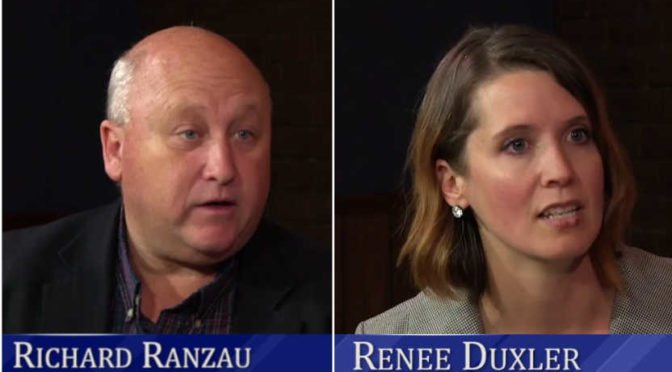
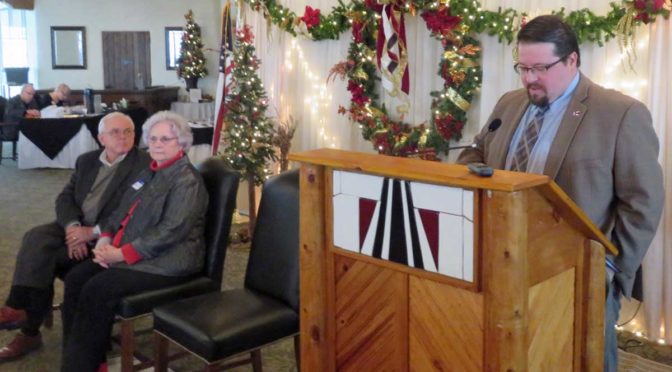
No longer is it “Sustainable Communities.” Now it’s “South Central Kansas Prosperity Plan.” Either way, the program is still centralized government planning, with great potential to harm our economy and liberties.
The newly-renamed planning initiative has a new website set to launch in a few days — Let’s Talk Prosperity.
But no matter how politicians and bureaucrats dress it up, we need to remember the roots of this program. It took from 1987 to 2012, but Sedgwick County actually adopted the language of the United Nations regarding sustainability.
Unruh said he sees the grant simply as an “effort to make decisions about our future for us and our future generations that will save money, conserve resources and be the best solutions for all the folks in our region.” …
Norton said he sees the grant as a way to “look to the future, try to figure out best possible outcomes and make decisions today that will be good for tomorrow.”
“We’re all in this together. You may not like the federal government. You may not like the state government. You may not even like the local government. But I like being at the table and being involved in the future.”
He dismisses any connection to Agenda 21.
“It was a non-binding agreement passed during the first Bush era,” he said of former president George H.W. Bush. “I don’t rail on President Bush because it happened on his watch. I’m not twitchy about it. I’m not worried about it.”
It’s instructive to notice, however, that the language Sedgwick County uses when considering sustainability comes directly from the United Nations. General Assembly Resolution 42/187: Report of the World Commission on Environment and Development holds this language: “Believing that sustainable development, which implies meeting the needs of the present without compromising the ability of future generations to meet their own needs, should become a central guiding principle of the United Nations, Governments and private institutions, organizations and enterprises.” (emphasis added)
Sedgwick County’s Sustainability Page holds this: Definition of Sustainability for Sedgwick County … Meeting the needs of the present without compromising the ability of future generations to meet their needs … (emphasis added)
Sedgwick County left out the word “own,” but otherwise the language is identical. This definition was repeated on the county’s 2012 Employee Sustainability Survey.
The Sedgwick County page — and other county documents — mention economic development, environmental protection, institutional and financial viability, and social equity as “the four core factors that Sedgwick County considers when making community policy and program management decisions.” These goals are often mentioned in Agenda 21 documents, especially social equity.
Proper attention given to the depreciation expense of Intrust Bank Arena in downtown Wichita recognizes and accounts for the sacrifices of the people of Sedgwick County and its visitors to pay for the arena.
The true state of the finances of the Intrust Bank Arena in downtown Wichita are not often a subject of public discussion. Arena boosters promote a revenue-sharing arrangement between the county and the arena operator, referring to this as profit or loss. But this arrangement is not an accurate and complete accounting, and hides the true economics of the arena.
There are at least two ways of looking at the finance of the arena. Most attention is given to the “profit” (or loss) earned by the arena for the county according to an operating and management agreement between the county and SMG, a company that operates the arena.
This agreement specifies a revenue sharing mechanism between the county and SMG. For 2102, the accounting method used in this agreement produced a profit of $703,000, to be split (not equally) between SMG and the county.
While described as “profit” by many, this payment does not represent any sort of “profit” or “earnings” in the usual sense. In fact, the introductory letter that accompanies these calculations warns readers that these are “not intended to be a complete presentation of INTRUST Bank Arena’s financial position and results of operations and are not intended to be a presentation in conformity with accounting principles generally accepted in the United States of America.”
That bears repeating: This is not a reckoning of profit and loss in any recognized sense. It is simply an agreement between Sedgwick County and SMG as to how SMG is to be paid, and how the county participates.
A much better reckoning of the economics of the Intrust Bank Arena can be found in the county’s Comprehensive Annual Financial Report for 2012. It states: “The Arena had an operating loss of $4.8 million. The loss can be attributed to $5.3 million in depreciation expense.”
Depreciation expense is not something that is paid out in cash. Sedgwick County didn’t write a check for the $5.3 million in depreciation expense. Instead, it provides a way to recognize and account for the cost of long-lived assets over their lifespan. It provides a way to recognize opportunity costs, that is, what could be done with our resources if not spent on the arena.
But some don’t recognize this. In years past, Dave Unruh made remarks that show the severe misunderstanding that he and almost everyone labor under regarding the nature of the spending on the arena: “I want to underscore the fact that the citizens of Sedgwick County voted to pay for this facility in advance. And so not having debt service on it is just a huge benefit to our government and to the citizens, so we can go forward without having to having to worry about making those payments and still show positive cash flow. So it’s still a great benefit to our community and I’m still pleased with this report.”
The contention of Unruh and other arena boosters such as the Wichita Eagle editorial board is that the capital investment of $183,625,241 (not including an operating and maintenance reserve) on the arena is merely a historical artifact, something that happened in the past, something that has no bearing today. This attitude, however, disrespects the sacrifices of the people of Sedgwick County and its visitors to raise those funds.
Any honest accounting or reckoning of the performance of Intrust Bank Arena must take depreciation into account. While Unruh is correct in that depreciation expense is not a cash expense that affects cash flow, it is an economic fact that can’t be ignored — except by politicians, apparently.
Recent reporting in the Wichita Business Journal on Wichita’s economic development efforts has many officials saying Wichita doesn’t have enough incentives to compete with other cities. That is, we are not spending enough on incentives.
Whether these incentives are good economic development policy is open for debate. I don’t believe we need them, and that we in Kansas and Wichita can chart another course to increase economic freedom in Kansas. That will make our area appealing to companies. But our local bureaucrats, most business leaders, and nearly all elected officials believe that targeted incentives are the way to attract and retain business.
(Charts at the end of this article illustrate the record in Wichita on jobs.)
Our leaders have identified what they believe is a solution to a problem, but have not implemented that solution effectively, in their own words.
I should say have not implemented the solution on a widespread basis, because Wichita has devoted more tax money to economic development. According to the 2010 City Manager’s Policy Message, page CM-2, “One mill of property tax revenue will be shifted from the Debt Service Fund to the General Fund. In 2011 and 2012, one mill of property tax will be shifted to the General Fund to provide supplemental financing. The shift will last two years, and in 2013, one mill will be shifted back to the Debt Service Fund. The additional millage will provide a combined $5 million for economic development opportunities.”
Isn’t this a failure of political and bureaucratic leadership? We have a long-standing problem, officials have identified what they believe is a solution, but it is not being implemented. These leaders have the ability to spend more on economic development, as illustrated by Wichita’s shifting of tax revenue.
Even if we believe that an active role for government in economic development is best (and I don’t believe that), we have to conclude that our efforts aren’t working. Several long-serving politicians and bureaucrats that have presided over this failure: Mayor Carl Brewer has been on the city council or served as mayor since 2001. Economic development director Allen Bell has been working for the city since 1992. City Attorney Gary Rebenstorf has served for many years. At Sedgwick County, manager William Buchanan has held that position for 21 years. On the Sedgwick County Commission, Dave Unruh has been in office since 2003, and Tim Norton since 2001. Unruh has said he wants to be Wichita’s next mayor.
Wichita City Manager Robert Layton has had less time to influence the course of economic development in Wichita. But as he approaches his fourth anniversary in Wichita, he starts to become part of the legacy of Wichita’s efforts in economic development.
Wichita’s job creation record
Two charts illustrate the record of job growth in Wichita. The first shows Wichita job growth compared to Kansas and the nation. Data is from U.S. Bureau of Economic Analysis, and indexed with values for 2001 set to 1.00.
As you can see, job growth in Wichita trails both Kansas and the nation.
The next chart shows Wichita job growth by sector.
Private sector job growth is prominently lower than government. This is a problem, because more economic activity is directed away from the productive private sector to inefficient government.
At the October 31 meeting of the Sedgwick County Commission, Karl Peterjohn introduced a measure that would let the Kansas Legislature know that the commission supports improving the tax climate in Kansas, and specifically would limit property tax growth. But electoral politics forced a delay in a vote.
In response to Peterjohn’s proposal, the coalition of one Democrat and two liberal Republicans that form the working majority on the commission maneuvered to delay voting on the measure until after the November 6 election. With the item appearing on tomorrow’s agenda, it’s very likely that the majority coalition — Commission Chair Tim Norton, Dave Unruh, and Jim Skelton — will vote against the proposal.
Why the rush for delay? Norton was facing a vigorous challenge in the election. He couldn’t afford to cast a vote against property tax reform. With Skelton publicly supporting Norton, and Unruh doing so behind the scenes, the two Republicans supported their liberal Democratic fellow traveler in delaying the vote until after the election.
But after the election, Norton is free to vote against property tax reform. Skelton and Unruh don’t face the voters for another two years, and they’ll be relying on the short memory span of most voters.
Unruh said he sees the grant simply as an “effort to make decisions about our future for us and our future generations that will save money, conserve resources and be the best solutions for all the folks in our region.” …
Norton said he sees the grant as a way to “look to the future, try to figure out best possible outcomes and make decisions today that will be good for tomorrow.”
“We’re all in this together. You may not like the federal government. You may not like the state government. You may not even like the local government. But I like being at the table and being involved in the future.”
He dismisses any connection to Agenda 21.
“It was a non-binding agreement passed during the first Bush era,” he said of former president George H.W. Bush. “I don’t rail on President Bush because it happened on his watch. I’m not twitchy about it. I’m not worried about it.”
The language Sedgwick County uses when considering sustainability comes directly from the United Nations. General Assembly Resolution 42/187: Report of the World Commission on Environment and Development holds this language: “Believing that sustainable development, which implies meeting the needs of the present without compromising the ability of future generations to meet their own needs, should become a central guiding principle of the United Nations, Governments and private institutions, organizations and enterprises.” (emphasis added)
Sedgwick County’s Sustainability Page holds this: Definition of Sustainability for Sedgwick County … Meeting the needs of the present without compromising the ability of future generations to meet their needs … (emphasis added)
Sedgwick County left out the word “own,” but otherwise the language is identical. This definition was repeated on the county’s 2012 Employee Sustainability Survey.
The Sedgwick County page — and other county documents — mention economic development, environmental protection, institutional and financial viability, and social equity as “the four core factors that Sedgwick County considers when making community policy and program management decisions.” These goals are often mentioned in Agenda 21 documents, especially social equity.
The sale of a radio tower owned by Sedgwick County reveals another case of local government not looking out for the interests of citizens and taxpayers, with the realization that the stain of cronyism is alive and well.
As a result of system upgrades, the county no longer needs a radio tower located near 77th Street North and Interstate 135. Pixius Communications, LLC made an offer to purchase the tower and the five acre tower site for $280,000. The county proceeded making arrangements for the sale, preparing a sales agreement contract between Sedgwick County and Pixius with a sales price of $280,000, along with several other legal documents necessary to support the sale. These documents are available at the agenda file for this item.
According to sources, County Manager William Buchanan supported the Pixius offer. So did commissioners Dave Unruh and Jim Skelton.
But commissioners Richard Ranzau and Karl Peterjohn felt that the best way to sell the tower was through an auction.
Commission Chair Tim Norton, because of his receipt of campaign contributions from Pixius, Jay Maxwell (owner of Pixius), and Penny Maxwell (spouse of owner), was going to abstain from voting. (Skelton has accepted contributions from the Maxwells, but he was going to vote nonetheless.)
So there was not a majority of three votes to accept the Pixius offer. Buchanan suggested the auction. All commissioners agreed.
Now we know the results of the auction: A Florida company offered $610,000. After a sales commission ($55,000) and half of closing costs ($1,128), the county will net $553,872. That’s almost twice the price the county manager and two commissioners were willing to sell the tower for.
There’s something else: What will be the appraised value of the tower and site for tax purposes? The selling price of a property is strong evidence of its value. As a result of the auction, therefore, this property is likely to be appraised at $610,000 instead of $280,000. That’s good for those who think it’s good for government to bring in more tax revenue.
This episode is another instance where no-bid contracts and cronyism cost taxpayers. Maxwell, the almost-beneficiary of this sweetheart no-bid contract, has been the recipient of many benefits at taxpayer expense, such as tax increment financing and community improvement district taxes. He’s tried for more, but even the Wichita City Council has a limit to its cronyism, now and then. Although cronyism and no-bid contracts have been a problem at Wichita City Hall.
Interestingly, a recent KSN Television news story characterized Ranzau and Peterjohn as “hardline fiscal conservatives.” The story went on to report “Incumbent Democrat Tim Norton often sides with the two more moderate members of the commission with many votes being decided by a 3-2 margin.” Those moderate members are, of course, Unruh and Skelton.
Norton didn’t have to take sides — at least publicly — on this issue, but I’m confident that if this was not an election year for Norton, he would have voted for the original Pixius deal that we now see was a disaster for taxpayers.
In the KSN story Norton was quoted as saying “I’m a business man of many years in Wichita. I understand the business climate and job retention.”
Unruh and Skelton are also businessmen. I hope these commissioners look after their personal business with more care and concern than they have shown for the business of taxpayers.
Tomorrow the Wichita Metro Chamber of Commerce will announce, according to the Wichita Eagle, new economic development initiatives. Said to be the product of months of discussion, past history suggests that the efforts will not be fruitful for the Wichita area. The inclinations of the parties involved in this effort are for more government intervention and less reliance on economic freedom and free markets.
Do economic development incentives work?
Judging the effectiveness of economic development incentives requires looking for the unseen effects as well as what is easily seen. It’s easy to see groundbreaking and ribbon cutting ceremonies. It’s more difficult to see that the harm that government intervention causes.
That’s assuming that the incentives even work as advertised in the first place. Alan Peters and Peter Fisher, in their paper titled The Failures of Economic Development Incentives published in Journal of the American Planning Association, wrote on the effects of incentives. A few quotes from the study, with emphasis added:
Given the weak effects of incentives on the location choices of businesses at the interstate level, state governments and their local governments in the aggregate probably lose far more revenue, by cutting taxes to firms that would have located in that state anyway than they gain from the few firms induced to change location.
On the three major questions — Do economic development incentives create new jobs? Are those jobs taken by targeted populations in targeted places? Are incentives, at worst, only moderately revenue negative? — traditional economic development incentives do not fare well. It is possible that incentives do induce significant new growth, that the beneficiaries of that growth are mainly those who have greatest difficulty in the labor market, and that both states and local governments benefit fiscally from that growth. But after decades of policy experimentation and literally hundreds of scholarly studies, none of these claims is clearly substantiated. Indeed, as we have argued in this article, there is a good chance that all of these claims are false.
The most fundamental problem is that many public officials appear to believe that they can influence the course of their state or local economies through incentives and subsidies to a degree far beyond anything supported by even the most optimistic evidence. We need to begin by lowering their expectations about their ability to micromanage economic growth and making the case for a more sensible view of the role of government — providing the foundations for growth through sound fiscal practices, quality public infrastructure, and good education systems — and then letting the economy take care of itself.
Other economists have studied tax increment financing (TIF) and have concluded that it is an overall negative factor for the entire region where it is used. Another study found that TIF districts created for retail use had a negative effect on municipal employment.
Last week Dave Trabert wrote in the Kansas Policy Institute blog: “There’s a very simple reason that these well-intended initiatives haven’t worked: local government and their public-private partners are offering employers what they want them to have instead of what they need to create jobs. The Wichita Chamber’s own survey of business owners said taxes were too high. WIBA’s member survey identified tax and regulatory issues as their top concerns, as did the US Chamber of Commerce. Yet government and their public-private partners ignore what the customer wants because they don’t want the same things.”
Wichita’s record on economic development
Earlier this year Wichita Mayor Carl Brewer said that the city’s efforts in economic development had created “almost 1000 jobs.” While that sounds like a lot of jobs, that number deserves context.
According to estimates from the Kansas Department of Labor, the civilian labor force in the City of Wichita for December 2011 was 192,876, with 178,156 people at work. This means that the 1,000 jobs created accounted for from 0.52 percent to 0.56 percent of our city’s workforce, depending on the denominator used. This miniscule number is dwarfed by the normal ebb and flow of other economic activity.
It’s also likely that the city’s economic development efforts were not responsible for a large proportion of these jobs. But government still takes credit. Also, the mayor did not mention the costs of creating these jobs. These costs have a negative economic impact on those who pay them. This means that economic activity — and jobs — are lost somewhere else in order to pay for the incentives.
The mayor’s plan going forward, in his words, is “We will incentivize new jobs.” But under the mayor’s leadership, this “active investor” policy has produced a very small number of jobs, year after year. Doubling down on the present course is not likely to do much better.
There’s even confusion over whether our efforts are working. In 2005, a Wichita Eagle editorial commented on a GWEDC report: “Among the points in Thursday’s report worthy of pride was this: the observation by coalition president J.V. Lentell that he’s never seen the cooperation on economic development between the public and private sectors as good as it is now. ‘I’m here to tell you, I think it’s on track,’ Lentell said, emphatically.” (July 29, 2005)
But in January of this year, an Eagle article listed several things Wichita needs, such as free land and buildings, money for closing deals, and a larger promotions budget. The reporter concluded “The missing pieces have been obvious for years, but haven’t materialized for one reason or another.”
So even if we believe that an active role for government is best, we have to conclude that our efforts aren’t working. Several long-serving politicians and bureaucrats that have presided over this failure: Mayor Carl Brewer has been on the city council or served as mayor since 2001. Economic development director Allen Bell has been working for the city since 1992. City Attorney Gary Rebenstorf has served for many years. At Sedgwick County, manager William Buchanan has held that position for 21 years. On the Sedgwick County Commission, Dave Unruh has been in office since 2003, and Tim Norton since 2001. (Unruh has said he wants to be Wichita’s next mayor.)
These people all believe in government-directed economic development. We need to hold them accountable.
Finally, consider Wichita job growth. As shown in the accompanying chart, the growth in government employees has outstripped private sector job growth. The increase in local government employees is particularly striking.
Wichita job growth. Data is indexed, with 1990 equal to 1. Source: Bureau of Labor Statistics.
What our leaders want
I don’t know what will be in the economic development plan, but it is possible — likely, even — that there will be a call for a tax revenue stream for economic development. In February a company location consultant told Wichita leaders “Successful communities need a dedicated stream of money for economic development.” The news story reported “He was preaching to the choir. GWEDC leaders have been saying for some time that now is the time to go to the business community and the public to make the case for more money and resources.” (Consultant: Wichita needs sites, closing fund to lure business, Wichita Eagle February 16, 2012.)
At one time local chambers of commerce would oppose tax increases. They would promote free market principles as the way to create a positive business environment. But this year it was the official position of the Wichita Chamber that eight government subsidy programs was not enough for a downtown hotel, and that there should be a ninth.
A few years ago Stephen Moore wrote a piece for the Wall Street Journal that that shows how very often, local chambers of commerce support principles of crony capitalism instead of pro-growth policies that support free enterprise and genuine capitalism: “The Chamber of Commerce, long a supporter of limited government and low taxes, was part of the coalition backing the Reagan revolution in the 1980s. On the national level, the organization still follows a pro-growth agenda — but thanks to an astonishing political transformation, many chambers of commerce on the state and local level have been abandoning these goals. They’re becoming, in effect, lobbyists for big government. … In as many as half the states, state taxpayer organizations, free market think tanks and small business leaders now complain bitterly that, on a wide range of issues, chambers of commerce deploy their financial resources and lobbying clout to expand the taxing, spending and regulatory authorities of government. This behavior, they note, erodes the very pro-growth climate necessary for businesses — at least those not connected at the hip with government — to prosper. Journalist Tim Carney agrees: All too often, he notes in his recent book, ‘Rip-Off,’ ‘state and local chambers have become corrupted by the lure of big dollar corporate welfare schemes.’”
Hall writes this regarding “benchmarking” — the bidding wars for large employers that are the foundation of Wichita economic development, and the battle for which Wichita is likely preparing: “Kansas can break out of the benchmarking race by developing a strategy built on embracing dynamism. Such a strategy, far from losing opportunity, can distinguish itself by building unique capabilities that create a different mix of value that can enhance the probability of long-term economic success through enhanced opportunity. Embracing dynamism can change how Kansas plays the game.”
We need to recognize that government as active investor doesn’t work. A serious problem with a plan for increased economic interventionism by government is the very nature of knowledge. In a recent issue of Cato Policy Report, Arnold King wrote:
As Hayek pointed out, knowledge that is important in the economy is dispersed. Consumers understand their own wants and business managers understand their technological opportunities and constraints to a greater degree than they can articulate and to a far greater degree than experts can understand and absorb.
When knowledge is dispersed but power is concentrated, I call this the knowledge-power discrepancy. Such discrepancies can arise in large firms, where CEOs can fail to appreciate the significance of what is known by some of their subordinates. … With government experts, the knowledge-power discrepancy is particularly acute.
Relying on economic freedom and free market solutions for economic growth and prosperity means trusting in the concept of spontaneous order. That takes courage. It requires faith in the values of human freedom and ingenuity rather than government control. It requires that government officials let go rather than grabbing tighter the reins of power, as will probably be the key feature of Wichita’s new economic development plan.
But Wichita’s mayor is openly dismissive of economic freedom, free markets, and limited government, calling these principles “simplistic.” Instead, he and most others prefer cronyism and corporate welfare. That hasn’t worked very well so far, and is not likely to work in the future.
Special interest groups are likely to co-opt the government planning process started in south-central Kansas as these groups see ways to benefit from the plan. The public choice school of economics and political science has taught us how special interest groups seek favors from government at enormous costs to society, and we will see this at play over the next few years.
Sedgwick County has voted to participate in a HUD Sustainable Communities Regional Planning Grant. While some justified their votes in favor of the plan because “it’s only a plan,” once the planning process begins, special interests plot to benefit themselves at the expense of the general public. Once the plan is formed, it’s nearly impossible to revise it, no matter how evident the need.
An example of how much reverence is given to government plans comes right from the U.S. Supreme Court in the decision Kelo v. New London, in which the Court decided that government could use the power of eminent domain to take one person’s property and transfer it to someone else for the purposes of economic development. In his opinion for the Court, Justice Stevens cited the plan: “The City has carefully formulated an economic development plan that it believes will provide appreciable benefits to the community.” Here we see the importance of the plan and due reverence given to it.
Stevens followed up, giving even more weight to the plan: “To effectuate this plan, the City has invoked a state statute that specifically authorizes the use of eminent domain to promote economic development. Given the comprehensive character of the plan, the thorough deliberation that preceded its adoption, and the limited scope of our review, it is appropriate for us, as it was in Berman, to resolve the challenges of the individual owners, not on a piecemeal basis, but rather in light of the entire plan. Because that plan unquestionably serves a public purpose, the takings challenged here satisfy the public use requirement of the Fifth Amendment.”
To Stevens, the fact that the plan was comprehensive was a factor in favor of its upholding. The sustainable communities plan, likewise, is nothing but comprehensive, as described by county manager Bill Buchanan in a letter to commissioners: “[the plan will] consist of multi-jurisdictional planning efforts that integrate housing, land use, economic and workforce development, transportation, and infrastructure investments in a manner that empowers jurisdictions to consider the interdependent challenges of economic prosperity, social equity, energy use and climate change, and public health and environmental impact.”
That pretty much covers it all. When you’re charged with promoting economic prosperity, defending earth against climate change, and promoting public health, there is no limit to the types of laws you might consider.
But these plans are rarely by and for the public. Almost always the government planning process is taken over and captured by special interests. We see this in public schools, where the planning and campaigning for new facilities is taken over by architectural and construction firms that see school building as a way to profit. It does not matter to them whether the schools are needed.
Our highway planning is hijacked by construction firms that stand to benefit, whether or not new roads are actually needed.
Our planning process for downtown Wichita is run by special interest groups that believe that downtown has a special moral imperative, and another group that sees downtown as just another way to profit at taxpayer expense. Both believe that taxpayers across Wichita, Kansas, and even the entire country must pay to implement their vision. As shown in Kansas and Wichita need pay-to-play laws the special interests that benefit from public spending on downtown make heavy political campaign contributions to nearly all members of the Wichita City Council. They don’t have a political ideology. They contribute only because they know council members will be voting to give them money.
In Wichita’s last school bond election, 72 percent of the contributions, both in-kind and cash, was given by contractors, architects, engineering firms and others who directly stand to benefit from new school construction, no matter whether schools are actually needed. The firm of Schaefer Johnson Cox Frey Architecture led the way in making these contributions. It’s not surprising that this firm was awarded a no-bid contract for plan management services for the bond issue valued at $3.7 million. This firm will undoubtedly earn millions more for those projects on which it serves as architect.
The special interest groups that benefit from highway construction: They formed a group called Economic Lifelines. It says it was formed to “provide the grassroots support for Comprehensive Transportation Programs in Kansas.” Its motto is “Stimulating economic vitality through leadership in infrastructure development.”
A look at the membership role, however, lets us know whose economic roots are being stimulated. Membership is stocked with names like AFL-CIO, Foley Equipment Company, Heavy Constructors Association of Greater Kansas City, Kansas Aggregate & Concrete Associations, Kansas Asphalt Pavement Association, Kansas Contractors Association, Kansas Society of Professional Engineers, and PCA South Central Cement Promotion Association. Groups and companies like these have an economic interest in building more roads and highways, whether or not the state actually needs them.
The planners themselves are a special interest group, too. They need jobs. Like most government bureaucrats, they “profit” from increasing their power and sphere of influence, and by expansion of their budgets and staffs. So when Sedgwick County Commissioner Jim Skelton asks a professional planner questions about the desirability of planning, what answer does he think he will get? It’s not that the planners are not honest people. But they have a vested economic and professional interest in seeing that we have more government planning, not less.
And we have evidence that planners watch out for themselves. It is not disputed that this planning grant benefits Regional Economic Area Partnership (REAP). Sedgwick County Commissioner Richard Ranzau says that John Schlegel, Wichita’s Director of Planning, told him that “acceptance of this grant will take REAP to another level, because right now they are struggling, and this will help plot the course for REAP.” He said that REAP, which is housed at the Hugo Wall School of Public Affairs at Wichita State University, needs to expand its role and authority in order to give it “something to do.”
We see that REAP is another special interest group seeking to benefit itself. In this case, our best hope is that REAP engages in merely make-work, that the plan it produces is put on a shelf and ignored, and that the only harm to us is the $1.5 million cost of the plan.
By the way, did you know that Sedgwick County Commissioner Dave Unruh, who voted in favor of the plan that benefits REAP, is now chairman of REAP? Special interest groups know how to play the political game.
While commissioners Karl Peterjohn and Richard Ranzau spoke in favor of government transparency and compliance with records requests, not all their colleagues agreed.
Dave Unruh asked Trabert if GWEDC had responded to his records request. Trabert said yes, and the response from GWEDC is that the agency believes it has complied with the open records law. This, he explained, is a common response from agencies.
Commission Chair Tim Norton expressed concern that any non-profit the commission gives money to would have to hire legal help, which he termed an unintended consequence. He made a motion to receive and file Trabert’s remarks, which is routine. His motion also included taking this matter under advisement, which is what politicians do in order to bury something. Unruh seconded the motion.
Peterjohn made a substitute motion that a representative from GWEDC would appear before the commission and discuss the open records act. This motion passed four to one, with Unruh in the minority. Even though Norton voted in favor of Peterjohn’s motion, it’s evident that he isn’t in favor of more government transparency. Unruh’s vote against government transparency was explicit.
Wichita school district records request
USD 259, the Wichita public school district, also declined to fulfill a records request submitted by KPI. In a press release, KPI details the overly-legalistic interpretation of the KORA statute that the Wichita school district uses to claim that the records are exempt from disclosure.
In a news report on KSN Television, school board president Lynn Rogers explained the district’s reason for denying the records request: “But some school board members with USD 259 in Wichita say, the numbers brought up in court are preliminary numbers. That’s the reason they are not handing them over to KPI. ‘We have worked very hard over the years to be very forthright and we’ve tried to disclose the information when we have it,’ says Lynn Rogers.’”
Until recently the Wichita school district had placed its monthly checkbook register on its website each month, and then removed it after a month had passed. Rogers explained that the district didn’t have space on its servers to hold these documents. That explanation is total nonsense, as the pdf check register documents are a very small fraction of the size of video files that the district hosted on its servers. Video files, by the way, not related to instruction, but holding coverage of groundbreaking ceremonies.
The Kansas Open Records Act (KORA), in KSA 45-216 (a) states: “It is declared to be the public policy of the state that public records shall be open for inspection by any person unless otherwise provided by this act, and this act shall be liberally construed and applied to promote such policy.”
But in my recent experience, our city’s legal staff has decided to act contrary to this policy. It’s not only the spirit of this law that the city is violating, but also the letter of the law as well.
Recently I requested some records from the Wichita Downtown Development Corporation. Although the WDDC cooperated and gave me the records I requested, the city denies that the WDDC is a public agency as defined in the Kansas Open Records Act.
This is an important issue to resolve.
In the future, requests may be made for records for which the WDDC may not be willing to cooperate. In this case, citizens will have to rely on compliance with the law, not voluntary cooperation. Or, other people may make records requests and may not be as willing as I have been to pursue the matter. Additionally, citizens may want to attend WDDC’s meetings under the provisions of the Kansas Open Meetings Act.
Furthermore, there are other organizations similarly situated. These include the Greater Wichita Economic Development Coalition and the Go Wichita Convention and Visitors Bureau. These organizations should properly be ruled public agencies as defined in the Kansas Open Records Act so that citizens and journalists may freely request their records and attend their meetings.
Here’s why the WDDC is a public agency subject to the Open Records Act. KSA 45-217 (f)(1) states: “‘Public agency’ means the state or any political or taxing subdivision of the state or any office, officer, agency or instrumentality thereof, or any other entity receiving or expending and supported in whole or in part by the public funds appropriated by the state or by public funds of any political or taxing subdivision of the state.”
The Kansas Attorney General’s office offers additional guidance: “A public agency is the state or any political or taxing subdivision, or any office, officer, or agency thereof, or any other entity, receiving or expending and supported in whole or part by public funds. It is some office or agency that is connected with state or local government.”
The WDDC is wholly supported by a special property tax district. Plain and simple. That is the entire source of their funding, except for some private fundraising done this year.
The city cites an exception under which organizations are not subject to the Kansas Open Records Act: “Any entity solely by reason of payment from public funds for property, goods or services of such entity.”
The purpose of this exception is so that every vendor that sells goods and services to government agencies is not subject to the Kansas Open Records Act. For example, if a city buys an automobile, the dealer is not subject simply because it sold a car to the city.
But this statute contains an important qualifier: the word “solely.” In this case, the relationship between the City of Wichita and the WDDC is not that of solely customer and vendor. Instead, the city created a special tax district that is the source of substantially all WDDC’s revenue, and the existence of the district must be renewed by the city soon. The WDDC performs a governmental function that some cities decide to keep in-house. The WDDC has only one “customer,” to my knowledge, that being the City of Wichita.
Furthermore, the revenue that the WDDC receives each year is dependent on the property tax collected in the special taxing district.
The only reasonable conclusion to draw is that in terms of both funding and function, the WDDC is effectively a branch of Wichita city government.
The refusal of the city’s legal department to acknowledge these facts and concede that the WDDC is a public agency stands reason on its head. It’s also contrary to the expressly stated public policy of the state of Kansas. It’s an intolerable situation that cannot be allowed to exist.
Mr. Mayor and members of the council, it doesn’t take a liberal application of the Kansas Open Records Act to correct this situation. All that is required is to read the law and follow it. That’s what I’m asking this body to do: ask the city legal department to comply with the clear language and intent of the Kansas Open Records Act.
The following year when WDDC’s contract was before the council for renewal, I asked that the city, as part of the contract, agree that WDDC is a public agency as defined in Kansas law. (Video is at Kansas Open Records Act at Wichita City Council.) Then-council member Paul Gray, after noting that he had heard all council members speak in favor of government transparency, said that even if WDDC is not a public agency under the law, why can’t it still proceed and fulfill records requests? This is an important point. The Kansas Open Records Act contains many exclusions that agencies use to avoid releasing records. But agencies may release the records if they want.
Any council member could have made the motion that I asked for. But no one, including Gray, former council member Sue Schlapp, former member Jim Skelton (now on the Sedgwick County Commission), Mayor Carl Brewer, and council members Jeff Longwell (district 5, west and northwest Wichita), Janet Miller (district 6, north central Wichita), and Lavonta Williams (district 1, northeast Wichita) would make a motion to increase government transparency and citizens’ right to know. Wichita city manager Robert Layton offered no recommendation to the council.
Last year I appeared again before the council to ask that Go Wichita agree that it is a public agency as defined in the open records act. Randy Brown, who is chair of the Kansas Sunshine Coalition for Open Government and former opinion page editor of the Wichita Eagle was at the meeting and spoke on this matter. In his remarks, Brown said “It may not be the obligation of the City of Wichita to enforce the Kansas Open Records Act legally, but certainly morally you guys have that obligation. To keep something cloudy when it should be transparent I think is foolishness on the part of any public body, and a slap in the face of the citizens of Kansas. By every definition that we’ve discovered, organizations such as Go Wichita are subject to the Kansas Open Records Act.”
Brown said that he’s amazed when public officials don’t realize that transparency helps build trust in government, thereby helping public officials themselves. He added “Open government is essential to a democracy. It’s the only way citizens know what’s going on. … But the Kansas Open Records Act is clear: Public records are to be made public, and that law is to be construed liberally, not by some facile legal arguments that keep these records secret.”
He recommended to the council, as I did, that the contract be contingent on Go Wichita following the Kansas Open Records Act.
Discussion on this matter revealed a serious lack of knowledge by some council members regarding the Kansas Open Records Act. In remarks from the bench James Clendenin (district 3, southeast and south Wichita) asked the city manager a series of questions aimed at determining whether the city was satisfied with the level of service that Go Wichita has provided. He then extended that argument, wondering if any company the city contracts with that is providing satisfactory products or service would be subject to “government intrusion” through records requests. Would this discourage companies from wanting to be contractors?
First, the Kansas Open Records Act does not say anything about whether a company is providing satisfactory service to government. That simply isn’t a factor, and is not a basis for my records request to Go Wichita. Additionally, the Kansas Open Records Act contains a large exception, which excepts: “Any entity solely by reason of payment from public funds for property, goods or services of such entity.” So companies that sell to government in the ordinary course of business are not subject to the open records law. Go Wichita is distinguished, since it is almost entirely funded by taxes and has, I believe, just a single client: the City of Wichita.
Finally, we should note that the open records law does not represent government intrusion, as Clendenin claimed. Open records laws offer citizens the ability to get an inside look at the working of government. That’s oversight, not intrusion.
Pete Meitzner (district 2, east Wichita) asked that there might be a workshop to develop a policy on records requests. He expressed concern that departments might be overwhelmed with requests from me that they have to respond to in a timely fashion, accusing me of “attempt to bury any of our departments in freedom of information acts [sic].” Such a workshop would probably be presented by Wichita City Attorney Gary Rebenstorf. His attitude towards the open records law is that of hostility, and is not on the side of citizens.
In making this argument, Mr. Meitzner might have taken the time to learn how many records requests I’ve made to the city. The answer, to the best of my recollection, is that I made no requests that year to the city citing the open records act. I have made perhaps a half-dozen informal requests, most of which I believe were fulfilled consuming just a few moments of someone’s time.
As to Meitzner’s concern over the costs of fulfilling records requests: The law allows for government and agencies to charge fees to fulfill requests. They often do this, and I have paid these fees. But more important than this, the attitude of council member Meitzner is troubling. Government should be responsive to citizens. As Randy Brown told the council, government should welcome opportunities to share information and be open and transparent.
Michael O’Donnell (district 4, south and southwest Wichita) made a motion that the contract be approved, but amended that Go Wichita will comply with the Kansas Open Records Act. That motion didn’t receive a second.
In Kansas, when citizens believe that agencies are not complying with the Kansas Open Records Act, they have three options. One is to ask the Kansas Attorney General for help. But the policy of the Attorney General is to refer all cases to the local District Attorney, which is what I did. The other way to proceed is for a citizen to pursue legal action at their own expense.
When newspapers have their records requests refused, they usually give publicity to this. The Wichita Eagle is aware of my difficulties with records requests in Wichita, as their reporters have attended a number of meetings where my records requests were discussed, sometimes at length. But so far no coverage of an issue that, were the newspaper in my shoes, would undoubtedly covered on the front page. Something tells me that KPI won’t get any coverage, either.
Voters in Wichita and the surrounding area have rejected, for the second time this year, the culture of political cronyism that passes for economic development in Wichita.
Sedgwick County will hear from the public on an issue, despite the desires of commissioners Tim Norton, Jim Skelton, and Dave Unruh to avoid public debate.
The government planning process started in south-central Kansas will likely be captured by special interest groups that see ways to benefit from the plan. The public choice school of economics and political science has taught us how special interest groups seek favors from government at enormous costs to society, and we will see this at play again over the next few years.
The Sedgwick County Commission has decided to give a consortium of South Central Kansas governments and organizations broad control over community planning funded by a federal grant and based on a United Nations agenda.
The Wall Street Journal comments on last week’s election in Wichita, noting “Local politicians like to get in bed with local business, and taxpayers are usually the losers.” Purported conservatives like Pete Meitzner, James Clendenin, and Jeff Longwell ought to take notice.
Sedgwick County’s consideration of a federal planning grant raised a host of issues, including buying in to the Obama Administration agenda and the roles and relationships of federal and local governments.
Reports that income earned by the Intrust Bank Arena is down sharply has brought the arena’s finances back into the news. The arena, located in downtown Wichita and owned by Sedgwick County, is deemed to be a success by the county and arena boosters based on “profit” figures generated during its first year of operations. But these numbers are not an honest assessment of the arena’s financial performance.
A decision by the Sedgwick County Commission to grant a forgivable loan of $48,000 to The Golf Warehouse is yet another example of local government relying on corporate welfare as economic development, and exposes how little deliberation is given to making these decisions.
Today: Kansas legislature website; legislators on governor’s plan; Wisconsin demonstrations come to Kansas?; Wichita trash; Wichita mayoral forum didn’t go well; Wichita City Council this week; Sedgwick County commission this week.
Today: Elections, Dave Unruh, Jim Skelton, Gwen Welshimer, Republican Party, Wichita Pachyderm Club, Paul Gray, Jeff Longwell, Rhonda Holman, Sue Schlapp, Carl Brewer.
The financial issue concerns the way that EMS employees are paid and its impact on the county’s budget. Commission chair Karl Peterjohn and Commissioner Kelly Parks asked questions of the county’s auditor. But the issue has grown to become political.
At today’s meeting of the Sedgwick County Commission, commissioners revised the county’s 2010 legislative platform, adding important and groundbreaking taxpayer protection to the platform. The split vote lets voters know without a doubt where commissioners stand on taxpayer protection issues.
Last week Betty Arnold, a member of the board of USD 259, the Wichita public school district declared her intent to be a candidate for the Sedgwick County Commission. She’ll be running for the spot currently held by Dave Unruh, who has already filed for re-election.
Today’s by Rhonda Holman is a two-fer. Two issues for the price of one column, and two issues she’s wrong on.
She criticizes Commissioner Karl Peterjohn and Board Chairman Kelly Parks for the opposition of a solid waste management fee that would add a relatively small amount to property tax bills.
Today was the ribbon cutting ceremony for Hartman Arena in Park City, just north of Wichita. This privately-owned arena should provide some competition to the Intrust Bank Arena in downtown Wichita. Note the wind turbine to the right (north) of the building. Normally the announcement of a facility like this would be welcomed by government [...]
Wednesday Waste from Bankrupting America The tip for this week’s Wednesday #Waste story comes from @bob_weeks via our mobile app. Give it a try! bnkrpt.am/10sPdfZ
— Bankrupting America (@BankruptingAm) May 15, 2013 […] Quick Takes
NAACP chairman emeritus: Tea party is the Taliban of American politics Former NAACP Chairman Julian Bond states on MSNBC that the targeting of Tea Party Groups by the IRS is legitimate, and compares the Tea Party to the Taliban. Thank you to Washington Free Beacon for transcript:
BOND: I hope not. I hope they don’t get any more air. They are the […] Quick Takes
Social media in local news coverage This Friday (May 17, 2013) the Wichita Pachyderm Club features Jeff Herndon, News Anchor on KAKE TV, Wichita’s ABC affiliate. The title of his presentation is “The Role of Social Media in Local News Coverage.”
The public is welcome and encouraged to attend Wichita Pachyderm Club meetings. Meetings are held almost […] Quick Takes
We had no knowledge It’s shocking to realize the accumulated gravity of this. #WeHadNoKnowledge […] Quick Takes
Stossel looks at affordable medical care Now available to view for free on hulu: “John Stossel looks at affordable medical care offered by a Oklahoma doctor. Guests debate the merits of Obama’s health care law and a veterinarian fights his state to keep his online consultations active.” […] Quick Takes
Americans for Prosperity Kansas supports limited government and responsible tax and budget policies that force state government to live within its means. Click here to learn more.
The Kansas Economic Freedom Index identifies Kansas legislators who vote in favor of economic freedom — and those who don’t.
Featured thoughts
We hold these truths to be self-evident, that all men are created equal, that they are endowed by their Creator with certain unalienable Rights, that among these are Life, Liberty and the pursuit of Happiness — Declaration of Independence
The enumeration in the Constitution, of certain rights, shall not be construed to deny or disparage others retained by the people. — Ninth Amendment to the U.S. Constitution
Government is essentially the negation of liberty. — Ludwig von Mises
It is the responsibility of the patriot to protect his country from its government. — Thomas Paine
It does not take a majority to prevail, but an irate, tireless minority keen to set brushfires of freedom in the minds of men. — Samuel Adams
You do not know, and will never know, who the Remnant are, nor where they are, nor how many of them there are, nor what they are doing or will do. Two things you know, and no more: first, that they exist; second, that they will find you. — Albert Jay Nock
A major source of objection to a free economy is precisely that ... it gives people what they want instead of what a particular group thinks they ought to want. Underlying most arguments against the free market is a lack of belief in freedom itself. — Milton Friedman
As the coercive power of the state will alone decide who is to have what, the only power worth having will be a share in the exercise of this directing power. — F.A. Hayek
The kind of rules we should have are the kind that we'd make if our worst enemy were in charge. — Walter E. Williams
Your principle has placed these words above the entrance of the legislative chamber: “whosoever acquires any influence here can obtain his share of legal plunder.” And what has been the result? All classes have flung themselves upon the doors of the chamber crying: “A share of the plunder for me, for me!” — Frederic Bastiat
This was all before politicians gave us the idea that the things we could not afford individually we could somehow afford collectively through the magic of government. — Thomas Sowell
While the short-run prospects for liberty at home and abroad may seem dim, the proper attitude for the Libertarian to take is that of unquenchable long-run optimism. — Murray N. Rothbard
Barbra Streisand told Diane Sawyer that we're in a global warming crisis, and we can expect more and more intense storms, droughts and dust bowls. But before they act, weather experts say they're still waiting to hear from Celine Dion. — Jay Leno
The great virtue of free enterprise is that it forces existing businesses to meet the test of the market continuously, to produce products that meet consumer demands at lowest cost, or else be driven from the market. It is a profit-and-loss system. Naturally, existing businesses generally prefer to keep out competitors in other ways. That is why the business community, despite its rhetoric, has so often been a major enemy of truly free enterprise. — Milton Friedman
Increasingly, it seems that the biggest difference between conservatives and liberals is that the conservatives know government is force. But that doesn't stop them from using it. — John Stossel
One of the annoying things about believing in free will and individual responsibility is the difficulty of finding somebody to blame your problems on. And when you do find somebody, it's remarkable how often his picture turns up on your driver's license. — P.J. O'Rourke
Late one night in Washington, D.C. a mugger wearing a ski mask jumped into the path of a well-dressed man and stuck a gun in his ribs. "Give me your money!" he demanded. Indignant, the affluent man replied, "You can't do this. I'm a United States Congressman!" "In that case," replied the robber, "give me my money!" — Related by Walter Block
The libertarian creed, finally, offers the fulfillment of the best of the American past along with the promise of a far better future. Even more than conservatives, who are often attached to the monarchical traditions of a happily obsolete European past, libertarians are squarely in the great classical liberal tradition that built the United States and bestowed on us the American heritage of individual liberty, a peaceful foreign policy, minimal government, and a free-market economy. Libertarians are the only genuine current heirs of Jefferson, Paine, Jackson, and the abolitionists. — From "For A New Liberty: The Libertarian Manifesto" by Murray N. Rothbard
No matter how disastrously some policy has turned out, anyone who criticizes it can expect to hear: “But what would you replace it with?” When you put out a fire, what do you replace it with? — Thomas Sowell
Here’s Williams’ law: Whenever the profit incentive is missing, the probability that people’s wants can be safely ignored is the greatest. — Walter E. Williams
I would remind you that extremism in the defense of liberty is no vice. And let me remind you also that moderation in the pursuit of justice is no virtue. — Barry Goldwater
A society that puts equality — in the sense of equality of outcome — ahead of freedom will end up with neither equality nor freedom. The use of force to achieve equality will destroy freedom, and the force, introduced for good purposes, will end up in the hands of people who use it to promote their own interests. — Milton Friedman
When it becomes dominated by a collectivist creed, democracy will inevitably destroy itself. — F.A. Hayek
The most dangerous man, to any government, is the man who is able to think things out for himself, without regard to the prevailing superstitions and taboos. Almost inevitably he comes to the conclusion that the government he lives under is dishonest, insane and intolerable, and so, if he is romantic, he tries to change it. — H.L. Mencken
Of all tyrannies, a tyranny exercised for the good of its victims may be the most oppressive. It may be better to live under robber barons than under omnipotent moral busybodies. The robber baron's cruelty may sometimes sleep, his cupidity may at some point be satiated; but those who torment us for our own good will torment us without end, for they do so with the approval of their own conscience. — C.S. Lewis
When the people find they can vote themselves money, that will herald the end of the republic. — Benjamin Franklin
What is euphemistically called government-corporate "partnership" is just government coercion, political favoritism, collectivist industrial policy, and old-fashioned federal boondoggles nicely wrapped up in a bright-colored ribbon. It doesn’t work. — Ronald Reagan
Those fighting for free enterprise and free competition do not defend the interests of those rich today. They want a free hand left to unknown men who will be the entrepreneurs of tomorrow. — Ludwig von Mises
The problem is big government. If whoever controls government can impose his way upon you, you have to fight constantly to prevent the control from being harmful. With small, limited government, it doesn’t much matter who controls it, because it can’t do you much harm. — Harry Browne
Life, liberty, and property do not exist because men have made laws. On the contrary, it was the fact that life, liberty, and property existed beforehand that caused men to make laws in the first place. — Frederic Bastiat
It is indeed probable that more harm and misery have been caused by men determined to use coercion to stamp out a moral evil than by men intent on doing evil. — F.A. Hayek
Freedom in economic arrangements is itself a component of freedom broadly understood, so economic freedom is an end in itself ... Economic freedom is also an indispensable means toward the achievement of political freedom. — Milton Friedman
Be thankful we're not getting all the government we're paying for. — Will Rogers
The American people will never knowingly adopt socialism, but under the name of liberalism, they will adopt every fragment of the socialist program until one day America will be a socialist nation without ever knowing how it happened. — Norman Thomas
[The political system] tends to give undue political power to small groups that have highly concentrated interests; to give greater weight to obvious, direct and immediate effects of government action than to possibly more important but concealed, indirect and delayed effects; to set in motion a process that sacrifices the general interest to serve special interests rather than the other way around. There is, as it were, an invisible hand in politics that operates in precisely the opposite direction to Adam Smith's invisible hand. — Milton Friedman
I'd rather be governed by the first 2,000 names in the Boston telephone directory than by the faculty of Harvard. — William F. Buckley Jr.
Liberty is not a means to a political end. It is itself the highest political end. — Lord Acton
The great virtue of a free market system is that it does not care what color people are; it does not care what their religion is; it only cares whether they can produce something you want to buy. It is the most effective system we have discovered to enable people who hate one another to deal with one another and help one another. — Milton Friedman
It is not from the benevolence of the butcher, the brewer, or the baker, that we expect our dinner, but from regard to their own interest. We address ourselves, not to their humanity but to their self-love, and never talk to them of our own necessities but of their advantages. Nobody but a beggar chooses to depend chiefly upon the benevolence of his fellow citizens. — Adam Smith
Democracy is a pathetic belief in the collective wisdom of individual ignorance. — H.L. Mencken
This is the shabby secret of the welfare statists' tirades against gold. Deficit spending is simply a scheme for the "hidden" confiscation of wealth. Gold stands in the way of this insidious process. It stands as a protector of property rights. If one grasps this, one has no difficulty in understanding the statists' antagonism toward the gold standard. — Alan Greenspan, “Gold and Economic Freedom” [1966]
Fundamentally, there are only two ways of coordinating the economic activities of millions. One is central direction involving the use of coercion — the technique of the army and of the modern totalitarian state. The other is voluntary cooperation of individuals — the technique of the marketplace. — Milton Friedman
The compelling issue to both conservatives and liberals is not whether it is legitimate for government to confiscate one’s property to give to another, the debate is over the disposition of the pillage. — Walter Williams
In Germany, they came first for the Communists,
And I didn’t speak up because I wasn’t a Communist;
And then they came for the trade unionists,
And I didn’t speak up because I wasn’t a trade unionist;
And then they came for the Jews,
And I didn’t speak up because I wasn’t a Jew;
And then ... they came for me ...
And by that time there was no one left to speak up.
— Pastor Martin Niemöller
There is no virtue in compulsory government charity, and there is no virtue in advocating it. A politician who portrays himself as "caring" and "sensitive" because he wants to expand the government's charitable programs is merely saying that he's willing to try to do good with other people's money. Well, who isn't? And a voter who takes pride in supporting such programs is telling us that he'll do good with his own money — if a gun is held to his head. — P.J. O'Rourke
The difference between libertarianism and socialism is that libertarians will tolerate the existence of a socialist community, but socialists can't tolerate a libertarian community. — David Boaz
When the people fear their government, there is tyranny; when the government fears the people, there is liberty. — Thomas Jefferson
After all, only the imagination limits the kind of laws and restrictions that can be written in the name of saving the planet. — Walter E. Williams
One of the methods used by statists to destroy capitalism consists in establishing controls that tie a given industry hand and foot, making it unable to solve its problems, then declaring that freedom has failed and stronger controls are necessary. — Ayn Rand
People of the same trade seldom meet together, even for merriment and diversion, but the conversation ends in a conspiracy against the publick. ... It is impossible indeed to prevent such meetings, by any law which either could be executed, or would be consistent with liberty and justice. But though the law cannot hinder people of the same trade from sometimes assembling together, it ought to do nothing to facilitate such assemblies; much less to render them necessary. — Adam Smith
Act only on that maxim through which you can at the same time will that it should become a universal law. — Immanuel Kant
When plunder becomes a way of life for a group of men living together in society, they create for themselves in the course of time a legal system that authorizes it and a moral code that justifies it. — Frederic Bastiat